Welcome to the first Marine News Roundup of 2012! Have you made nay marine-related New Year's resolutions? Perhaps you are going to spend more time at the beach, get involved with a beach clean, or do more to protect marine species? Whatever you're doing, leave us a comment and let us know!
Electrified cages jolt coral reef survival
A low-level electric current running through domed-shaped metallic structures in the waters off Bali is giving a jolt to coral reef survival there, according to news reports. The Biorock technology is seen by some conservationists as a means to repair coral reefs damaged by years of destructive cyanide and dynamite fishing practices, as well as steadily warming oceans.
Rare mussels found during marine surveys
The largest living collection of rare fan mussels in British waters has been discovered around Scotland’s Small Isles. More than 100 of the mussels, a species that fishermen used to believe fed on the bodies of drowned sailors, were located during a series of surveys of Scottish waters over the last year. Mussel fans were one of several rare species to be uncovered in waters where they were either unknown or hardly ever seen. They are the largest shellfish in British waters – growing up to 48cm long – and are among the rarest and most threatened.
Creatures found at deep-sea volcanic vent
A team of British scientists has captured images of very rare species, in some of the most inaccessible parts of the Indian Ocean. While they were surveying volcanic underwater vents, they found an array of creatures, including yeti crabs, scaly-foot snails and sea cucumbers. They believe some of the species may be new to science.
Marine surveys record 'brainless fish' off Orkney
Scotland's biggest horse mussel bed and a "faceless and brainless" fish-like creature were recorded during government-backed surveys this year. The work covered almost 2,200 square miles - equivalent to an area one and a quarter times the size of the Cairngorms National Park. The Scottish government has hailed the finds made during the surveys. WWF Scotland said the results highlighted the need to better protect the marine environment.
Seafloor "Bridges" Found to Span Earth's Deepest Trench
The Mariana Trench, located in the Pacific Ocean off the eastern coasts of Japan and the Philippines - at a depth of around 6.8 miles (11 kilometres) below sea level - is famous for being the deepest point on the planet's surface. Now, to add to the Mariana Trench's fame, marine geophysicists recently mapped a set of surprising seafloor features nearby. At least four underwater "bridges" span the depths of the trench, where the Pacific Plate dives under the Philippine Plate.
Whale and dolphin group reports big increase in strandings on coastline
The Irish Whale and Dolphin Group has said that the past year has seen a big increase in strandings of whales and dolphins compared to previous years. A total of 160 stranding and 1,565 sighting reports were logged during 2011. This is compares to 92 strandings in 2010.
World-first hybrid shark found off Australia
Scientists said on Tuesday that they had discovered the world's first hybrid sharks in Australian waters, a potential sign the predators were adapting to cope with climate change. The mating of the local Australian black-tip shark with its global counterpart, the common black-tip, was an unprecedented discovery with implications for the entire shark world.
Dead herring mystery for Norway as thousands wash up on beach
Norwegians have been left puzzled at the sight of thousands of dead herring carpeting a beach in the northerly district of Nordreisa with some wondering if a predator had driven them to their death or a storm had washed them ashore. Scientists were hoping to test the fish to see if they could ascertain the cause of death. Locals had more pressing concerns: how to clean up the 20 tonnes of dead creatures before they decay.
Tiny fish mimics octopus that mimics fish
A new film captures a circular game of copycat: a fish that mimics an octopus that mimics fish. First described by scientists in 1998, the remarkable mimic octopus (Thaumoctopus mimicus) can shift its shape, movements and colour to impersonate toxic lionfish, flatfish and even sea snakes. Such mimicry allows it to swim in the open with relatively little fear of predators. The black-marble jawfish (Stalix histrio), on the other hand, is a small, timid fish. It spends most of its adult life close to a sand burrow that serves as its hideout if a predator comes along.
Marine biologist accused of feeding whales
A marine biologist who runs popular whale-watching tours on California’s Monterey Bay has been indicted for violating federal laws that protect marine mammals. The San Jose Mercury News reports Nancy Black was charged Wednesday in San Jose for the violations, including two alleging she fed a killer whale. Black is also charged with lying to investigators about altering a 2005 video to hide what authorities say was illegal contact with a humpback whale in the Monterey Bay National Marine Sanctuary. Prosecutors say charges were filed after an investigation by the National Oceanic and Atmospheric Administration and US Department of Justice. Lawrence Biegel, Black’s lawyer, says she had a research permit to study the whales and denies she fed them.
High mercury levels found in Antarctic waters
A new study has found Antarctica is not as pristine as people might think. A team of French and Australian oceanographers have discovered the seabirds in the Southern Ocean have four times the mercury levels of aquatic birds elsewhere. The toxic element has come from both man-made and naturally occurring sources and while the birds seem to be coping, the same cannot be said for the region's fish. Seabirds like albatross and petrels are the mega-fauna above the water, while whales, seals and penguins are the big predators below.
Begging Whale Sharks Raise Concern In Philippines
Whale sharks begging for food in the central Philippines have sparked a debate on whether feeding the giant fish may ultimately be hurting the creatures, officials have said. While the mayor of the coastal town of Oslob insists that the practice of feeding the whale sharks does no harm and is good for tourism, environmentalists have recommended that it be halted. Fishermen in Oslob in the central resort island of Cebu have been feeding whale sharks with baby shrimp since the 1980s and now use this feeding to make the
creatures rise to the surface of the water for the amusement of tourists. Expecting food, whale sharks might approach other boats and risk colliding with them. They also might be more vulnerable to poachers who will catch and kill them. Tourists are also barred from feeding or swimming with the whale sharks and the boatmen are required to use rowing boats and keep their distance to avoid
hurting fish with their propellers or in collisions. The Philippines has banned the catching and killing of whale sharks and they
have become popular tourist attractions in some towns.
Ocean waves power a prototype generator in Newport Beach
After testing their wave-powered turbine near the Wedge, the entrepreneurs behind Green Wave Energy Corp. want Newport Beach officials' permission to set up a more permanent trial. Waves at the Wedge are legendary for hurling bodysurfers into the air and
sweeping tourists off their feet. But the walls of water that rise up at the end of the Balboa Peninsula in Newport Beach also could serve a far more utilitarian purpose: producing electricity. A pair of Newport Beach entrepreneurs have been testing a wave-powered turbine near the famed bodysurfing spot for years and have now approached city officials for permission to set up a more permanent prototype, possibly off one of the city's two piers. But because of strict regulations and high costs, it will be a long time before their generators can be used for commercial purposes.
Crowds thrilled as whales feast on birds
A pod of four killer whales kept a crowd of wildlife watchers entranced for hours on a still afternoon in Shetland. An adult female orca led one immature whale and two even younger whales from the south west tip of Shetland at West Voe round to the east of the islands, swimming up to Mousa Sound where they were last seen in the afternoon as it got dark. More than 200 people were watching the whales by the afternoon, causing gridlock on the roads in the area as more people heard about their arrival.
Near Icy Waters, Marine Life Gets By Swimmingly
Almost two miles deep into the dark water off the coast of Antarctica, researchers say they've discovered about two dozen new species of marine animals lurking on the seafloor. Geyserlike hydrothermal vents are key to these creatures' survival. The vents release scalding-hot fluids with chemicals that support them. The Antarctic research team was able to take photos and video of the new species, including yeti crabs, starfish, barnacles, sea anemones - and potentially octopuses.
That's all for now - check back in two week's time for the next Marine News Roundup.
Showing posts with label Coral Reef. Show all posts
Showing posts with label Coral Reef. Show all posts
Thursday, 12 January 2012


Thursday, 15 December 2011
Marine News Roundup
I hope you enjoy this week's Marine News Roundup - leave a comment below and let me know what you think!
Life without light [video]
The latest blog from BBC Earth takes a look into the diverse life forms that not only survive, but thrive in the darkest depths of our planet. Without sunlight, life on Earth would not exist. Every organism that has evolved on the surface of our planet has received energy either directly or indirectly from the sun. Even creatures that lie at the depths of our oceans and have never felt the sun’s rays, not only survive but can actually flourish thanks to solar energy. 120 kilometres off of the Californian coast at a depth of 1,250m a diverse ecosystem is thriving in the darkness. Rising up 2280 metres from the seafloor, the Davidson Seamount, an underwater mountain, is an ‘oasis in the deep’.

Thought to have formed between 9 and 15 million years ago from volcanic eruptions, the ancient seamount is home to some of the slowest growing communities in the ocean. For example Paragorgia arborea more commonly known as pink bubblegum coral, grows to over three metres in height and is over 100 years old. But how has this seamount managed to sustain more biodiversity with a higher species count than that of the neighbouring seafloor? Its elevated position creates complex current patterns which influences what can live there. The mountain provides a place for species, such as coral, to attach to it which in turn provide food and shelter for other species. Due to these unique conditions seamounts demonstrate a high degree of endemism. Much of the deep sea is fed by the "compost" or “marine snow” from the upper sunlit portions of the sea. As plants and animals at the surface die and decay, they fall toward the sea floor. This snow provides carbon and nitrogen to feed many of the scavengers in the deep sea; testament to the fact that the sun’s rays touch far beyond where they can be seen. But what happens when there are no nutrient-rich currents to feed from? No organic material falling down from above? Or when the extreme conditions make life almost impossible? Over the last 30 years, researchers have discovered deep sea-ecosystems that live independently of the sun’s energy. These communities survive by utilising chemical rather than solar energy. Deep-sea organisms such as mussels, shrimps and squat lobsters host methane fixing bacteria, which convert the chemical energy from methane bubbling out of the sea bed into nutrients.
In this remarkable video from BBC Earth’s Life series, David Attenborough shows us exactly how an assumed barren seabed, became an abundant source of food and life.
These extremophiles have found a way to survive by utilising the energy source which is most abundant to them, begging the question: If life has been found to flourish in even the darkest, saltiest, most inhospitable places where might we find it next? The search continues…
U.S., 3 other countries oppose commercial whaling
The United States, Australia, the Netherlands and New Zealand have voiced their opposition to commercial whaling, expressing disappointment about the recent departure of a Japanese whaling fleet for the Southern Ocean and denouncing any actions that imperil human life. In a joint statement, the governments of the four countries said they "jointly condemn any actions that imperil human life in the Southern Ocean," as they are "deeply concerned that confrontations in the Southern Ocean will eventually lead to injury or loss of life among protesters, many of whom are nationals of our countries, and whaling crews. We remain resolute in our opposition to commercial whaling, including so-called 'scientific whaling,' in particular in the Southern Ocean Whale Sanctuary established by the International Whaling Commission, and are disappointed about the recent departure of the Japanese whaling fleet for the Southern Ocean," they added. Japan's whaling fleet has set sail for the country's annual hunt in Antarctica, with security beefed up amid international protests.
Damaged Florida Keys coral reefs make amazing recovery
A coral reef damaged when a boat ran aground in the Florida Keys National Marine Sanctuary in 2002 has made an encouraging recovery after a nearly decade-long restoration effort. Hundreds of groundings happen in the sanctuary each year, and conservationists are hoping that this reef-restoration and monitoring effort will help inform future endeavours.
Ribbon seals on track for Endangered Species Act listing, agency says
The National Marine Fisheries Service has renewed plans that may lead to a listing of the ribbon seals under the Endangered Species Act, bringing to three the number of ice-dependent seals in Alaska that could be protected by the act.
Rare sighting of humpback whale off Shetland
Crowds gathered to catch a rare glimpse of a humpback whale spotted off the coast of Shetland. The 50ft whale could be seen swimming within 200m of the shore of the south coast and are a rare sight off Shetland. The last to be spotted, in September 2010, became trapped in creel ropes, freeing itself just as a major operation was being organised.
Supermarket Seafood Survey 2011
The MCS supermarket survey is the benchmark for seafood sustainability in UK supermarkets. Consumers put their faith in supermarkets to source sustainable seafood, and their survey is putting that trust to the test. They sent supermarkets a questionnaire to assess and score them in four key areas: their policy, seafood sales, labelling and consumer information, and sustainability initiatives.
The results have revealed that some retailers are moving in the right direction towards sustainable sourcing, whilst others have made considerably less effort. Marks & Spencer and the Co-operative come out on top with a "Gold" medal standard, with Sainsbury’s and Waitrose picking up "Silver". None of the other major supermarkets reached a level that merited an award, and some refused to take part in the research at all.
Shock as retreat of Arctic sea ice releases deadly greenhouse gas
Dramatic and unprecedented plumes of methane – a greenhouse gas 20 times more potent than carbon dioxide – have been seen bubbling to the surface of the Arctic Ocean by scientists undertaking an extensive survey of the region.
Fish of 'Finding Nemo' Fame May Soon be Found No More
Pixar's wildly popular animated film 'Finding Nemo' gained near universal praise from fans and critics, earned numerous awards and accolades for its stars, and netted parent company Walt Disney Pictures over $860 million in box office revenue - the real losers, it turns out, are the real-life fish it portrayed. According to a new study which examined the extinction risk of the marine animals of 'Nemo' found that one in six species depicted in the film's animated aquatic setting run the risk of meeting a most un-Disney sort of end. Researchers from Simon Fraser University and International Union for Conservation of Nature (IUCN) report that while the health of Earth's ocean ecosystems are in decline, even the most charismatic, memorable marine species are feeling the pinch - and partially because they're popular. As species rise to public awareness through media, like the fish-rich 'Finding Nemo', it's often a boon to conservation efforts. But sometimes, say researchers, it has the opposite effect.
Elephant seal is back - after 18,000-mile jaunt at sea
Satellite tags have tracked a southern elephant seal nicknamed Jackson travelling for a whopping 18,000 miles (29,000 kilometres), the equivalent of going from New York to Sydney and back again. The Wildlife Conservation Society tracked the male seal from December 2010 until last month after conservationists with the group fitted Jackson with a small satellite transmitter on the beach of Admiralty Sound in Tierra del Fuego in southern Chile. The transmitter sends a signal every time the animal surfaces to breathe. Jackson then swam 1,000 miles (1,610 km) north, 400 miles (644 km) west, and 100 miles (160 km) south from the original tagging location, meandering through fjords and venturing past the continental shelf as he foraged for fish and squid. WCS reports that Jackson has returned to Admiralty Sound, the site of the original tagging. Each year, elephant seals haul ashore in colonies to molt and find mates. The satellite transmitter is expected to work until early next year, when it will eventually fall off.
Japanese Whalers Sue Sea Shepherd Activists
Whaling authorities of Japan are taking new measures to combat the militant U.S. environmentalist anti-whaling group, Sea Shepherd - they are taking the group to court. The Institute of Cetacean Research, along with masters of whaling vessels, have filed suit against the Sea Shepherd Conservation Society and their leader, Paul Watson, in an attempt to stop the sometimes violent interference in Japan’s annual whale hunt. This is the first time Japan has pursued legal action against anti-whaling campaigners. The Institute and Kyodo Senpaku, ship-owner, are seeking to obtain court orders from a District Court in Seattle, Washington, that would prevent the Sea Shepherd from engaging in all activities at sea that can cause harm to the crew, and vessels of whaling operations.
Moray Eels Grab Prey With "Alien" Jaws
Much like the fearsome star of the Alien movies, moray eels have a second set of toothed jaws that drag prey into their throats, a new study has found. In a series of experiments, scientists at the University of California, Davis, recently discovered that moray eels possess an extremely mobile set of jaws in their throat that they can project forward into their mouth to aid in feeding. However, unlike the fictitious alien's second mandible, which it menacingly extended toward its prey, the eel's jaws are much more practical.
Acidic oceans threaten fish
Ocean acidification - caused by climate change - looks likely to damage crucial fish stocks. Two studies published today in Nature Climate Change reveal that high carbon dioxide concentrations can cause death and organ damage in very young fish. The work challenges the belief that fish, unlike organisms with shells or exoskeletons made of calcium carbonate, will be safe as marine CO2 levels rise.
Santa Claws! Winter white albino lobster is catch of the day in Dorset
A pure white albino lobster has been caught off the coast of Dorset. The snow-coloured beast was pulled from the sea by a fisherman who couldn't bring himself to eat it and instead handed it to an aquarium. Santa Claws - as he's been named - is now at home at the Sea Life centre in Weymouth, Dorset, where he has turned into a popular attraction. Santa is a one-in-a-million find and has been fortunate to be able to survive into adulthood. He was discovered in a lobster pot and is thought to be about 30-years-old.
Jellyfish swarm shuts down St. Lucie nuclear power plant
A massive influx of jellyfish shut down the St. Lucie nuclear power plant in late August, but it is only now that nuclear regulators, wildlife officials and marine researchers are learning that the event also killed several tons of protected goliath grouper. Jellyfish invasions of this magnitude are rare. Biologists at the plant could recall only three other similar events in the past 30 years.
Tsunami fund 'used for whaling'
Japan has used funds from its tsunami recovery budget to subsidise its controversial annual whaling programme, environmental activists say. Greenpeace says 2.3bn yen ($30m; £19m) from a budget of 12.1 trillion yen is being used to fund extra security. Japanese officials argued when they applied for extra funding that whaling helped coastal communities. The whaling fleet reportedly headed for Antarctic waters this week, though Tokyo has not confirmed the reports. There has been a ban on commercial whaling for 25 years, but Japan catches about 1,000 whales each year in what it says is a scientific research programme.
Life without light [video]
The latest blog from BBC Earth takes a look into the diverse life forms that not only survive, but thrive in the darkest depths of our planet. Without sunlight, life on Earth would not exist. Every organism that has evolved on the surface of our planet has received energy either directly or indirectly from the sun. Even creatures that lie at the depths of our oceans and have never felt the sun’s rays, not only survive but can actually flourish thanks to solar energy. 120 kilometres off of the Californian coast at a depth of 1,250m a diverse ecosystem is thriving in the darkness. Rising up 2280 metres from the seafloor, the Davidson Seamount, an underwater mountain, is an ‘oasis in the deep’.

Thought to have formed between 9 and 15 million years ago from volcanic eruptions, the ancient seamount is home to some of the slowest growing communities in the ocean. For example Paragorgia arborea more commonly known as pink bubblegum coral, grows to over three metres in height and is over 100 years old. But how has this seamount managed to sustain more biodiversity with a higher species count than that of the neighbouring seafloor? Its elevated position creates complex current patterns which influences what can live there. The mountain provides a place for species, such as coral, to attach to it which in turn provide food and shelter for other species. Due to these unique conditions seamounts demonstrate a high degree of endemism. Much of the deep sea is fed by the "compost" or “marine snow” from the upper sunlit portions of the sea. As plants and animals at the surface die and decay, they fall toward the sea floor. This snow provides carbon and nitrogen to feed many of the scavengers in the deep sea; testament to the fact that the sun’s rays touch far beyond where they can be seen. But what happens when there are no nutrient-rich currents to feed from? No organic material falling down from above? Or when the extreme conditions make life almost impossible? Over the last 30 years, researchers have discovered deep sea-ecosystems that live independently of the sun’s energy. These communities survive by utilising chemical rather than solar energy. Deep-sea organisms such as mussels, shrimps and squat lobsters host methane fixing bacteria, which convert the chemical energy from methane bubbling out of the sea bed into nutrients.
In this remarkable video from BBC Earth’s Life series, David Attenborough shows us exactly how an assumed barren seabed, became an abundant source of food and life.
These extremophiles have found a way to survive by utilising the energy source which is most abundant to them, begging the question: If life has been found to flourish in even the darkest, saltiest, most inhospitable places where might we find it next? The search continues…
U.S., 3 other countries oppose commercial whaling
The United States, Australia, the Netherlands and New Zealand have voiced their opposition to commercial whaling, expressing disappointment about the recent departure of a Japanese whaling fleet for the Southern Ocean and denouncing any actions that imperil human life. In a joint statement, the governments of the four countries said they "jointly condemn any actions that imperil human life in the Southern Ocean," as they are "deeply concerned that confrontations in the Southern Ocean will eventually lead to injury or loss of life among protesters, many of whom are nationals of our countries, and whaling crews. We remain resolute in our opposition to commercial whaling, including so-called 'scientific whaling,' in particular in the Southern Ocean Whale Sanctuary established by the International Whaling Commission, and are disappointed about the recent departure of the Japanese whaling fleet for the Southern Ocean," they added. Japan's whaling fleet has set sail for the country's annual hunt in Antarctica, with security beefed up amid international protests.
Damaged Florida Keys coral reefs make amazing recovery
A coral reef damaged when a boat ran aground in the Florida Keys National Marine Sanctuary in 2002 has made an encouraging recovery after a nearly decade-long restoration effort. Hundreds of groundings happen in the sanctuary each year, and conservationists are hoping that this reef-restoration and monitoring effort will help inform future endeavours.
Ribbon seals on track for Endangered Species Act listing, agency says
The National Marine Fisheries Service has renewed plans that may lead to a listing of the ribbon seals under the Endangered Species Act, bringing to three the number of ice-dependent seals in Alaska that could be protected by the act.
Rare sighting of humpback whale off Shetland
Crowds gathered to catch a rare glimpse of a humpback whale spotted off the coast of Shetland. The 50ft whale could be seen swimming within 200m of the shore of the south coast and are a rare sight off Shetland. The last to be spotted, in September 2010, became trapped in creel ropes, freeing itself just as a major operation was being organised.
Supermarket Seafood Survey 2011
The MCS supermarket survey is the benchmark for seafood sustainability in UK supermarkets. Consumers put their faith in supermarkets to source sustainable seafood, and their survey is putting that trust to the test. They sent supermarkets a questionnaire to assess and score them in four key areas: their policy, seafood sales, labelling and consumer information, and sustainability initiatives.
The results have revealed that some retailers are moving in the right direction towards sustainable sourcing, whilst others have made considerably less effort. Marks & Spencer and the Co-operative come out on top with a "Gold" medal standard, with Sainsbury’s and Waitrose picking up "Silver". None of the other major supermarkets reached a level that merited an award, and some refused to take part in the research at all.
Shock as retreat of Arctic sea ice releases deadly greenhouse gas
Dramatic and unprecedented plumes of methane – a greenhouse gas 20 times more potent than carbon dioxide – have been seen bubbling to the surface of the Arctic Ocean by scientists undertaking an extensive survey of the region.
Fish of 'Finding Nemo' Fame May Soon be Found No More
Pixar's wildly popular animated film 'Finding Nemo' gained near universal praise from fans and critics, earned numerous awards and accolades for its stars, and netted parent company Walt Disney Pictures over $860 million in box office revenue - the real losers, it turns out, are the real-life fish it portrayed. According to a new study which examined the extinction risk of the marine animals of 'Nemo' found that one in six species depicted in the film's animated aquatic setting run the risk of meeting a most un-Disney sort of end. Researchers from Simon Fraser University and International Union for Conservation of Nature (IUCN) report that while the health of Earth's ocean ecosystems are in decline, even the most charismatic, memorable marine species are feeling the pinch - and partially because they're popular. As species rise to public awareness through media, like the fish-rich 'Finding Nemo', it's often a boon to conservation efforts. But sometimes, say researchers, it has the opposite effect.
Elephant seal is back - after 18,000-mile jaunt at sea
Satellite tags have tracked a southern elephant seal nicknamed Jackson travelling for a whopping 18,000 miles (29,000 kilometres), the equivalent of going from New York to Sydney and back again. The Wildlife Conservation Society tracked the male seal from December 2010 until last month after conservationists with the group fitted Jackson with a small satellite transmitter on the beach of Admiralty Sound in Tierra del Fuego in southern Chile. The transmitter sends a signal every time the animal surfaces to breathe. Jackson then swam 1,000 miles (1,610 km) north, 400 miles (644 km) west, and 100 miles (160 km) south from the original tagging location, meandering through fjords and venturing past the continental shelf as he foraged for fish and squid. WCS reports that Jackson has returned to Admiralty Sound, the site of the original tagging. Each year, elephant seals haul ashore in colonies to molt and find mates. The satellite transmitter is expected to work until early next year, when it will eventually fall off.
Japanese Whalers Sue Sea Shepherd Activists
Whaling authorities of Japan are taking new measures to combat the militant U.S. environmentalist anti-whaling group, Sea Shepherd - they are taking the group to court. The Institute of Cetacean Research, along with masters of whaling vessels, have filed suit against the Sea Shepherd Conservation Society and their leader, Paul Watson, in an attempt to stop the sometimes violent interference in Japan’s annual whale hunt. This is the first time Japan has pursued legal action against anti-whaling campaigners. The Institute and Kyodo Senpaku, ship-owner, are seeking to obtain court orders from a District Court in Seattle, Washington, that would prevent the Sea Shepherd from engaging in all activities at sea that can cause harm to the crew, and vessels of whaling operations.
Moray Eels Grab Prey With "Alien" Jaws
Much like the fearsome star of the Alien movies, moray eels have a second set of toothed jaws that drag prey into their throats, a new study has found. In a series of experiments, scientists at the University of California, Davis, recently discovered that moray eels possess an extremely mobile set of jaws in their throat that they can project forward into their mouth to aid in feeding. However, unlike the fictitious alien's second mandible, which it menacingly extended toward its prey, the eel's jaws are much more practical.
Acidic oceans threaten fish
Ocean acidification - caused by climate change - looks likely to damage crucial fish stocks. Two studies published today in Nature Climate Change reveal that high carbon dioxide concentrations can cause death and organ damage in very young fish. The work challenges the belief that fish, unlike organisms with shells or exoskeletons made of calcium carbonate, will be safe as marine CO2 levels rise.
Santa Claws! Winter white albino lobster is catch of the day in Dorset
A pure white albino lobster has been caught off the coast of Dorset. The snow-coloured beast was pulled from the sea by a fisherman who couldn't bring himself to eat it and instead handed it to an aquarium. Santa Claws - as he's been named - is now at home at the Sea Life centre in Weymouth, Dorset, where he has turned into a popular attraction. Santa is a one-in-a-million find and has been fortunate to be able to survive into adulthood. He was discovered in a lobster pot and is thought to be about 30-years-old.
Jellyfish swarm shuts down St. Lucie nuclear power plant
A massive influx of jellyfish shut down the St. Lucie nuclear power plant in late August, but it is only now that nuclear regulators, wildlife officials and marine researchers are learning that the event also killed several tons of protected goliath grouper. Jellyfish invasions of this magnitude are rare. Biologists at the plant could recall only three other similar events in the past 30 years.
Tsunami fund 'used for whaling'
Japan has used funds from its tsunami recovery budget to subsidise its controversial annual whaling programme, environmental activists say. Greenpeace says 2.3bn yen ($30m; £19m) from a budget of 12.1 trillion yen is being used to fund extra security. Japanese officials argued when they applied for extra funding that whaling helped coastal communities. The whaling fleet reportedly headed for Antarctic waters this week, though Tokyo has not confirmed the reports. There has been a ban on commercial whaling for 25 years, but Japan catches about 1,000 whales each year in what it says is a scientific research programme.
Thursday, 3 November 2011
Marine News Roundup
Here is the latest Marine News Roundup, bringing you the best marine news stories of the past two weeks!
A world of sonic wonder
An insightful piece by BBC Earth about the sonic wonders, or rather ‘phenomenon,’ of our planet. From a mighty clap of thunder to the subtle rustling of leaves, everywhere we go it feels as though we are immersed in sound. BBC Earth decided to hunt down some of the planet’s lesser known sonic wonders, including speaking sands, stirring ice and mysterious seas.
Stirring Ice:
The ferocious noise made by popping or cracking ice maybe a worrying sound to the lay ear - particularly if you are stood on top of it at the time. However to researchers working in the field of climate science the groaning of the polar landscapes is music to their ears. Scientists have started to record the sound that the ice makes as it recedes, using hydrophones to measure the amount of glacial melting. Mapping the sea floor using sonar is not a new phenomenon but in this new application instead of sending pulses of sound to the sea floor and timing their return, glaciologists just simply listen. Looking at the interface between ice, ocean, and bedrock it may be possible to use acoustics to measure the glacial melt.

Life Is Scary
BBC Earth produced a wonderful video for Halloween this year, including some stunning underwater shots of some scary marine life. Enjoy!
Tracking long-distance migration to assess marine pollution impact
Animal tracking provides new means to assess far-reaching environmental impacts. In the aftermath of the Deepwater Horizon explosion in the Gulf of Mexico, a long-distance migrant, the northern gannet (Morus bassanus) suffered the highest oiling among beach-wrecked birds recovered. Analysis of bird-borne tracking data indicated that 25% of their North American population from multiple colonies in eastern Canada migrated to the pollution zone. Findings contrasted sharply with available mark-recapture (band recovery) data. The timing of movement into and out of the Gulf indicates that immature birds would have absorbed most oil-induced mortality. Consequently, one of two outcomes is likely: either a lagged (likely difficult to assess) population decrease, or an undetectable population response buffered by age-related life-history adaptations. Tracking research is especially useful when little information on animal distributions in pollution zones is available, as is the case in the Gulf of Mexico. Ongoing research highlights current risks and conservation concerns.
Ohio zoo to release Florida manatee after rehab
The Cincinnati Zoo plans to return a manatee to the wild as part of a U.S. Fish & Wildlife Service rescue and release program. A 978-pound Florida manatee named Illusion arrived at the Cincinnati Zoo & Botanical Garden about a year ago and will be returned on November 9th. She'll remain on exhibit until November 8th. The manatee suffered fractured ribs and vertebrae in March 2010 when a boat propeller cut through it in Palm Beach County. It was taken to the Cincinnati Zoo by the Miami Seaquarium. The zoo says the manatee is the eighth it has rehabilitated and released. There are no scheduled release dates for Illusion's roommates, Wooten and Betsy. Manatees can live up to 60 years, but human activities account for about one-third of known deaths annually.
Whirlwind Whales
They’re rarely seen. Even less often photographed. Bryde’s whales rocket through Pacific shallows to gorge on fish. Here, National Geographic showcase some stunning photographs of these beautiful whales.
Giant Amoebas Discovered in Deepest Ocean Trench
During a July 2011 voyage to the Pacific Ocean chasm, researchers with Scripps Institution of Oceanography at UC San Diego and National Geographic engineers deployed untethered landers, called dropcams, equipped with digital video and lights to explore the largely mysterious region of the deep sea. The team documented the deepest known existence of xenophyophores, single-celled animals exclusively found in deep-sea environments. Xenophyophores are noteworthy for their size, with individual cells often exceeding 4 inches (10 centimeters), their extreme abundance on the seafloor and their role as hosts for a variety of organisms.
Monster shark found off Bar Beach
Fish from European waters will be distributed to the poor as an alternative to throwing them away at sea, the EU fisheries chief told MPs on Thursday, as part of a sweeping reform of marine policy. Maria Damanaki, the European commissioner for fisheries, said that as part of a proposed new deal with fishermen aimed at ending the wasteful practice of discarding edible fish at sea, lower value fish could be distributed to charities and other public organisations. Appearing before the House of Commons select committee on environment, food and rural affairs, she said: "We can use these for charitable purposes, [though] we will have to give fishermen compensation if they give fish to the poor." Damanaki is seeking the most wide-ranging reform of the EU's common fisheries policy since it was formulated more than four decades ago. Key to the reforms will be an end to the practice of discards, by which as much as two-thirds of the catch of some species are abandoned at sea, almost all of them to die. About 1m tonnes are estimated to be thrown back each year into the North Sea alone. Discards are a byproduct of the rules on fishing quotas – when fishermen exceed their allowance, or net species for which they lack a quota, they must throw the excess back. But the commissioner faces stiff opposition from fishing groups and some member states, because forcing fishermen to land all their catch will mean lower incomes. Current practices allow fleets to discard damaged fish, or lower value species, for which they receive less money, in order to maximise their profits.
NOAA finds bacterial infection as cause of death for five northern Gulf dolphins; investigation continues
Pathology experts contracted by NOAA have identified the bacteria Brucella in five bottlenose dolphins that died in the northern Gulf of Mexico. These five are among the 580 dolphins in higher than expected strandings that began in February 2010 and are continuing. NOAA has declared it an “unusual mortality event,” triggering a focused, expert investigation into the cause. Brucella bacteria are commonly found in populations of marine and terrestrial animals throughout the world, but infection in humans is rare in the US, and there are no documented U.S. cases of Brucella in humans originating from marine sources.
Underwater carving competition yields no ordinary pumpkins
On Saturday 29th October, more than 40 divers participated in the third annual Underwater Pumpkin Carving Contest at the Grand Lagoon Yacht Club in Pensacola. MBT Divers and the Grand Lagoon Yacht Club hosted the event, which included more than 25 students from the University of West Florida SCUBA Club. Participants braved the chilly morning wind and slipped into their wet suits and scuba gear as dolphins frolicked about 20 yards away. Divers in teams of two waded into the nippy water with pumpkins and various carving tools in hand and took to the difficult task of underwater carving. The event was as much a spectator sport as it was a dive event: more than 30 people watched from the nearby dock, which provided the perfect viewing spot as divers disappeared underwater with their bright orange pumpkins. Within minutes, the water's surface was dotted with hundreds of pumpkin seeds and entrails - which the gulls and small fish were only too happy to eat.
Killed Trainer's Family Gets Help in OSHA Suit
SeaWorld Parks and Entertainment can intervene in a lawsuit that would shield pictures and videos of a whale trainer being drowned by an orca last year, a federal judge ruled. The video and photographs show animal trainer Dawn Brancheau being dragged by her hair and drowned by Tilikum, a 20-foot-long male orca at SeaWorld's Shamu Stadium in Orlando. Brancheau was killed during a February 24th 2010, "Dine With Shamu" show. Witnesses eating dinner near a subterranean viewing tank said they saw Tilikum playing with the corpse. The US Secretary of Labor and Occupational Safety and Health Administration released at least one video of the drowning to the media. OSHA also has photos taken immediately after the incident showing Dawn's personal effects and clothing, and two surveillance videos showing her death and rescue efforts. The sheriff's office and medical examiner who investigated the death agreed to keep the materials confidential. Apart from using the materials against SeaWorld, which it fined $75,000 for violations of the Occupational Safety and Health Act of 1970, the government is not seeking to release the video. But Brancheau's family has fought to make sure that those with access to the videos never have the chance to release them.
Bangladesh dolphins get Sundarbans sanctuaries
A world of sonic wonder
An insightful piece by BBC Earth about the sonic wonders, or rather ‘phenomenon,’ of our planet. From a mighty clap of thunder to the subtle rustling of leaves, everywhere we go it feels as though we are immersed in sound. BBC Earth decided to hunt down some of the planet’s lesser known sonic wonders, including speaking sands, stirring ice and mysterious seas.
Stirring Ice:
The ferocious noise made by popping or cracking ice maybe a worrying sound to the lay ear - particularly if you are stood on top of it at the time. However to researchers working in the field of climate science the groaning of the polar landscapes is music to their ears. Scientists have started to record the sound that the ice makes as it recedes, using hydrophones to measure the amount of glacial melting. Mapping the sea floor using sonar is not a new phenomenon but in this new application instead of sending pulses of sound to the sea floor and timing their return, glaciologists just simply listen. Looking at the interface between ice, ocean, and bedrock it may be possible to use acoustics to measure the glacial melt.

Mysterious Seas:
The familiar sounds of the sea are captured in the incredible soundtracks of natural history documentaries as well as inside seashells when they are held up to our ears. The sound transports us to the blue planet that covers over 70 percent of the Earth’s surface. In the summer of 1997, a number of hydrophones in the Equatorial Pacific Ocean picked up a bizarre new sound phenomenon. The underwater microphones picked up a signal that rose rapidly in frequency for about a minute before disappearing. The sound was picked up repeatedly by US government microphones for the duration of that summer but has not been heard since. It became known as ‘The Bloop’ and was detected by sensors over a range of 5,000 kilometres. Initial tracking suggested that the sound profile of ‘The Bloop’ was comparable to that of a living animal. However it was far louder than any whale song ever recorded. The mystery remains just a drop in the ocean of the hundreds of mysterious sounds that make our planet a sonic wonder.
Life Is Scary
BBC Earth produced a wonderful video for Halloween this year, including some stunning underwater shots of some scary marine life. Enjoy!
Tracking long-distance migration to assess marine pollution impact
Animal tracking provides new means to assess far-reaching environmental impacts. In the aftermath of the Deepwater Horizon explosion in the Gulf of Mexico, a long-distance migrant, the northern gannet (Morus bassanus) suffered the highest oiling among beach-wrecked birds recovered. Analysis of bird-borne tracking data indicated that 25% of their North American population from multiple colonies in eastern Canada migrated to the pollution zone. Findings contrasted sharply with available mark-recapture (band recovery) data. The timing of movement into and out of the Gulf indicates that immature birds would have absorbed most oil-induced mortality. Consequently, one of two outcomes is likely: either a lagged (likely difficult to assess) population decrease, or an undetectable population response buffered by age-related life-history adaptations. Tracking research is especially useful when little information on animal distributions in pollution zones is available, as is the case in the Gulf of Mexico. Ongoing research highlights current risks and conservation concerns.
Ohio zoo to release Florida manatee after rehab
The Cincinnati Zoo plans to return a manatee to the wild as part of a U.S. Fish & Wildlife Service rescue and release program. A 978-pound Florida manatee named Illusion arrived at the Cincinnati Zoo & Botanical Garden about a year ago and will be returned on November 9th. She'll remain on exhibit until November 8th. The manatee suffered fractured ribs and vertebrae in March 2010 when a boat propeller cut through it in Palm Beach County. It was taken to the Cincinnati Zoo by the Miami Seaquarium. The zoo says the manatee is the eighth it has rehabilitated and released. There are no scheduled release dates for Illusion's roommates, Wooten and Betsy. Manatees can live up to 60 years, but human activities account for about one-third of known deaths annually.
Whirlwind Whales
They’re rarely seen. Even less often photographed. Bryde’s whales rocket through Pacific shallows to gorge on fish. Here, National Geographic showcase some stunning photographs of these beautiful whales.
Giant Amoebas Discovered in Deepest Ocean Trench
During a July 2011 voyage to the Pacific Ocean chasm, researchers with Scripps Institution of Oceanography at UC San Diego and National Geographic engineers deployed untethered landers, called dropcams, equipped with digital video and lights to explore the largely mysterious region of the deep sea. The team documented the deepest known existence of xenophyophores, single-celled animals exclusively found in deep-sea environments. Xenophyophores are noteworthy for their size, with individual cells often exceeding 4 inches (10 centimeters), their extreme abundance on the seafloor and their role as hosts for a variety of organisms.
Monster shark found off Bar Beach
The body of a four meter-long great white shark was discovered in shark netting on Newcastle's Bar Beach yesterday morning. The creature was initially towed to the Newcastle Fisherman's Co-Op due to an inability to lift the remains from the water with a commercial vessel. Now, the shark's carcass is now being held at the Port Stephens Fisheries Research Centre, where it will be "analysed as part scientific research purposes". Representatives for the centre said that the shark netting acts as important preventative device. "The nets are not set as a barrier, but rather as a technique that deters dangerous sharks from establishing a territory and reduces the risk to swimmers," said a spokesperson. "This program is very successful."
A peer-reviewed study commissioned by NOAA shows the American people assign an estimated total economic value of $33.57 billion for the coral reefs of the main Hawaiian Islands. The study shows that people from across the United States treasure Hawaii's coral reefs, even though many never get to visit them. It illustrates the economic value of coral reefs to all Americans, and how important it is to conserve these ecosystems for future generations.
The threat to the marine life is growing past the danger mark as a latest research says that the seaweed communities are being killed due to constantly warming oceanic climate. The seaweed is crucial for the existence of many marine species. Given future warming, up to one quarter of species might become extinct, said Thomas Wernberg, assistant professor at the University of Western Australia Oceans Institute, who conducted the study. The researchers studied a database of more than 20,000 herbarium records of macro-algae collected in Australia since the 1940s. They found changes in seaweed communities in both the Indian and the Pacific oceans, consistent with rapid warming over the past decades.
Cullercoats lifeboat launched on Wednesday 26 October to save the life of a 12 year old boy who had been swept into the sea in Brown's Bay, Cullercoats. The conditions were so rough that the child was exhausted in a very few minutes - the prompt call by his friends to the Coastguard for assistance helped save his life. Sea conditions produced a 4m swell, which meant that the boy was unable to help himself. Cullercoats lifeboat crew (Robert Oliver, Grahame Wood and Stephen Potts) launched at 3.58pm. They raced in their inshore lifeboat Hylton Burdon to the scene and plucked the exhausted, hypothermic youngster from the sea while he was in the last stages of consciousness in the extremely cold water. Returning to the lifeboat station in Cullercoats Bay, the boywas given oxygen and warmed up while waiting for the Air Sea Rescue helicopter from RAF Boulmer. He was flown to Wansbeck Hospital in Ashington for further treatment. Later reports indicated that he is recovering from his ordeal.
NOAA finds bacterial infection as cause of death for five northern Gulf dolphins; investigation continues
Pathology experts contracted by NOAA have identified the bacteria Brucella in five bottlenose dolphins that died in the northern Gulf of Mexico. These five are among the 580 dolphins in higher than expected strandings that began in February 2010 and are continuing. NOAA has declared it an “unusual mortality event,” triggering a focused, expert investigation into the cause. Brucella bacteria are commonly found in populations of marine and terrestrial animals throughout the world, but infection in humans is rare in the US, and there are no documented U.S. cases of Brucella in humans originating from marine sources.
Underwater carving competition yields no ordinary pumpkins
On Saturday 29th October, more than 40 divers participated in the third annual Underwater Pumpkin Carving Contest at the Grand Lagoon Yacht Club in Pensacola. MBT Divers and the Grand Lagoon Yacht Club hosted the event, which included more than 25 students from the University of West Florida SCUBA Club. Participants braved the chilly morning wind and slipped into their wet suits and scuba gear as dolphins frolicked about 20 yards away. Divers in teams of two waded into the nippy water with pumpkins and various carving tools in hand and took to the difficult task of underwater carving. The event was as much a spectator sport as it was a dive event: more than 30 people watched from the nearby dock, which provided the perfect viewing spot as divers disappeared underwater with their bright orange pumpkins. Within minutes, the water's surface was dotted with hundreds of pumpkin seeds and entrails - which the gulls and small fish were only too happy to eat.
Killed Trainer's Family Gets Help in OSHA Suit
SeaWorld Parks and Entertainment can intervene in a lawsuit that would shield pictures and videos of a whale trainer being drowned by an orca last year, a federal judge ruled. The video and photographs show animal trainer Dawn Brancheau being dragged by her hair and drowned by Tilikum, a 20-foot-long male orca at SeaWorld's Shamu Stadium in Orlando. Brancheau was killed during a February 24th 2010, "Dine With Shamu" show. Witnesses eating dinner near a subterranean viewing tank said they saw Tilikum playing with the corpse. The US Secretary of Labor and Occupational Safety and Health Administration released at least one video of the drowning to the media. OSHA also has photos taken immediately after the incident showing Dawn's personal effects and clothing, and two surveillance videos showing her death and rescue efforts. The sheriff's office and medical examiner who investigated the death agreed to keep the materials confidential. Apart from using the materials against SeaWorld, which it fined $75,000 for violations of the Occupational Safety and Health Act of 1970, the government is not seeking to release the video. But Brancheau's family has fought to make sure that those with access to the videos never have the chance to release them.
Bangladesh dolphins get Sundarbans sanctuaries
Bangladesh is declaring three areas in the southern Sundarbans mangrove forest as dolphin sanctuaries to protect freshwater dolphins, officials say. Conservationists say the mangrove forest is the only place in the world where the Ganges river dolphins and Irrawaddy dolphins are found. These dolphins are among the world's most endangered mammals. Fishermen normally do not target them, but the animals get entangled in fishing nets and drown. They are also threatened by rising salinity levels and pollution. Environmentalists say the diverse aquatic ecosystem of the Sundarbans support an impressive variety of cetaceans - whales, dolphins and porpoises. While Ganges river dolphins find safe haven in the upper regions of Sundarbans, Irrawaddy dolphins thrive in the southern parts, which are closer to the Bay of Bengal. The decision by the forest department coincided with a new survey by the BCDP which, apart from freshwater dolphins, also reported sightings of the finless porpoises and an Indo-Pacific humpback dolphin in western Sundarbans. These two cetacean species, which are normally found along the coast, migrate upriver in Sundarbans mostly during winter, when the salinity level is high. They go back after fresh water starts flowing into the rivers. The nine-day survey was conducted in the western part of Sundarbans mangrove forests earlier this month. Two years ago, researchers found that there were nearly 6,000 Irrawaddy dolphins - which are related to orcas or killer whales - in the waterways of Sundarbans mangrove forests and the nearby coastal waters of the Bay of Bengal.
Race to the South Pole
And finally, as part of the BBC's Frozen Planet series, BBC Earth have blogged about the race across the Antartic wilderness by two teams 100 years ago. Led by Roald Amundsen from Norway and Captain Robert Scott from Great Britain, the men set out to conquer this vast icy continent and to become the first to reach the South Pole. For one group the adventure would end in triumph, for the other it would end in tragedy. This year marks the 100th anniversary of Scott and Amundsen’s separate attempt to be the first to the South Pole.
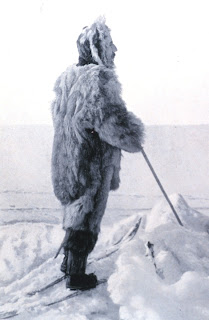
The adventure began more than 10 years earlier, in 1897, when a great, global effort to uncover the mysteries of Antarctica began. People knew that a huge, frozen continent lay beyond the wild seas at the southern end of the Earth, but it wasn’t until 1820 that explorers first laid eyes on Antarctica. Before then ships had failed to penetrate far enough through the frozen ocean to carry their passengers within sight of land. During the winter of 1897, a Belgian ship carrying a crew of explorers, called the Belgica, was trapped in the ice off the coast of the continent. The crew became the first people to endure an Antarctic winter and sparked a period of exploration that would last for 25 years. During that time scientists, geographers and adventurers would compete to become the first to explore uncharted territories and claim the credit for their respective nations. But it was the parallel journeys of Scott and Amundsen that would capture the imaginations of people across the world. Scott had been planning his Terra Nova Expedition for years. His aim was to be the first to the South Pole after Ernst Shackleton had narrowly failed during an earlier expedition. Scientific research was also an important part of Scott’s expedition to Antarctica. But when the American adventurers Frederick Cook and Robert Peary laid claim that achievement, Amundsen turned his attention towards the other end of the Earth. Only his brother Leon and second-in-command Thorvald Nilsen knew of Amundsen’s plan until after his ship, the Fram, had set sail. Scott only learnt of this change of direction months later when his ship, the Terra Nova, docked in Melbourne, Australia. There he was handed a telegram from the Norwegian, it read: ‘Beg to inform you Fram proceeding Antarctic – Amundsen.’ Even though Scott publically insisted that this news would change nothing, the reality was that he was now locked in a race to the South Pole.
That's it for now - there will be another Marine News Roundup in two week's time. Please free to comment and let us know what you think!
Race to the South Pole
And finally, as part of the BBC's Frozen Planet series, BBC Earth have blogged about the race across the Antartic wilderness by two teams 100 years ago. Led by Roald Amundsen from Norway and Captain Robert Scott from Great Britain, the men set out to conquer this vast icy continent and to become the first to reach the South Pole. For one group the adventure would end in triumph, for the other it would end in tragedy. This year marks the 100th anniversary of Scott and Amundsen’s separate attempt to be the first to the South Pole.

The adventure began more than 10 years earlier, in 1897, when a great, global effort to uncover the mysteries of Antarctica began. People knew that a huge, frozen continent lay beyond the wild seas at the southern end of the Earth, but it wasn’t until 1820 that explorers first laid eyes on Antarctica. Before then ships had failed to penetrate far enough through the frozen ocean to carry their passengers within sight of land. During the winter of 1897, a Belgian ship carrying a crew of explorers, called the Belgica, was trapped in the ice off the coast of the continent. The crew became the first people to endure an Antarctic winter and sparked a period of exploration that would last for 25 years. During that time scientists, geographers and adventurers would compete to become the first to explore uncharted territories and claim the credit for their respective nations. But it was the parallel journeys of Scott and Amundsen that would capture the imaginations of people across the world. Scott had been planning his Terra Nova Expedition for years. His aim was to be the first to the South Pole after Ernst Shackleton had narrowly failed during an earlier expedition. Scientific research was also an important part of Scott’s expedition to Antarctica. But when the American adventurers Frederick Cook and Robert Peary laid claim that achievement, Amundsen turned his attention towards the other end of the Earth. Only his brother Leon and second-in-command Thorvald Nilsen knew of Amundsen’s plan until after his ship, the Fram, had set sail. Scott only learnt of this change of direction months later when his ship, the Terra Nova, docked in Melbourne, Australia. There he was handed a telegram from the Norwegian, it read: ‘Beg to inform you Fram proceeding Antarctic – Amundsen.’ Even though Scott publically insisted that this news would change nothing, the reality was that he was now locked in a race to the South Pole.
That's it for now - there will be another Marine News Roundup in two week's time. Please free to comment and let us know what you think!
Thursday, 20 October 2011
Marine News Roundup
Welcome to the fortnightly Marine News Roundup, gathering together the best of the marine news stories from the past two weeks!
Act Now to Save 'the Most Important Fish in the Sea'
Atlantic menhaden, often called “the most important fish in the sea,” have reached a turning point. These fish play a critical role in the marine food web as prey for striped bass, bluefish, tuna, whales, porpoises, seabirds, and other wildlife. But the essential role menhaden play in the marine ecosystem is now at risk. The Atlantic States Marine Fisheries Commission (ASMFC) has taken a historic first step to restore the menhaden population by laying out a plan that could significantly increase the number left in the ocean, finally taking into account the needs of their predators.
Kraken lair? Paleontologist identifies giant sea monster's bone heap.
Scientists have uncovered the lair of an ancient sea monster similar to the legendary Kraken, which has appeared countless times in myths and stories, notably in the 2010 film, 'Clash of the Titans.' Evidence for the kraken and its gruesome attacks comes from markings on the bones of the remains of nine 45-foot (14 meter) ichthyosaurs of the species Shonisaurus popularis, which lived during the Triassic, a period that lasted from 248 million to 206 million years ago. The beasts were the Triassic version of today's predatory giant squid-eating sperm whales.
Florida's wildlife officials encouraged by sea turtle nest count
The populations of two of the three species of sea turtles that nest in Florida are growing and the number of nests of the third – the iconic loggerhead – seems to have stabilized after a substantial and steady decline since 1998. The Florida Fish and Wildlife Conservation Commission this week released the results of its annual nest count. The survey is not the total number of nests in the state, but only on targeted beaches where turtles are known to nest year after year. The good news for green turtles, which are on the federal endangered species list, is that the survey showed a record high annual nest count in Florida this year. It is the most ever counted since the survey began 22 years ago. Leatherback turtles' nests numbered high as well, with the count falling just shy of the previous high mark two years ago. Leatherbacks also are on the federal endangered list.
Target commits to 100% sustainable, traceable fish by 2015
The second largest discount retailer in the U.S. has announced that it will sell only sustainable, traceable fish by 2015. Minneapolis-based Target Corp. operates 1,762 stores, many of which are converting to incorporate PFresh markets that sell fresh and frozen foods, including fish. In 2010, Target stopped selling farmed salmon, Chilean sea bass and orange roughy due to various sustainability issues. It currently sells 50 different brands of fish certified by either the Marine Stewardship Council or the Global Aquaculture Alliance.
Mysterious outbreak killing Arctic Alaska ringed seals
A mysterious and potentially widespread disease is thought to have contributed to the deaths of dozens of ringed seals along Alaska's Arctic coast. Scores more are sickened, some so ill that skin lesions bleed when touched. The animals are an important subsistence food for Alaska Native hunters and their families, and the National Oceanic and Atmospheric Administration has proposed listing them as threatened or endangered under the Endangered Species Act.
Man 'surfs' great white shark
Doug Niblack was trying to catch another wave before going to work when his longboard hit something hard as rock off the Oregon coast and he found himself standing on a thrashing great white shark. Looking down, he could see a dorsal fin in front of his feet as he stood on what he described as 10 feet (three metres) of back as wide as his surfboard and as black as his wetsuit. A tail thrashed back and forth and the water churned around him. Niblack estimated that he was standing on the shark for no more than three or four seconds. The dorsal fin caught his board and dragged him for about a metre by his ankle tether. In six years of surfing, Niblack said he had seen sharks in the water, but never so close. He said he had been dreaming about sharks, but was planning to go back out to surf. When he does he will take a waterproof video camera his roommate gave him. He has also put a sticker on the bottom of his board to ward off sharks – a shark with a red circle and a slash over it.
'Whale war' kicks off as Japan sends strengthened fleet to Antarctica
As the Steve Irwin approached the equator last week, word that Japan would be sending a strengthened whaling fleet to Antarctica next month reached the bridge of the old Aberdeen-built customs vessel. The crew of activists on board cheered, as their veteran leader, Captain Paul Watson, resigned himself to his eighth "whale war" among the icebergs and 100mph winds of the Southern ocean. Watson, on what is nearly his 350th voyage in nearly 40 years defending whales and other marine wildlife at the helm of Sea Shepherd Conservation Society, is sending three ships to intercept, chase and harass the Japanese. He promises "aggressive non-violence", while the Japanese, still smarting from last year's humiliation when their fleet took only a fifth of its planned whale catch, say they will heighten security and take an armed government fisheries patrol vessel.
Mississauga bans shark fin products
Mississauga councillors unanimously adopted a bylaw Wednesday that bans the possession and sale of shark fin products in the city. The decision makes Mississauga the largest city in Canada to ban the controversial products, the consumption of which has pushed many of the world’ shark species to the brink of extinction. The move came a day before a Toronto council committee was to address the issue, and following introduction of a ban in Oakville in July. At the municipal level, much of the debate revolves around whether cities have the jurisdiction and the ability to enforce such a ban. Mississauga Councillor Pat Mullin says cities certainly have the jurisdiction but adds there are issues to be worked out regarding enforcement.
Endangered Sea Turtles Drowning In Shrimp Nets, Groups Sue For More Protection
Several wildlife protection groups are suing the federal agency that regulates fishing in U.S. waters, claiming the government isn't doing enough to protect endangered sea turtles from drowning in shrimp nets. The lawsuit filed in Washington claims the National Marine Fisheries Service violates the Endangered Species Act by letting some shrimpers operate without required turtle excluder devices on their nets and exempting some shrimping from the requirement. The gear is required on many shrimp trawls in federal and state waters, but some kinds of trawls and other nets are exempt under certain conditions. A Louisiana law passed in 1987 makes it illegal for state wildlife agents to enforce turtle excluder device regulations in state waters.
Rare dwarf sperm whale sighted off Cornwall coast
A dwarf sperm whale was spotted in Mounts Bay off Penzance, where it was caught on camera swimming just off the shore. It's the first ever recorded sighting of the species off the coast of the UK . A video, posted on YouTube, shows the 3 metre mammal circling the bay in shallow water. There are no official figures for dwarf sperm whale population because they usually stay in deeper waters, feeding off fish and crustaceans on the sea floor.
Amazing animal-inspired inventions!
A BBC Earth blog looking at some of the amazing things animals can do and how we've learnt from nature...
Humpback Whale-inspired Hydroelectric Turbines:
 In the search for more renewable sources of energy, scientists have turned to one of nature’s most wonderful creatures for ideas. The Humpback Whale’s amazing agility is down to its slightly odd flippers. The unusual bumps on the leading edge of the whale’s flippers give it incredible manoeuvrability for an animal so big. Scientists over at WhalePower realised the potential of this oddity in a number of different technologies and have applied bumps to hydroelectric turbines, ventilation fans, irrigation pumps and wind turbines. The gains in efficiency are massive. Compared to smooth fins, the bumpy humpback’s fins have 32 per cent less drag and an 8 per cent increased lift in their movement through air and water. The efficiency gains are huge enough, potentially 20 per cent, to make the likes of wind power a source of energy fully competitive with alternatives.
People have always campaigned to save the whales and now they could save us energy!
In the search for more renewable sources of energy, scientists have turned to one of nature’s most wonderful creatures for ideas. The Humpback Whale’s amazing agility is down to its slightly odd flippers. The unusual bumps on the leading edge of the whale’s flippers give it incredible manoeuvrability for an animal so big. Scientists over at WhalePower realised the potential of this oddity in a number of different technologies and have applied bumps to hydroelectric turbines, ventilation fans, irrigation pumps and wind turbines. The gains in efficiency are massive. Compared to smooth fins, the bumpy humpback’s fins have 32 per cent less drag and an 8 per cent increased lift in their movement through air and water. The efficiency gains are huge enough, potentially 20 per cent, to make the likes of wind power a source of energy fully competitive with alternatives.
People have always campaigned to save the whales and now they could save us energy!
Friction reducing Sharkskin:
 American hero Michael Phelps may just owe a debt of gratitude to sharks. Phelps swam to his record eight gold medals at the Beijing Olympics wearing a revolutionary new swimsuit based on a study of sharkskin. The suit increases a swimmer’s speed by reducing drag through water by up to 4 per cent more than the next swimsuit. Sharkskin is covered in tiny ‘teeth’, varying in shape and positioning, that regulate the flow of water around the body. Researchers are now developing ‘sharkskin’ coatings for ship's hulls, submarines, aircraft fuselage, and even swimwear for humans.
With only spines attached, shark fins come ashore
Despite recent measures to crack down on the practice of shark finning, Costa Rican fishermen and environmentalists believe that foreign fleets are once again using methods to evade Costa Rican fishing laws and regulations. In recent months, three Taiwanese ships landed shark fins attached only to the shark’s spine at the public dock in Puntarenas. The sharks’ flesh was shaved away from the sharks’ spines, leaving only skeletons attached to full fins. Last year, the Costa Rican Agriculture Ministry (MAG) and the Costa Rican Fisheries Institute (Incopesca) barred foreign fleets from unloading at private docks. Instead they must land at public docks, where inspectors can enforce the law. A public backlash begun nearly a decade ago helped ban the practice of shark finning in Costa Rica. However, shark fishing remains legal in the country. Today Costa Rican regulations stipulate that only three authorized cuts can be made when shark fishing: the head, the entrails and a partial cut to allow the bending of the fin. Yet recent cases in Puntarenas have shown that the law has left grey areas that fishermen exploit. The Taiwanese boat Wang Jia Men was the first ship discovered using the new practice of landing only skeletons. According to Incopesca Executive Director Luis Gerardo Dobles, it was the first time that the fisheries institute had seen the new tactic. An Incopesca inspector let the ship unload and reported that 36 sharks had landed without full carcasses. When members of the Pacific Coast Fishermen’s Union found out, the ship had already been allowed to sell the fins. The union, made up of Costa Rican fishermen, strongly opposes the practice.
Global warming: A tipping point for phytoplankton?
Aquaculture, one of the fastest growing sectors of agriculture in the US, combats the global dilemma of depleting wild fish populations. But a new report from the group Food & Water Watch says factory fish farms risk the health of other, stable species swimming in the sea. One of the biggest problems? The fish food. It takes about three pounds of feeder fish to produce one pound of farmed salmon. And we need more fish to keep up with a hungry, growing, human population. But feeding more salmon depletes the ocean's smaller fish. Wild-caught, carnivorous fish like salmon chow down on smaller fish and crustaceans because those delectable treats are high in protein and fat - essential nutrients to a fish. Farmed fish need the same nutrients but get it as a blend of various nutritional ingredients - all targeted to increase the efficiency of a fish's growth and its health. Researchers are looking into new fish feed using renewable sources, such as biofuel co-products, poultry by-products, soybeans and so on. Finding alternative sources of fat and protein to supply aquaculture could help provide fish with the necessary nutrients without depleting the ocean.
On ocean's floor, death is not the end
On the dark, cold floor of the ocean, death is not the end. Dead organic material settles to the bottom, where, like compost in a garden, it is converted into nutrients, including nitrate and phosphate. Coastal winds help complete the circle of life, lifting clear, cold, nutrient-rich water into the sunlit shallows. The upwelling promotes a population explosion of phytoplankton, the microscopic plants that form the base of the marine food web.
Dolphins 'decompress like humans'
Act Now to Save 'the Most Important Fish in the Sea'
Atlantic menhaden, often called “the most important fish in the sea,” have reached a turning point. These fish play a critical role in the marine food web as prey for striped bass, bluefish, tuna, whales, porpoises, seabirds, and other wildlife. But the essential role menhaden play in the marine ecosystem is now at risk. The Atlantic States Marine Fisheries Commission (ASMFC) has taken a historic first step to restore the menhaden population by laying out a plan that could significantly increase the number left in the ocean, finally taking into account the needs of their predators.
Kraken lair? Paleontologist identifies giant sea monster's bone heap.
Scientists have uncovered the lair of an ancient sea monster similar to the legendary Kraken, which has appeared countless times in myths and stories, notably in the 2010 film, 'Clash of the Titans.' Evidence for the kraken and its gruesome attacks comes from markings on the bones of the remains of nine 45-foot (14 meter) ichthyosaurs of the species Shonisaurus popularis, which lived during the Triassic, a period that lasted from 248 million to 206 million years ago. The beasts were the Triassic version of today's predatory giant squid-eating sperm whales.
Florida's wildlife officials encouraged by sea turtle nest count
The populations of two of the three species of sea turtles that nest in Florida are growing and the number of nests of the third – the iconic loggerhead – seems to have stabilized after a substantial and steady decline since 1998. The Florida Fish and Wildlife Conservation Commission this week released the results of its annual nest count. The survey is not the total number of nests in the state, but only on targeted beaches where turtles are known to nest year after year. The good news for green turtles, which are on the federal endangered species list, is that the survey showed a record high annual nest count in Florida this year. It is the most ever counted since the survey began 22 years ago. Leatherback turtles' nests numbered high as well, with the count falling just shy of the previous high mark two years ago. Leatherbacks also are on the federal endangered list.
Target commits to 100% sustainable, traceable fish by 2015
The second largest discount retailer in the U.S. has announced that it will sell only sustainable, traceable fish by 2015. Minneapolis-based Target Corp. operates 1,762 stores, many of which are converting to incorporate PFresh markets that sell fresh and frozen foods, including fish. In 2010, Target stopped selling farmed salmon, Chilean sea bass and orange roughy due to various sustainability issues. It currently sells 50 different brands of fish certified by either the Marine Stewardship Council or the Global Aquaculture Alliance.
Mysterious outbreak killing Arctic Alaska ringed seals
A mysterious and potentially widespread disease is thought to have contributed to the deaths of dozens of ringed seals along Alaska's Arctic coast. Scores more are sickened, some so ill that skin lesions bleed when touched. The animals are an important subsistence food for Alaska Native hunters and their families, and the National Oceanic and Atmospheric Administration has proposed listing them as threatened or endangered under the Endangered Species Act.
Man 'surfs' great white shark
Doug Niblack was trying to catch another wave before going to work when his longboard hit something hard as rock off the Oregon coast and he found himself standing on a thrashing great white shark. Looking down, he could see a dorsal fin in front of his feet as he stood on what he described as 10 feet (three metres) of back as wide as his surfboard and as black as his wetsuit. A tail thrashed back and forth and the water churned around him. Niblack estimated that he was standing on the shark for no more than three or four seconds. The dorsal fin caught his board and dragged him for about a metre by his ankle tether. In six years of surfing, Niblack said he had seen sharks in the water, but never so close. He said he had been dreaming about sharks, but was planning to go back out to surf. When he does he will take a waterproof video camera his roommate gave him. He has also put a sticker on the bottom of his board to ward off sharks – a shark with a red circle and a slash over it.
'Whale war' kicks off as Japan sends strengthened fleet to Antarctica
As the Steve Irwin approached the equator last week, word that Japan would be sending a strengthened whaling fleet to Antarctica next month reached the bridge of the old Aberdeen-built customs vessel. The crew of activists on board cheered, as their veteran leader, Captain Paul Watson, resigned himself to his eighth "whale war" among the icebergs and 100mph winds of the Southern ocean. Watson, on what is nearly his 350th voyage in nearly 40 years defending whales and other marine wildlife at the helm of Sea Shepherd Conservation Society, is sending three ships to intercept, chase and harass the Japanese. He promises "aggressive non-violence", while the Japanese, still smarting from last year's humiliation when their fleet took only a fifth of its planned whale catch, say they will heighten security and take an armed government fisheries patrol vessel.
Mississauga bans shark fin products
Mississauga councillors unanimously adopted a bylaw Wednesday that bans the possession and sale of shark fin products in the city. The decision makes Mississauga the largest city in Canada to ban the controversial products, the consumption of which has pushed many of the world’ shark species to the brink of extinction. The move came a day before a Toronto council committee was to address the issue, and following introduction of a ban in Oakville in July. At the municipal level, much of the debate revolves around whether cities have the jurisdiction and the ability to enforce such a ban. Mississauga Councillor Pat Mullin says cities certainly have the jurisdiction but adds there are issues to be worked out regarding enforcement.
Endangered Sea Turtles Drowning In Shrimp Nets, Groups Sue For More Protection
Several wildlife protection groups are suing the federal agency that regulates fishing in U.S. waters, claiming the government isn't doing enough to protect endangered sea turtles from drowning in shrimp nets. The lawsuit filed in Washington claims the National Marine Fisheries Service violates the Endangered Species Act by letting some shrimpers operate without required turtle excluder devices on their nets and exempting some shrimping from the requirement. The gear is required on many shrimp trawls in federal and state waters, but some kinds of trawls and other nets are exempt under certain conditions. A Louisiana law passed in 1987 makes it illegal for state wildlife agents to enforce turtle excluder device regulations in state waters.
Rare dwarf sperm whale sighted off Cornwall coast
A dwarf sperm whale was spotted in Mounts Bay off Penzance, where it was caught on camera swimming just off the shore. It's the first ever recorded sighting of the species off the coast of the UK . A video, posted on YouTube, shows the 3 metre mammal circling the bay in shallow water. There are no official figures for dwarf sperm whale population because they usually stay in deeper waters, feeding off fish and crustaceans on the sea floor.
Amazing animal-inspired inventions!
A BBC Earth blog looking at some of the amazing things animals can do and how we've learnt from nature...
Humpback Whale-inspired Hydroelectric Turbines:
 In the search for more renewable sources of energy, scientists have turned to one of nature’s most wonderful creatures for ideas. The Humpback Whale’s amazing agility is down to its slightly odd flippers. The unusual bumps on the leading edge of the whale’s flippers give it incredible manoeuvrability for an animal so big. Scientists over at WhalePower realised the potential of this oddity in a number of different technologies and have applied bumps to hydroelectric turbines, ventilation fans, irrigation pumps and wind turbines. The gains in efficiency are massive. Compared to smooth fins, the bumpy humpback’s fins have 32 per cent less drag and an 8 per cent increased lift in their movement through air and water. The efficiency gains are huge enough, potentially 20 per cent, to make the likes of wind power a source of energy fully competitive with alternatives.
 Friction reducing Sharkskin:
 American hero Michael Phelps may just owe a debt of gratitude to sharks. Phelps swam to his record eight gold medals at the Beijing Olympics wearing a revolutionary new swimsuit based on a study of sharkskin. The suit increases a swimmer’s speed by reducing drag through water by up to 4 per cent more than the next swimsuit. Sharkskin is covered in tiny ‘teeth’, varying in shape and positioning, that regulate the flow of water around the body. Researchers are now developing ‘sharkskin’ coatings for ship's hulls, submarines, aircraft fuselage, and even swimwear for humans.
Despite recent measures to crack down on the practice of shark finning, Costa Rican fishermen and environmentalists believe that foreign fleets are once again using methods to evade Costa Rican fishing laws and regulations. In recent months, three Taiwanese ships landed shark fins attached only to the shark’s spine at the public dock in Puntarenas. The sharks’ flesh was shaved away from the sharks’ spines, leaving only skeletons attached to full fins. Last year, the Costa Rican Agriculture Ministry (MAG) and the Costa Rican Fisheries Institute (Incopesca) barred foreign fleets from unloading at private docks. Instead they must land at public docks, where inspectors can enforce the law. A public backlash begun nearly a decade ago helped ban the practice of shark finning in Costa Rica. However, shark fishing remains legal in the country. Today Costa Rican regulations stipulate that only three authorized cuts can be made when shark fishing: the head, the entrails and a partial cut to allow the bending of the fin. Yet recent cases in Puntarenas have shown that the law has left grey areas that fishermen exploit. The Taiwanese boat Wang Jia Men was the first ship discovered using the new practice of landing only skeletons. According to Incopesca Executive Director Luis Gerardo Dobles, it was the first time that the fisheries institute had seen the new tactic. An Incopesca inspector let the ship unload and reported that 36 sharks had landed without full carcasses. When members of the Pacific Coast Fishermen’s Union found out, the ship had already been allowed to sell the fins. The union, made up of Costa Rican fishermen, strongly opposes the practice.
Global warming: A tipping point for phytoplankton?
An elaborate lab experiment done by a San Francisco State University research team shows that warmer increasingly acidic oceans may fundamentally change the role some phytoplankton have in capturing carbon from the atmosphere. The study published this week in the journal Global Change Biology suggests that at least one species of ubiquitous phytoplankton - Emiliania huxleyi- forms incomplete or hollow coccoliths in high carbon and high ammonium conditions, resulting in less carbon sinking to the ocean floor. The results suggest in the future there will be overall lower amounts of calcification and overall lower amount of transport of carbon to the deep ocean. To measure the impacts of warmer temperatures and increasing acidification, the scientists raised more than 200 generations of Emiliania huxleyi in the lab, adjusting carbon dioxide levels and the type of nitrogen in the phytoplankton’s seawater bath. Changes to this massive carbon sink could have a critical effect on the planet’s future climate, especially as atmospheric carbon dioxide levels continue to rise sharply as a result of fossil fuel burning and other human activities. The shell-building capacity of the phytoplankton could also be inhibited by thickening layers of warm water that prevent upwelling of nitrate-rich water. Emiliania huxleyi typically use nitrates to make proteins, but this form of nitrogen may be in shorter supply as ocean temperatures change. At the same time, the warmer temperatures favor bacteria that turn recycled nitrogen from surface waters and the atmosphere into ammonium, and acidification inhibits the bacteria that turn ammonium into nitrate. The study is the first to look at the intertwined effects of ocean acidification and changes in nitrogen on phytoplankton like Emiliania huxleyi. It’s also one of the first studies to observe these effects continuously over a long time scale, “so the responses of the phytoplankton are likely what we’ll see in the ocean itself”.
On ocean's floor, death is not the end
On the dark, cold floor of the ocean, death is not the end. Dead organic material settles to the bottom, where, like compost in a garden, it is converted into nutrients, including nitrate and phosphate. Coastal winds help complete the circle of life, lifting clear, cold, nutrient-rich water into the sunlit shallows. The upwelling promotes a population explosion of phytoplankton, the microscopic plants that form the base of the marine food web.
Dolphins 'decompress like humans'
Scientists have found tiny bubbles beneath the blubber of dolphins that have beached themselves. The bubbles were discovered by taking ultrasound scans of the animals within minutes of stranding off Cape Cod, US. The team's findings help confirm what many researchers have long suspected: dolphins avoid the bends by taking long, shallow decompression dives after feeding at depth. If human divers ascend too quickly, dissolved nitrogen forms bubbles in the body, causing decompression sickness. But marine mammals such as whales, dolphins, and seals are highly adept at dealing with the pressures of the deep. They slow their hearts, collapse the tiny air-filled chambers in their lungs, and channel blood to essential organs - like the brain - to conserve oxygen, and limit the build-up of nitrogen bubbles in the blood that happens at depth. However, even marine mammals ascending from the deep must rid themselves of the gas that has built up in their tissues, or risk developing the bends. If dolphins come up too quickly, there is evidence that they "grab another gulp of air and go back down again," in much the same way a human diver would "re-tank and re-ascend" to try to prevent the bends. But there's one place they can't do that - "sitting on the beach".
'Criminal' penguin caught on film
Toxic Seaweed Poisons Coral Reefs on Contact
That's it for now - the Marine News Roundup will be back in two weeks.
'Criminal' penguin caught on film
A "criminal" stone-stealing Adelie penguin has been captured on camera by a BBC film crew. The team, filming for the documentary Frozen Planet, spent four months with the penguin colony on Ross Island, Antarctica. The footage they captured shows a male penguin stealing stones from its neighbour's nest. The birds build their stone nests to elevate and protect their eggs from run-off when the Antarctic ice melts. Males with the best nests are more likely to attract a mate, so, in a colony of half a million penguins, the best stones are highly prized. Each male adelie penguin builds its nest just out of "pecking distance" of its neighbours. The film crew managed to capture a remarkable sequence, with one penguin repeatedly returning to its nest to add stones, apparently unaware of the fact that his neighbour would steal a stone every time his nest was unattended.
Toxic Seaweed Poisons Coral Reefs on Contact
“Attack of the killer seaweed” may sound like a cheesy horror flick, but for many coral species, murderous multicellular algae have become real-life villains. A new study of reefs in the South Pacific suggests that some algae can poison coral on contact. This chemical warfare may be increasing the pressure on struggling reef communities worldwide, researchers say. Along the reefs dotting Fiji, overfishing has pitted corals against algae in a battle royale. On swaths of coastline where fishing is restricted, corals such as the tall and branching Acropora millepora rule. But where Fijians spear lots of herbivores such as bird-beaked parrotfish, few fish remain to prune back the region’s seaweeds, a blanket term for many types of big algae. These algae then creep in, extending their tendrils over close to 60 percent of the ocean bottom and turning waters a sludgy green. Such “seaweed-covered parking lots” aren’t unique to Fiji either. Recent studies have hinted that this ocean greenery may be carrying out a subtle chemical war on sensitive reefs. To investigate this covert struggle, researchers strung eight different species of Fijian seaweed across growing corals, including A. millepora colonies. True to the researchers’ suspicions, many of these algal species seemed to wield a poison touch. In less than 2 weeks, the test coral often began to discolor and even die where it rubbed against the seaweeds. Faux seaweeds made of plastic had no such effect.
Everyone knows that piranhas have razor-sharp teeth, but they have another distinguishing characteristic: They make noise. Until now, however, scientists have never understood why. Now, using a hydrophone to record underwater sounds, researchers from the University of Liège in Belgium say they have found an answer. These are sounds made during fighting, charging and frontal display,” said Eric Parmentier, a morphologist at the university and an author of a new study on the noises, published in The Journal of Experimental Biology. It was previously thought that piranhas produced a single barking call. But the researchers also recorded a drumlike sound, made when the fish fought for food, and a croak the fish’s jaws produced when it snapped at another piranha. Dr. Parmentier and his colleagues also discovered that piranhas make the barking and drumming sounds by rapidly contracting a muscle attached to the swim bladder. The contractions occur 100 to 200 times a second and cause the bladder to vibrate. The moment the contractions stop, the vibration stops, as the swim bladder itself is unable to vibrate on its own. Researchers are discovering that many types of fish produce sound because it is a good way to communicate underwater. At least 100 fish families are known to produce sound - "sound travels faster in the water than in the air".
And finally...
Farting Fish
Flatulence might be rude to us humans, but for herring, it's a survival strategy. Herring have a secret, and funny, way of communicating with each other - by farting. They just have to hope neighboring predators aren't listening in...And finally...
Farting Fish
That's it for now - the Marine News Roundup will be back in two weeks.
Thursday, 29 September 2011
Marine News Roundup
Welcome to this week's Marine News Roundup... As ever, please feel free to leave us a comment and let us know what you think!
Rare turtle turns up in Auckland waters
BBC Doc Shows Whales and Dolphins are Self-aware and Emotional
The Ocean Giants documentary showed dolphins and whales using complex thought and planning to communicate, rear their young, overcome apprehension and feed. Stephen Fry began the narration of Deep Thinkers by telling us that bottlenose dolphins have one of the biggest brains in the animal kingdom, and that they are thought to be one of the most intelligent animals. Scientists believe that we should be able to 'talk' with bottlenose dolphins within five years. The documentary showed a captive dolphins experiment. A two-way mirror had been placed in the dolphins' pool. The dolphins were shown taking a keen interest in themselves, moving their heads to look at themselves at different angles. Only humans, great apes and elephants were previously known to be so self-aware. Human babies usually take about two years to reach that level; about the same time as they learn empathy.
Cornish fisherman finds rare slipper lobster
A rare slipper lobster has been discovered by a Cornish fisherman six miles (10km) east of Falmouth. The lobster, normally found in warmer waters, is one of only a few recorded in the UK since records began back in 1758. It was caught by St Mawes fisherman John Hayse on his boat who discovered it sitting on one of his crab pots. Staff at Blue Reef Aquarium are looking after 12cm (4.7ins) long Popeye, who has orange eyes and a dark brown body. The crustacean uses specially adapted plates on its head to burrow in search of food and to escape would-be predators. Historically, records of slipper lobsters in UK waters have been extremely rare. However, in the past decade sightings have risen.
Clothing Sheds Microplastics Into Sea
Washing a fleece jacket may add to the fog of microscopic plastic floating in the oceans, according to a new study. Researchers report that the majority of these plastic particles probably washed off synthetic fabrics. Although stories of large chunks of plastic trash trapped in the guts of seabirds are devastating, most plastic pollution in the oceans takes the form of tiny, even microscopic, fragments. In the 1990s, researchers started tracking the amounts of these particles and searching for possible sources, such as the plastic beads used as scrubbing agents in face cleaners and soaps. The particles' shapes and sizes indicated they were fibers of synthetic fabrics. They found that polyester made up about three-quarters of the plastics; the rest consisted of polyamide, polypropylene, and acrylic, a composition that matches that of textiles. So the researchers analyzed the water drained from frontloading washing machines after throwing fleece jackets, blankets, and synthetic business shirts into them. In one wash cycle, they found, a single piece of clothing shed more than 1,900 tiny fibers. The scientists also determined that the chemical composition of their coastal plastic samples matched that of microscopic plastic found in treated discharge they collected from two wastewater treatment plants in Australia. They concluded that plastic fragments from synthetic fabrics most likely flow from wastewater treatment plants down to the seashore, and perhaps out to sea.
West African Fisheries Decline Steeply as Government Fails to Act
The Senegalese Maritime Economy Ministry has failed to save its country’s diminishing fish stocks. This week, it slashed the biological recovery period of commercial fisheries because of pressure from national industrial lobbyists. The recovery period is vital because it gives fish populations time to regenerate between fishing intervals. Cutting the amount of time between fishing periods means fisheries don’t have a chance to recover before being fished again. Millions of Senegalese depend on the fish caught off shore for their basic protein needs, but because the West Africans waters are becoming increasingly overfished by European trawlers. Many species, including Thiof - the traditional Senegalese delicacy - are now threatened with extinction. Greenpeace has called on the Senegalese government to reconsider its decision, and reinstate the two month moratorium on commercial fishing.
Warning over 'extremely worrying plans' to close coastguard stations
Rural Affairs Secretary Richard Lochhead has reiterated his condemnation of "extremely worrying plans" to close or downgrade Scottish coastguard stations. Mr Lochhead said the plans suggest any key incident involving North Sea oil platforms would be managed by senior officers in the Maritime Operations Centre (MOC) which will be based in the Southampton and Portsmouth area. He said this is a departure from existing, well-established procedures which allow multi-agency teams, including MCA managers, police and oil company representatives, to be based at the Aberdeen MRCC at short notice and coordinate the response from there.
Birds Caught in Fishing Lines Dying by the Thousands
While it's no secret that keeping up with the world's demand for seafood puts terrible strain on ocean ecosystems, it turns out that fish aren't the only species feeling the pinch from overfishing. On the heels of a recent study which found that fishing nets and hooks in the U.S. kill around 4,600 sea turtles every year off the U.S. coast alone, a new report suggests that seabirds are fairing even worse. According to researchers, the fishing industry may be responsible for inadvertently killing up to 320 thousand birds annually. And the problem is so bad, it could soon drive some bird species to extinction. Although there may be no way to ensure that birds, protected or otherwise, won't continue to be killed in fishing lines and nets, wildlife experts say that there are measures the industry can take to reduce the numbers. By making some small changes, like weighing down the nets or even just trawling at night, experts say that bird deaths could be minimized.
Scientists discover reef overfishing point
Fishermen and scientists questioning how many fish can be sustainably taken from a reef believe they've quantified the tipping point. In a report released today, researchers have demonstrated how overfishing can generate a predictable sequence of events that lead to the collapse of reef ecosystems.
It also offers targets in order to keep fisheries sustainable. As "fish biomass" - the number and weight of fish living on a reef - declines due to fishing, a number of tipping points are crossed, from which it is increasingly harder to return. The study shows that in well-protected areas, there are typically 1000 to 1500 kilograms of reef fish per hectare of coral reef. As this is reduced below 1000 kilograms, early warning signs such as increased seaweed growth and urchin activity begin to show up.
The researchers found that between 300 and 600 kilograms of fish per hectare was the "maximum sustainable yield". When fish stocks dropped below 300 kilograms/hectare the reef was in real trouble. The loss of hard corals, which had been thought of as a warning sign, was actually the last stage in the collapse of a reef, the study found.
That's it for this week - as always, please feel free to post a comment and let us know what you think!
Rare turtle turns up in Auckland waters
A Department of Conservation ranger has rescued an endangered olive ridley turtle from a south Auckland beach. The stranded turtle was found floating in the water at Kariotahi Beach, on the Awhitu Peninsula near Waiuku, by a local resident while she was horse riding. The turtle is an adult male and there are no signs of external injury. Marine scientist Dan Godoy says the turtle had goose barnacles on its shell which indicated it had been floating for sometime and was unable to dive for food. "That's usually due to an illness that could be caused by the ingestion of marine debris such as plastic." Godoy says the turtle will be x-rayed and that will show whether it is the victim of marine pollution.
Humpback whale numbers are increasing but so are strandings
Humpback whale numbers are increasing but so are strandings
The annual Humpback whale migration begins in May as the mammals
make their way up the West Australian coast from the food-rich Southern Ocean to
breeding grounds in warm northern waters. But, experts say an increasing number are not surviving the journey. Of the 14 Humpback whales to die along WA's coast already this season, most
have been young. The Department of Environment and Conservation (DEC) says calfs are showing signs of malnutrition. There has been a marked increase in sick and dying Humpback whales in recent
years. The reason for the increase in deaths could also simply be because of a growing
population. The DEC and a team of researchers from Murdoch University have begun taking
blubber samples from a number of the dead whales to try to find out why they are
dying. Whales are sensitive to their environment and when there is an imbalance, they can act
as an early warning sign.
Divers pal up with friendly dolphin Billy
A friendly dolphin has been playing with divers after turning up alone in Plymouth Sound.
Billy, as it has been nicknamed, was first spotted during a commercial diving course off Fort Bovisand on Friday. Over the weekend, Billy was spotted again in Whitsand Bay.
A friendly dolphin has been playing with divers after turning up alone in Plymouth Sound.
Billy, as it has been nicknamed, was first spotted during a commercial diving course off Fort Bovisand on Friday. Over the weekend, Billy was spotted again in Whitsand Bay.
The Ocean Giants documentary showed dolphins and whales using complex thought and planning to communicate, rear their young, overcome apprehension and feed. Stephen Fry began the narration of Deep Thinkers by telling us that bottlenose dolphins have one of the biggest brains in the animal kingdom, and that they are thought to be one of the most intelligent animals. Scientists believe that we should be able to 'talk' with bottlenose dolphins within five years. The documentary showed a captive dolphins experiment. A two-way mirror had been placed in the dolphins' pool. The dolphins were shown taking a keen interest in themselves, moving their heads to look at themselves at different angles. Only humans, great apes and elephants were previously known to be so self-aware. Human babies usually take about two years to reach that level; about the same time as they learn empathy.
Cornish fisherman finds rare slipper lobster
A rare slipper lobster has been discovered by a Cornish fisherman six miles (10km) east of Falmouth. The lobster, normally found in warmer waters, is one of only a few recorded in the UK since records began back in 1758. It was caught by St Mawes fisherman John Hayse on his boat who discovered it sitting on one of his crab pots. Staff at Blue Reef Aquarium are looking after 12cm (4.7ins) long Popeye, who has orange eyes and a dark brown body. The crustacean uses specially adapted plates on its head to burrow in search of food and to escape would-be predators. Historically, records of slipper lobsters in UK waters have been extremely rare. However, in the past decade sightings have risen.
Clothing Sheds Microplastics Into Sea
Washing a fleece jacket may add to the fog of microscopic plastic floating in the oceans, according to a new study. Researchers report that the majority of these plastic particles probably washed off synthetic fabrics. Although stories of large chunks of plastic trash trapped in the guts of seabirds are devastating, most plastic pollution in the oceans takes the form of tiny, even microscopic, fragments. In the 1990s, researchers started tracking the amounts of these particles and searching for possible sources, such as the plastic beads used as scrubbing agents in face cleaners and soaps. The particles' shapes and sizes indicated they were fibers of synthetic fabrics. They found that polyester made up about three-quarters of the plastics; the rest consisted of polyamide, polypropylene, and acrylic, a composition that matches that of textiles. So the researchers analyzed the water drained from frontloading washing machines after throwing fleece jackets, blankets, and synthetic business shirts into them. In one wash cycle, they found, a single piece of clothing shed more than 1,900 tiny fibers. The scientists also determined that the chemical composition of their coastal plastic samples matched that of microscopic plastic found in treated discharge they collected from two wastewater treatment plants in Australia. They concluded that plastic fragments from synthetic fabrics most likely flow from wastewater treatment plants down to the seashore, and perhaps out to sea.
West African Fisheries Decline Steeply as Government Fails to Act
The Senegalese Maritime Economy Ministry has failed to save its country’s diminishing fish stocks. This week, it slashed the biological recovery period of commercial fisheries because of pressure from national industrial lobbyists. The recovery period is vital because it gives fish populations time to regenerate between fishing intervals. Cutting the amount of time between fishing periods means fisheries don’t have a chance to recover before being fished again. Millions of Senegalese depend on the fish caught off shore for their basic protein needs, but because the West Africans waters are becoming increasingly overfished by European trawlers. Many species, including Thiof - the traditional Senegalese delicacy - are now threatened with extinction. Greenpeace has called on the Senegalese government to reconsider its decision, and reinstate the two month moratorium on commercial fishing.
Warning over 'extremely worrying plans' to close coastguard stations
Rural Affairs Secretary Richard Lochhead has reiterated his condemnation of "extremely worrying plans" to close or downgrade Scottish coastguard stations. Mr Lochhead said the plans suggest any key incident involving North Sea oil platforms would be managed by senior officers in the Maritime Operations Centre (MOC) which will be based in the Southampton and Portsmouth area. He said this is a departure from existing, well-established procedures which allow multi-agency teams, including MCA managers, police and oil company representatives, to be based at the Aberdeen MRCC at short notice and coordinate the response from there.
Birds Caught in Fishing Lines Dying by the Thousands
While it's no secret that keeping up with the world's demand for seafood puts terrible strain on ocean ecosystems, it turns out that fish aren't the only species feeling the pinch from overfishing. On the heels of a recent study which found that fishing nets and hooks in the U.S. kill around 4,600 sea turtles every year off the U.S. coast alone, a new report suggests that seabirds are fairing even worse. According to researchers, the fishing industry may be responsible for inadvertently killing up to 320 thousand birds annually. And the problem is so bad, it could soon drive some bird species to extinction. Although there may be no way to ensure that birds, protected or otherwise, won't continue to be killed in fishing lines and nets, wildlife experts say that there are measures the industry can take to reduce the numbers. By making some small changes, like weighing down the nets or even just trawling at night, experts say that bird deaths could be minimized.
Scientists discover reef overfishing point
Fishermen and scientists questioning how many fish can be sustainably taken from a reef believe they've quantified the tipping point. In a report released today, researchers have demonstrated how overfishing can generate a predictable sequence of events that lead to the collapse of reef ecosystems.
It also offers targets in order to keep fisheries sustainable. As "fish biomass" - the number and weight of fish living on a reef - declines due to fishing, a number of tipping points are crossed, from which it is increasingly harder to return. The study shows that in well-protected areas, there are typically 1000 to 1500 kilograms of reef fish per hectare of coral reef. As this is reduced below 1000 kilograms, early warning signs such as increased seaweed growth and urchin activity begin to show up.
The researchers found that between 300 and 600 kilograms of fish per hectare was the "maximum sustainable yield". When fish stocks dropped below 300 kilograms/hectare the reef was in real trouble. The loss of hard corals, which had been thought of as a warning sign, was actually the last stage in the collapse of a reef, the study found.
That's it for this week - as always, please feel free to post a comment and let us know what you think!
Thursday, 15 September 2011
Marine News Roundup
This weeks best marine news stories all in once place!
Keystone Pipeline Could Push Endangered Whooping Crane Into Extinction
The Canadian energy company TransCanada and the Obama administration is on the verge of approving a proposal that will place a route through which to move toxic, highly corrosive, sludgy crude oil on the same narrow corridor used by one of the world’s most endangered birds. If approved by the administration, the Keystone XL tar-sands pipeline will move a half million+ barrels daily of Canadian crude 1,700 miles from Alberta, Canada to the Texas coast as soon as 2013. The Whooping crane is one of the most highly endangered birds in the world and the cranes follow the proposed path of the pipeline annually each spring, as they migrate from Texas to their breeding grounds in Canada. Scientists are deeply concerned by the proposals and say that, in addition to the grave risk of catastrophic spill, Whooping cranes would be put at still further risk by the installation of aerial power lines that would be constructed to power pumping stations on the proposed pipeline route. The State Department has completely ignored the impacts of the proposed pipeline on the highly endangered Whooping crane and in so doing, ignored the requirements of the Endangered Species Act. The Obama administration could announce its decision whether to block this remarkably flawed proposal at any time.
Tesco Drops Biodegradable Bags
Tesco is eliminating a controversial type of additive which helped it to create biodegradable bags, according to news reports. A study backed by the UK's Department for Food, Environment and Rural Affairs suggested that bags containing oxo-biodegradable additives (OBD) could actually harm the environment. Tesco is replacing the bags with an alternative that is not biodegradable, but which does use 15% recycled material. Tesco handed out over two billion of the bags to customers last year.
The Great Garbage Patch exposed
Tim Silverwood sailed the wild seas with a research team in search of the North Pacific's heart of plastic. His journey started around four years ago when he travelled to India and saw huge levels of trash entering waterways and the ocean. This article is a personal account of what Tim found when he visited the North Pacific Garbage Patch. "Tiny shards of 'micro debris', just like the plastic sand of Kamilo Beach, glistened among a treasure-trove of biota almost like they were meant to be there. It doesn't take long to realise that the larger items we spotted were merely the forebears of future plastic sand. Time, friction, tide and the relentless sun would secure their fate. Despite the conditions, we completed dozens of trawls and found plastic in every trawl, from recognisable items like pen caps and a toothbrush to tiny pieces including the infamous 'nurdle', the pre-production pellets used in the manufacture of plastic." You can read more about the North Pacific Garbage Patch and the problems of plastics and other debris in the marine environment in our Marine Debris blog.
Marine survey uncovers a deep sea treasure trove
Building on UN Environment Program biodiversity assessments, the Sydney Centre for Policy Development has counted up the worth of nature hidden beneath the sea's surface. The first serious stab at the value of the ecological benefits to Australia of its huge marine domain is $25 billion. The greatest single value lay in the ocean's use as a carbon sink. The report also calculated dollar values of the oceans to the economy in recreational fisheries, providing ''nursery'' services to fish, and in disease control.
Arctic sea ice is melting at its fastest pace in almost 40 years
The Northwest Passage was, again, free of ice this summer and the polar region could be unfrozen in just 30 years. Arctic sea ice has melted to a level not recorded since satellite observations started in 1972 – and almost certainly not experienced for at least 8,000 years, say polar scientists. The German researchers said the record melt was undoubtedly because of human-induced global warming. Floating Arctic sea ice naturally melts and re-freezes annually, but the speed of change in a generation has shocked scientists – it is now twice as great as it was in 1972, according to the NSIDC, with a decline of about 10% per decade. Arctic temperatures have risen more than twice as fast as the global average over the past half century. The last time the Arctic was uncontestably free of summertime ice was 125,000 years ago, at the height of the last major interglacial period, known as the Eemian. This year, both the North-west and North-east passages were mostly ice free, as they have been twice since 2008. Last year (2010) tied with 2005 as the warmest year on record.
Endangered blue whale spotted off Boothbay Harbor
Naturalists from two whale watching companies based in Boothbay Harbor confirmed the sighting on Sunday afternoon of an endangered blue whale, the largest mammal on Earth. The whale was believed to be “logging” or sleeping in waters about 15 miles offshore from Boothbay Harbor. Blue whales can grow to enormous sizes, weighing on average 400,000 pounds and possessing tongues that weigh as much as an elephant. Whale watch boats based in Maine typically spot fin, humpback and sei whales in the Gulf of Maine.
Call for more marine parks
The Centre for Policy Development, releasing its report on marine economy security, says that Australia needs extra marine parks and increased fish stocks to protect ocean ecosystems from the effects of climate change such as acidity and rising temperatures. Ocean ecosystems add an extra $25 billion to the national economy each year including $15.8 billion a year in carbon storage, the report says. Researchers looked at the south-western region of Western Australia as a case study and found the region provided an extra $435 million a year in value than official figures showed. The report said extending a proposed marine protection area to cover coastal shelf, sea grass and coral reefs could protect a further $1.1 billion in economic benefits.
Dugongs and Turtles Face Mass Starvation After Storm
Northeastern Australia may have dried out after devastating floods hit the area early this year, but for dugongs and turtles off the Queensland coast, the natural disaster's effects seem to be just beginning. Hundreds of the animals have been washing up dead onshore near the Great Barrier Reef.
The green turtles and dugongs, vulnerable herbivores related to the Florida manatee, are believed to be victims of the aftermath of the floods and cyclone that hit Australia over the past year.
Coral reefs 'will be gone by end of the century'
A leading United Nations scientist has claimed that coral reefs are on course to become the first ecosystem that human activity will eliminate entirely from the Earth. He says this event will occur before the end of the present century, which means that there are children already born who will live to see a world without coral. The predicted decline is mainly downacidification, though local activities such as overfishing, pollution and coastal development have also harmed the reefs. He predicts that, that "we risk having no reefs that resemble those of today in as little as 30 or 40 more years". Though not all scientists agree with these precise timescales set, the crisis is clear, although there are signs that local conservation efforts can make a difference.
10 deadly animals you wouldn't want to meet
Another great blog from the BBC Earth team! Check on number 8 on their 'deadly animals you wouldn't want to meet' list: Aurelia Jellyfish. "The common jellyfish moves by pulsating its saucer shaped colourless body. Beware the tentacles which surround its body - they contain stinging cells which are used to catch prey."
Plan for marine nature reserves
Plans for a series of marine nature reserves off the coast of Plymouth and South East Cornwall have been submitted to government. They are among a total of 58 proposed “conservation zones” in the South West covering habitats from estuaries and coastal areas to deep water canyons. The aim is to develop a wider network of areas providing improved protection for marine life and habitats. Of the suggested sites (MCZs), 13 are in offshore areas and 32 in the inshore waters of the region. It is aimed at protecting a broad range of wildlife and habitats, including a type of nationally scarce lagoon worm, blue mussel beds, a shoaling fish known as smelt, seagrass beds, the pink sea fan, a fish known as the giant goby, a stalked jellyfish and long snouted seahorses. Next year the Government will following a public consultation, announce the final list of marine conservation zones which are being designated under the Marine and Coastal Access Act. The Marine Conservation Society welcomed the announcement, saying protected sites were desperately needed to conserve the seas around the UK coast to allow habitats and wildlife to recover from decades of degradation.
Twice as much litter fouling area's beaches
On a more personal note, I have been volunteering for the Marine Conservation Society (MCS) for nine years and during this time I have, among other things, arranged regular beach cleans on the Plymouth Local Group's adopted beach at Batten Bay. This weekend is the MCS Beachwatch weekend and we will be holding a cleanup at Batten Bay at 10.30am this Saturday, 17th September. Our local paper, The Herald, has published an article which, although it doesn't mention my name, directly quotes from my email to our volunteers. It's good to see the message getting out there and hopefully we will have a good turnout of volunteers on Saturday!
That's it for this week... Check back next Thursday for the next Marine News Roundup!
Keystone Pipeline Could Push Endangered Whooping Crane Into Extinction
The Canadian energy company TransCanada and the Obama administration is on the verge of approving a proposal that will place a route through which to move toxic, highly corrosive, sludgy crude oil on the same narrow corridor used by one of the world’s most endangered birds. If approved by the administration, the Keystone XL tar-sands pipeline will move a half million+ barrels daily of Canadian crude 1,700 miles from Alberta, Canada to the Texas coast as soon as 2013. The Whooping crane is one of the most highly endangered birds in the world and the cranes follow the proposed path of the pipeline annually each spring, as they migrate from Texas to their breeding grounds in Canada. Scientists are deeply concerned by the proposals and say that, in addition to the grave risk of catastrophic spill, Whooping cranes would be put at still further risk by the installation of aerial power lines that would be constructed to power pumping stations on the proposed pipeline route. The State Department has completely ignored the impacts of the proposed pipeline on the highly endangered Whooping crane and in so doing, ignored the requirements of the Endangered Species Act. The Obama administration could announce its decision whether to block this remarkably flawed proposal at any time.
Tesco Drops Biodegradable Bags
Tesco is eliminating a controversial type of additive which helped it to create biodegradable bags, according to news reports. A study backed by the UK's Department for Food, Environment and Rural Affairs suggested that bags containing oxo-biodegradable additives (OBD) could actually harm the environment. Tesco is replacing the bags with an alternative that is not biodegradable, but which does use 15% recycled material. Tesco handed out over two billion of the bags to customers last year.
The Great Garbage Patch exposed
Tim Silverwood sailed the wild seas with a research team in search of the North Pacific's heart of plastic. His journey started around four years ago when he travelled to India and saw huge levels of trash entering waterways and the ocean. This article is a personal account of what Tim found when he visited the North Pacific Garbage Patch. "Tiny shards of 'micro debris', just like the plastic sand of Kamilo Beach, glistened among a treasure-trove of biota almost like they were meant to be there. It doesn't take long to realise that the larger items we spotted were merely the forebears of future plastic sand. Time, friction, tide and the relentless sun would secure their fate. Despite the conditions, we completed dozens of trawls and found plastic in every trawl, from recognisable items like pen caps and a toothbrush to tiny pieces including the infamous 'nurdle', the pre-production pellets used in the manufacture of plastic." You can read more about the North Pacific Garbage Patch and the problems of plastics and other debris in the marine environment in our Marine Debris blog.
Marine survey uncovers a deep sea treasure trove
Building on UN Environment Program biodiversity assessments, the Sydney Centre for Policy Development has counted up the worth of nature hidden beneath the sea's surface. The first serious stab at the value of the ecological benefits to Australia of its huge marine domain is $25 billion. The greatest single value lay in the ocean's use as a carbon sink. The report also calculated dollar values of the oceans to the economy in recreational fisheries, providing ''nursery'' services to fish, and in disease control.
Arctic sea ice is melting at its fastest pace in almost 40 years
The Northwest Passage was, again, free of ice this summer and the polar region could be unfrozen in just 30 years. Arctic sea ice has melted to a level not recorded since satellite observations started in 1972 – and almost certainly not experienced for at least 8,000 years, say polar scientists. The German researchers said the record melt was undoubtedly because of human-induced global warming. Floating Arctic sea ice naturally melts and re-freezes annually, but the speed of change in a generation has shocked scientists – it is now twice as great as it was in 1972, according to the NSIDC, with a decline of about 10% per decade. Arctic temperatures have risen more than twice as fast as the global average over the past half century. The last time the Arctic was uncontestably free of summertime ice was 125,000 years ago, at the height of the last major interglacial period, known as the Eemian. This year, both the North-west and North-east passages were mostly ice free, as they have been twice since 2008. Last year (2010) tied with 2005 as the warmest year on record.
Endangered blue whale spotted off Boothbay Harbor
Naturalists from two whale watching companies based in Boothbay Harbor confirmed the sighting on Sunday afternoon of an endangered blue whale, the largest mammal on Earth. The whale was believed to be “logging” or sleeping in waters about 15 miles offshore from Boothbay Harbor. Blue whales can grow to enormous sizes, weighing on average 400,000 pounds and possessing tongues that weigh as much as an elephant. Whale watch boats based in Maine typically spot fin, humpback and sei whales in the Gulf of Maine.
Call for more marine parks
The Centre for Policy Development, releasing its report on marine economy security, says that Australia needs extra marine parks and increased fish stocks to protect ocean ecosystems from the effects of climate change such as acidity and rising temperatures. Ocean ecosystems add an extra $25 billion to the national economy each year including $15.8 billion a year in carbon storage, the report says. Researchers looked at the south-western region of Western Australia as a case study and found the region provided an extra $435 million a year in value than official figures showed. The report said extending a proposed marine protection area to cover coastal shelf, sea grass and coral reefs could protect a further $1.1 billion in economic benefits.
Dugongs and Turtles Face Mass Starvation After Storm
Northeastern Australia may have dried out after devastating floods hit the area early this year, but for dugongs and turtles off the Queensland coast, the natural disaster's effects seem to be just beginning. Hundreds of the animals have been washing up dead onshore near the Great Barrier Reef.
The green turtles and dugongs, vulnerable herbivores related to the Florida manatee, are believed to be victims of the aftermath of the floods and cyclone that hit Australia over the past year.
Coral reefs 'will be gone by end of the century'
A leading United Nations scientist has claimed that coral reefs are on course to become the first ecosystem that human activity will eliminate entirely from the Earth. He says this event will occur before the end of the present century, which means that there are children already born who will live to see a world without coral. The predicted decline is mainly downacidification, though local activities such as overfishing, pollution and coastal development have also harmed the reefs. He predicts that, that "we risk having no reefs that resemble those of today in as little as 30 or 40 more years". Though not all scientists agree with these precise timescales set, the crisis is clear, although there are signs that local conservation efforts can make a difference.
10 deadly animals you wouldn't want to meet
Another great blog from the BBC Earth team! Check on number 8 on their 'deadly animals you wouldn't want to meet' list: Aurelia Jellyfish. "The common jellyfish moves by pulsating its saucer shaped colourless body. Beware the tentacles which surround its body - they contain stinging cells which are used to catch prey."
Plan for marine nature reserves
Plans for a series of marine nature reserves off the coast of Plymouth and South East Cornwall have been submitted to government. They are among a total of 58 proposed “conservation zones” in the South West covering habitats from estuaries and coastal areas to deep water canyons. The aim is to develop a wider network of areas providing improved protection for marine life and habitats. Of the suggested sites (MCZs), 13 are in offshore areas and 32 in the inshore waters of the region. It is aimed at protecting a broad range of wildlife and habitats, including a type of nationally scarce lagoon worm, blue mussel beds, a shoaling fish known as smelt, seagrass beds, the pink sea fan, a fish known as the giant goby, a stalked jellyfish and long snouted seahorses. Next year the Government will following a public consultation, announce the final list of marine conservation zones which are being designated under the Marine and Coastal Access Act. The Marine Conservation Society welcomed the announcement, saying protected sites were desperately needed to conserve the seas around the UK coast to allow habitats and wildlife to recover from decades of degradation.
Twice as much litter fouling area's beaches
On a more personal note, I have been volunteering for the Marine Conservation Society (MCS) for nine years and during this time I have, among other things, arranged regular beach cleans on the Plymouth Local Group's adopted beach at Batten Bay. This weekend is the MCS Beachwatch weekend and we will be holding a cleanup at Batten Bay at 10.30am this Saturday, 17th September. Our local paper, The Herald, has published an article which, although it doesn't mention my name, directly quotes from my email to our volunteers. It's good to see the message getting out there and hopefully we will have a good turnout of volunteers on Saturday!
That's it for this week... Check back next Thursday for the next Marine News Roundup!
Thursday, 8 September 2011
Marine News Roundup
Welcome to this week's Marine News Roundup... As always, feel free to comment and let us know what you think!
"Fears in Miami That Port Expansion Will Destroy Reefs"
Miami's Department of Environmental Protection is on the verge of granting a final permit to the Army Corps of Engineers which will allow them to conduct 600 days of blasting to deepen, widen and dredge its port to accommodate supersize freighters. At the same time, environmentalists are attempting to protect threatened coral reefs and acres of sea grass that they say would be destroyed by the expansion.
"Happy Feet finally set free"
Following last week's story following "Happy Feet's" rehabilitation and journey to the Antarctic, we are pleased to report that Happy Feet the penguuin has now been released, about 700 kilometres south of New Zealand's South Island. He needed "some gentle encouragement" to leave the safety of his crate and is now expected to complete the 2,000 kilometer journey South to his Antarctic home. He has been fitted with a satellite tracker and microchip and his progress can be followed online.
"Dogger Bank to get special marine protection"
The UK section of the Dogger Bank is home to a fantastic array of sea life and habitats and has been submitted by the Government to the European Commission. It now has candidate Special Area of Conservation (cSAC) status, with over 12,000 square kilometers of species rich sandbank having become a marine protected area to safeguard the important sea life and habitats. This is the largest European Marine Site to be submitted by any Member State for protection and links up with the existing sites in Germany and the Netherlands. Candidate SAC status means that the site must be protected from damaging activities to ensure its features are conserved.
"Unbelievable photo of shark spotted along San Diego's coastline"
A two-mile stretch of coastline at Casa Reef in La Jolla, San Diego was shut down last week after several people reportedly spotted a twelve-inch dorsal fin in the water in an area close to a seal colony. The area was reopened on Thursday because lifeguards, patrolling the area since the early morning, found no evidence of a shark. This was the third confirmed shark sighting along San Diego's coastline in a week and it is believed that this shark was a 10-12 foot Great White.
"Hawksbill Sea Turtles Not Extinct In Eastern Pacific"
Until recently, scientists had assumed that the Hawksbill Sea Turtle was functionally extinct in the eastern tropical Pacific. However, a group of researchers in Central and South America are now saying this is not the case. The new findings, published this month in Biology Letters, show that Hawksbills went undetected because they are "living among in-shore mangrove estuaries rather than the coral and rocky reefs for which they [were] previously known to inhabit". The researchers believe that conservation efforts will be easier than for turtles in the ocean, although the turtles' mangrove habitats are also close to human populations, putting them at greater risk for destruction and habitat degradation. The habitats are under pressure from fishing, tourism, development and other human activities.
"Sharks likely to get more protection"
State fishery managers will recommend at this week's Florida Fish and Wildlife Conservation Commission meeting in Naples that anglers can catch more sea trout but need to kill fewer sharks. The state regulatory board also begins reviewing a budget for the next fiscal year that proposes to institute a 10 percent cut ordered by the Florida Legislature. In fishery matters of interest to the Florida Keys, the FWC board on Thursday will hear staff proposals on protecting sharks. Tiger sharks and three species of hammerhead sharks (great, smooth and scalloped) all should be added to Florida's no-take list, which now includes 22 shark species, says the recommended action. A series of seven statewide workshops on sharks, including one in Key West, found widespread support for adding the four shark species to the protected list. Two other shark proposals, to require use of circle hooks in shark fishing, and to ban chumming from shore, did not get endorsed by FWC staff. Encouraging reports on the spotted sea trout fishery could lead to a year-around recreational season on the Gulf of Mexico food fish. The agency also will recommend extending the season for the "small" commercial fishery on sea trout. The FWC meets from Wednesday through Friday at the Naples Grande resort.
"Sardine fishery growing sustainably"
The South Australian sardine fishery has been developing quickly since 1991, but has not harmed the surrounding ecosystem, according to a seven-year study by the South Australian Research and Development Institute (SARDI). The fishery is Australia’s largest by weight, with around 30,000 tonnes harvested annually. Most of this goes to feed farmed tuna but is increasingly destined for human consumption. “This study shows that South Australia’s pelagic marine ecosystem is in good health. The evidence suggests that the precautionary approach to management that the sardine fishery has taken, is achieving its goal of ensuring ecological sustainability,” said Associate Professor Tim Ward, who has led the SARDI Wild Fisheries research team since 1998.
"Shark Savers congratulates California Senate for banning the shark fin trade"
The California state Senate has passed a historic bill to protect all shark species from the environmentally destructive shark fin trade. AB 376 makes it unlawful for any person to possess, sell, offer for sale, trade, or distribute a shark fin. The bill was sponsored by Monterey Bay Aquarium and the Asian Pacific American Ocean Harmony Alliance and supported by a diverse coalition of organizations that included Shark Savers and thousands of individuals. The bill passed the Senate by a vote of 25 to 9 and now moves to Governor Jerry Brown to be signed. Opposition was raised on the grounds that the bill was discriminatory to Asian communities but polls have indicated 70% of the Asian American community and 76% of California voters supported the shark fin ban. A companion bill, AB 853, was also passed that allow sales of shark fin until 1st July 2013 for all fin stock on-hand prior to January 1st 2012. Sharks are essential to the health of our oceans and maintain balance within the marine ecosystem and the AB 376 bill represents a fantastic step towards protecting sharks.
"Giant crabs make Antarctic leap" Scientists have found a large, reproductive population of King crabs in the Palmer Deep on the edge of Antarctica, probably as a result of warming in the region. The researchers believe the crabs may have been washed in during an upsurge of warmer water, and have warned that the crabs are likely to profoundly change the ecosystem of the area as the population spreads. It is estimated that they may be around 1.5 million King crabs in the basin and that they have been there for about 30-40 years. The species cannot tolerate water colder than 1.4 degrees Celcius but the seas there get warmer as you descend, and the crabs were only found below 850m. The crabs are voracious crushers of sea floor animals and local extinctions of other species are expected.
"Blind Cave Fish Tell Time On Biological Clocks"
How do animals that have evolved for millions of years underground, completely isolated from the day-night cycle, still "know" what time it is? A new study has attempted to tackle this question by investigating a species of cavefish, Phreatichthys andruzzii, which has lived isolated for 2 million years beneath the Somalian desert. The study has found that this cavefish has an unusual circadian clock; it ticks with an extremely long period (up to 47 hours) and is completely blind. The circadian clock is a highly conserved physiological timing mechanism that allows organisms to anticipate and adapt to the day-night cycle. The cavefish have given scientists a unique opportunity to understand how profoundly sunlight has influenced our evolution.
"Fears in Miami That Port Expansion Will Destroy Reefs"
Miami's Department of Environmental Protection is on the verge of granting a final permit to the Army Corps of Engineers which will allow them to conduct 600 days of blasting to deepen, widen and dredge its port to accommodate supersize freighters. At the same time, environmentalists are attempting to protect threatened coral reefs and acres of sea grass that they say would be destroyed by the expansion.
"Happy Feet finally set free"
Following last week's story following "Happy Feet's" rehabilitation and journey to the Antarctic, we are pleased to report that Happy Feet the penguuin has now been released, about 700 kilometres south of New Zealand's South Island. He needed "some gentle encouragement" to leave the safety of his crate and is now expected to complete the 2,000 kilometer journey South to his Antarctic home. He has been fitted with a satellite tracker and microchip and his progress can be followed online.
"Dogger Bank to get special marine protection"
The UK section of the Dogger Bank is home to a fantastic array of sea life and habitats and has been submitted by the Government to the European Commission. It now has candidate Special Area of Conservation (cSAC) status, with over 12,000 square kilometers of species rich sandbank having become a marine protected area to safeguard the important sea life and habitats. This is the largest European Marine Site to be submitted by any Member State for protection and links up with the existing sites in Germany and the Netherlands. Candidate SAC status means that the site must be protected from damaging activities to ensure its features are conserved.
"Unbelievable photo of shark spotted along San Diego's coastline"
A two-mile stretch of coastline at Casa Reef in La Jolla, San Diego was shut down last week after several people reportedly spotted a twelve-inch dorsal fin in the water in an area close to a seal colony. The area was reopened on Thursday because lifeguards, patrolling the area since the early morning, found no evidence of a shark. This was the third confirmed shark sighting along San Diego's coastline in a week and it is believed that this shark was a 10-12 foot Great White.
"Hawksbill Sea Turtles Not Extinct In Eastern Pacific"
Until recently, scientists had assumed that the Hawksbill Sea Turtle was functionally extinct in the eastern tropical Pacific. However, a group of researchers in Central and South America are now saying this is not the case. The new findings, published this month in Biology Letters, show that Hawksbills went undetected because they are "living among in-shore mangrove estuaries rather than the coral and rocky reefs for which they [were] previously known to inhabit". The researchers believe that conservation efforts will be easier than for turtles in the ocean, although the turtles' mangrove habitats are also close to human populations, putting them at greater risk for destruction and habitat degradation. The habitats are under pressure from fishing, tourism, development and other human activities.
"Sharks likely to get more protection"
State fishery managers will recommend at this week's Florida Fish and Wildlife Conservation Commission meeting in Naples that anglers can catch more sea trout but need to kill fewer sharks. The state regulatory board also begins reviewing a budget for the next fiscal year that proposes to institute a 10 percent cut ordered by the Florida Legislature. In fishery matters of interest to the Florida Keys, the FWC board on Thursday will hear staff proposals on protecting sharks. Tiger sharks and three species of hammerhead sharks (great, smooth and scalloped) all should be added to Florida's no-take list, which now includes 22 shark species, says the recommended action. A series of seven statewide workshops on sharks, including one in Key West, found widespread support for adding the four shark species to the protected list. Two other shark proposals, to require use of circle hooks in shark fishing, and to ban chumming from shore, did not get endorsed by FWC staff. Encouraging reports on the spotted sea trout fishery could lead to a year-around recreational season on the Gulf of Mexico food fish. The agency also will recommend extending the season for the "small" commercial fishery on sea trout. The FWC meets from Wednesday through Friday at the Naples Grande resort.
"Sardine fishery growing sustainably"
The South Australian sardine fishery has been developing quickly since 1991, but has not harmed the surrounding ecosystem, according to a seven-year study by the South Australian Research and Development Institute (SARDI). The fishery is Australia’s largest by weight, with around 30,000 tonnes harvested annually. Most of this goes to feed farmed tuna but is increasingly destined for human consumption. “This study shows that South Australia’s pelagic marine ecosystem is in good health. The evidence suggests that the precautionary approach to management that the sardine fishery has taken, is achieving its goal of ensuring ecological sustainability,” said Associate Professor Tim Ward, who has led the SARDI Wild Fisheries research team since 1998.
"Shark Savers congratulates California Senate for banning the shark fin trade"
The California state Senate has passed a historic bill to protect all shark species from the environmentally destructive shark fin trade. AB 376 makes it unlawful for any person to possess, sell, offer for sale, trade, or distribute a shark fin. The bill was sponsored by Monterey Bay Aquarium and the Asian Pacific American Ocean Harmony Alliance and supported by a diverse coalition of organizations that included Shark Savers and thousands of individuals. The bill passed the Senate by a vote of 25 to 9 and now moves to Governor Jerry Brown to be signed. Opposition was raised on the grounds that the bill was discriminatory to Asian communities but polls have indicated 70% of the Asian American community and 76% of California voters supported the shark fin ban. A companion bill, AB 853, was also passed that allow sales of shark fin until 1st July 2013 for all fin stock on-hand prior to January 1st 2012. Sharks are essential to the health of our oceans and maintain balance within the marine ecosystem and the AB 376 bill represents a fantastic step towards protecting sharks.
"Giant crabs make Antarctic leap" Scientists have found a large, reproductive population of King crabs in the Palmer Deep on the edge of Antarctica, probably as a result of warming in the region. The researchers believe the crabs may have been washed in during an upsurge of warmer water, and have warned that the crabs are likely to profoundly change the ecosystem of the area as the population spreads. It is estimated that they may be around 1.5 million King crabs in the basin and that they have been there for about 30-40 years. The species cannot tolerate water colder than 1.4 degrees Celcius but the seas there get warmer as you descend, and the crabs were only found below 850m. The crabs are voracious crushers of sea floor animals and local extinctions of other species are expected.
"Blind Cave Fish Tell Time On Biological Clocks"
How do animals that have evolved for millions of years underground, completely isolated from the day-night cycle, still "know" what time it is? A new study has attempted to tackle this question by investigating a species of cavefish, Phreatichthys andruzzii, which has lived isolated for 2 million years beneath the Somalian desert. The study has found that this cavefish has an unusual circadian clock; it ticks with an extremely long period (up to 47 hours) and is completely blind. The circadian clock is a highly conserved physiological timing mechanism that allows organisms to anticipate and adapt to the day-night cycle. The cavefish have given scientists a unique opportunity to understand how profoundly sunlight has influenced our evolution.
Subscribe to:
Posts (Atom)