Welcome to the latest Marine News Roundup! We hope you enjoy this edition.
Corals inflate to escape being buried alive in sand
Coral might appear solid and inanimate, but surprising new footage of a mushroom coral inflating itself to escape a sandy burial has brought the organism to life. A scientist from the University of Queensland used timelapse photography to capture the footage. It was already known that the species could release itself from the sandy seabed, but it was not clear how. Since corals move so slowly, time-lapse imagery was used to find out. As sandy sediments shift on the seabed, corals need to breathe and prevent themselves from being smothered. To find out how mushroom corals - a particularly mobile family of corals - did this, the researcher brought specimens into the lab and put them in aquaria in order to film the process. Unlike many of the more familiar branching and "staghorn-type" corals, mushroom corals have a relatively thick layer of fleshy tissue on top of their tough calcium carbonate skeleton. To move around, the corals "inflate and deflate" parts of their body. And, as the footage showed, they use a similar technique to free themselves from a covering of sand.
Arctic Oil Drilling Threatens Polar Bear Birthing Grounds
Up in the frozen arctic, where polar bears rule over a biogem world, massive oil drilling plans threaten the Arctic National Wildlife Refuge. Shell, the oil behemoth that made $4.8 billion in profits last quarter, intends to boost those numbers by drilling in the Beaufort and Chukchi Seas off Alaska. Last year Shell was granted approval to conduct exploratory deepwater drilling operations in one of the most fragile ecosystems - and most hazardous environments - on the planet. This month, federal regulators may approve Shell’s cleanup response plan in this remote area that is a thousand miles from modern ports and oil industry infrastructure. If approved, Shell could send its drilling fleet out into the arctic this summer to bore into the seabed, searching for the black gold oil industry execs have been salivating over for decades. The problem is, drilling in these remote, harsh arctic environments involve huge risks and threatens all forms of life, including the arctic's most iconic creature, the polar bear.
Whale Shark Found Dead In Arabian Sea, Reeled Into Harbour In Karachi, Pakistan
A 40-foot whale shark was brought into harbour in Karachi, Pakistan after reportedly being found unconscious in the Arabian Sea about 10 days ago. Fishermen used several cranes to lift the whale shark to dry land, where a crowd of onlookers gathered to see the massive creature. The whale shark carcass was later sold for 1.7 million rupees (nearly $19,000). For many years, whale sharks have been highly sought after by harpoon fisheries in Southeast Asia, where people primarily used the fish for meat and oil. However, it is now illegal to hunt whale sharks in several countries, including India and the Philippines.
Cape Cod Dolphin Stranding: Record Number Of Animals Stranded Along Coast
A record 129 common dolphins have stranded themselves over three weeks along the coast of Cape Cod, Massachusetts. A marine mammal specialist said it was the Northeast's largest "single-species event" of its kind on record. While this isn't a new problem, most strandings end within two days - this time it has carried on for almost a month with no end in sight. The dolphins oddly seem to be healthy. While common dolphins are "known to strand in groups due to their tight social structure," the unusually large numbers have prompted investigation of factors such as tides and weather. The International Fund for Animal Welfare has rescued and released 37 of the dolphins stranded between the 25 miles of beach. The other 92 animals were either dead or euthanized when staff responded. The rescued dolphins are checked, tested and tagged with an identifier before release.
Shipping causes 'chronic stress' to whales
Shipping noise causes chronic stress to whales, scientists have shown for the first time, after using the halt in marine traffic after the 9/11 terrorist attacks to conduct a unique experiment. The effect on whales of propeller noise, military sonar and explosions set off in the search for oil and gas is highly controversial. Environmental campaigners claim the noise interferes with the singing of whales, or even kills the animals, and are currently suing the US government over the navy's use of sonar. This research provides the first evidence of physical harm. The whales studied occupy oceans with high levels of ship noise and have shown a chronic stress response. High levels of stress hormone's were found in the whales' fecal balls, whilst there was a "highly significant" decrease in stress hormones coinciding with the drop in shipping noise. Whales use sound as their primary sense, just as humans use sight, and their singing enables them to find food, mates and to navigate. They are believed to be able to communicate over hundreds of kilometres. But the frequencies they use largely overlap with the frequencies generated by human activities in the oceans, which have increased tenfold in volume since the 1960s, disrupting their ability to communicate. A separate study published in January showed the singing of humpback whales was disrupted by sonar noise caused over 200km away while measuring fish stocks.
World's first animals were Namibian sponges
Scientists digging in a Namibian national park have uncovered sponge-like fossils they say are the first animals. These fossils extend the first appearance of animals on Earth by 100 million years. By comparing DNA from one species to the "next" in the line scientists have determined the "molecular clock" of the older fossils. The tiny vase-shaped creatures' fossils were found in Namibia's Etosha National Park and other sites around the country in rocks between 760 and 550 million years old, a 10-member team of international researchers said in a paper published in the South African Journal of Science. That means animals, previously thought to have emerged 600 million to 650 million years ago, actually appeared 100 million to 150 million years before that. It also means the hollow globs - about the size of a dust speck and covered in holes that allowed fluid to pass in and out of their bodies - were our ancestors.
The sea is rising? Island nations will see you in court
If the globe keeps warming and the seas keep rising, the country of Palau could be wiped off the map. So the Pacific island is teaming up with other small island nations to fight the threat of climate change - in court. The countries want the International Court of Justice to offer an opinion on whether countries that pollute have a responsibility to other countries that get hurt by that pollution. Ecological damage that crosses borders could be seen as a violation of international law, a legal cudgel against climate change.
2011 Shark Attacks Remain Steady, Worldwide Deaths Highest Since 1993; 'Who's Killing Who?'
Shark attacks in the U.S. declined in 2011, but worldwide fatalities reached a two-decade high, according to the University of Florida's International Shark Attack File report released today. While the U.S. and Florida saw a five-year downturn in the number of reported unprovoked attacks, the 12 fatalities - which all occurred outside the U.S. - may show tourists are venturing to more remote places. Seventy-five attacks occurred worldwide, close to the decade average, but the number of fatalities doubled compared with 2010. Fatalities occurred in Australia (3), Reunion (2), the Seychelles (2) and South Africa (2), with one each in Costa Rica, Kenya and New Caledonia. The average global fatality rate for the last decade was just under 7 percent, and it rose to 16 percent last year. Excluding the U.S., which had 29 shark attacks but no deaths, the international fatality rate averaged 25 percent in 2011. Florida led the U.S. with 11 of its 29 attacks. Other countries with multiple attacks include Australia (11), South Africa (5), Reunion (4), Indonesia (3) Mexico (3), Russia (3), Seychelles (2) and Brazil (2). While the higher number of fatalities worldwide came as a surprise, the drop in the number of U.S. attacks follows a 10-year decline. Surfers were the most affected group, accounting for about 60 percent of unprovoked attacks, largely due to the provocative nature of the activity. Swimmers experienced 35 percent of attacks, followed by divers, with about 5 percent. Despite the number of deaths being higher than other years, people should remember how much of a threat humans are to sharks. With worldwide over-fishing, especially to meet demands for flesh and fins used in shark fin soup, an expensive Asian delicacy, humans pose a greater threat to elasmobranchs (sharks, skates and rays) than sharks do to humans.
PETA's SeaWorld Lawsuit Focuses On Constitutional Protection Against Slavery For Animals
A federal judge for the first time in U.S. history heard arguments Monday in a case that could determine whether animals enjoy the same constitutional protection against slavery as human beings. The U.S. District Judge called the hearing in San Diego after Sea World asked the court to dismiss a lawsuit filed by People for the Ethical Treatment of Animals that names five orcas as plaintiffs in the case. PETA claims the captured killer whales are treated like slaves for being forced to live in tanks and perform daily at its parks in San Diego and Orlando, Florida. The judge raised doubts a court can allow animals to be plaintiffs in a lawsuit, and he questioned how far the implications of a favourable ruling could reach, pointing out the military's use of dolphins and scientists' experiments on whales in the wild. The issue is not about whether the animals have been subjected to abuse, the defence said. If the court were to grant orcas constitutional rights, Shaw warned the ruling would have profound implications that could impact everything from the way the U.S. government uses dogs to sniff out bombs and drugs to how zoos and aquariums operate. PETA said a ruling in its favour would only help to protect the orcas in the entertainment industry and other cases involving animals would have to be decided on their own merits.
Penguins flag changes in Antarctic environment
Antarctica may be a long way from civilisation, but human activity has put its penguins on thin ice. Over-fishing, melting sea ice and pollution are threatening these iconic creatures which have so far managed to thrive in the world's harshest conditions. But one species is faring better than most - and researchers are using them to find out what's changing in this vast and fragile ecosystem.
Concordia Not the First Sunk by Treacherous Reef
Costa Concordia captain Francesco Schettino wasn't the only seaman who drove his ship into the rocks off the Tuscan island of Giglio, ripping a huge gash in the hull that sent the 114,500-ton vessel tumbling onto its side. Before him, other ship commanders had a close encounter with the cursed reefs that jut out off the island's coast. In fact, more than a dozen ancient ships rest in Giglio's treacherous waters. The most common cause of the wrecks has been running aground on reefs, rocks, shoals and even other wrecks. Indeed, it is not at all unusual to find wrecks on top of each other.
Man frees orca entangled in cray pot
A Coromandel father and son team rescued an exhausted and bloody orca after it became entangled in a cray pot. The 20-year-old Hahei man located the orca after his family's diving business received a call from the Department of Conservation informing them the mammal was in distress and needed help. The orca was discovered tangled in rope and cray pots several hundred metres off the Coromandel Coast. The whale, surrounded by a small pod of orca nearby, was exhausted after dragging the cray pot up from the ocean's surface. It was tangled around the tail, which meant it could be cut free, and in a matter of minutes it was freed using knives to cut the rope. It's not the first time a whale has been rescued after becoming entangled in cray buoys and nets in New Zealand waters. A juvenile humpback whale became entangled in rope and cray buoys in the Queen Charlotte Sounds in July last year and a juvenile orca got tangled in cray pot ropes in February last year.
Playing With Beach Sand Might Make You Sick, Warns EPA
Just when you thought it was safe to get out of the water, it turns out that land onshore might be more likely to make you sick. According to a new report from the EPA, beach sand may be home to more dangerous levels of illness-inducing bacteria than the often suspiciously warm, wader-packed ocean itself. Indeed, researchers warn that even folks too cautious to dip a single toe into the sea are often being exposed to dangerous levels of fecal microbial pollution. Researchers from the EPA, the University of North Carolina at Chapel Hill, and Johns Hopkins University questioned beachgoers and discovered that those who dug or were buried in the sand showed more symptoms of gastrointestinal illness than those who did not. Such symptoms include "diarrhoea, vomiting, nausea, and/or stomach ache" - and they're all associated with exposure to fecal bacteria.
Plan hatched to save UK’s rarest fish
A new plan to save Britain’s rarest fish has been hatched by transplanting around 70,000 eggs into a remote Scottish loch. Vendace, a small freshwater fish that has been an inhabitant of deep lochs and lakes in the UK since the Ice Age, died out in Scotland in the 1960s, leaving them clinging to survival in just two remaining lakes in Cumbria, England. The herring-like fish is thought to have fallen victim to competition from introduced species and also to deterioration in water quality. However, thousands of vendace eggs have now been collected from Derwent Water in the Lake District and put into Loch Valley in Galloway Forest Park in the hope a new population of the critically endangered species will flourish. Experts undertook a hunt for a suitable spot, which had to meet rules on transferring species set by the International Union for the Conservation of Nature. They focused on south-west Scotland, assessing all the lochs, but relatively few were deemed to be of high enough quality for vendace. Loch Valley is not considered perfect because it had become very acidic in the past due to pollution, but was thought to have recovered enough to be worth a try. Monitoring will take place in three years to find out whether the fish have become established. The new plan will add to a smaller trial release in the Scotland in the 1990s when eggs and newly spawned fish were introduced to Loch Skeen near Moffat. With initial surveys suggesting the population is doing well, the larger release has now been authorised. The fish released into Loch Skeen had been collected from Bassenthwaite in Cumbria, the only remaining home for the species in the UK apart from Derwent Water.
This seagrass could be a hundred thousand years old
Posidonia oceanica is found throughout the Mediterranean Sea. It forms massive clonal colonies, in which genetically identical specimens form one giant interconnected super-organism that can last for hundreds of thousands of years. Those colonies are older than human history. Posidonia oceancia, popularly known as Neptune grass, is one of a few contenders for the title of longest-lived organisms on Earth. While the individual clones are small and short-lived, the underlying root system binds them together as one organism that is essentially a vast continuation of the original ancestor. Technically speaking, the seagrass is only partially clonal, meaning it can use both asexual and sexual reproduction techniques to propagate itself. It might be that mix of reproductive techniques - the former crucial to preserving the integrity of the original genetic material, the latter essential in adapting to changing environmental conditions - that has allowed these seagrass colonies to endure for tens, if not hundreds of thousands of years.
That's all for this edition - the Marine News Roundup will be back in two week's time.
Showing posts with label Whales. Show all posts
Showing posts with label Whales. Show all posts
Thursday, 9 February 2012


Thursday, 26 January 2012
Marine News Roundup
Welcome to the latest edition of the Respect Our Seas Marine News Roundup. Please share with your friends and, as always, feel free to comment below.
10 Marine Species on the Brink of Mass Extinction Due to Ocean Acidification
The ocean is a delicate place, and tiny changes to its composition can cause serious devastation. Adding carbon to the atmosphere contributes to global warming and climate change. Another less-discussed impact is ocean acidification - whereby carbon molecules diffuse into the ocean from the atmosphere, causing a steady rise in acidity - even though the impacts are already being felt by many species. Check out these beautiful photos of ten marine species currently under threat from ocean acidification.
Anchovy Explosion
They’re back. After a nearly half-century of rarity, big schools of anchovies - an important prey for both wildlife and humans - are again showing up in Europe’s North Sea. A new study tries to explain why, and finds climate shifts are probably playing a role.
Cargo boat and US navy ship powered by algal oil in marine fuel trials
Substituting biofuel for bunker fuel may bring about revolution in world's shipping fleets. Giant cargo boats and US navy warships have been successfully powered on oil derived from genetically modified algae in a move which could herald a revolution in the fuel used by the world's fleets – and a reduction in the pollution they cause. The results of substituting algal oil for low-grade, "bunker" fuel and diesel in a 98,000-tonne container ship are still being evaluated by Maersk, the world's biggest shipping company, which last week tested 30 tonnes of oil supplied by the US navy in a vessel travelling from Europe to India. Last month, the navy tested 20,000 gallons of algal fuel on a decommissioned destroyer for a few hours. Both ran their trials on a mix of algal oil – between 7% and 100% – and conventional bunker fuel.
Carbon Dioxide Affecting Fish Brains
Rising human carbon dioxide emissions may be affecting the brains and central nervous systems of sea fish, with serious consequences for their survival, according to new research. Carbon dioxide concentrations predicted to occur in the ocean by the end of this century will interfere with fishes' ability to hear, smell, turn and evade predators, the research found. The Australian Research Council's Centre of Excellence for Coral Reef Studies said it had been testing the performance of baby coral fish in sea water containing higher levels of dissolved CO2 for several years.
Seal death mystery could stay unsolved
Scientists examining dead seal pups found on South Australia's Eyre Peninsula say the creatures are so badly decomposed it may not be possible to determine how they died. The bodies of 51 New Zealand fur seal pups and two young adults were found washed up near Port Lincoln and at Wanna Beach in the Lincoln National Park. Post-mortems have been carried out on three of the pups by University of Adelaide veterinary pathologists. There are no signs of malicious treatment. The seals were found along a six-kilometre stretch of shoreline and more bodies were expected to be found as volunteers search nearby beaches. New Zealand fur seals are a protected species found along Australia's south coast and along the coast of New Zealand's South Island. They can grow to weigh up to 250 kilograms, but males usually average about 125kg and are considered docile, although they will attack if provoked.
Man cited for allegedly poaching lobsters inside marine sanctuary State wildlife officials cited a Riverside County man Sunday for allegedly poaching dozens of lobsters inside one of Southern California's new marine sanctuaries, in what authorities called the first major violation of fishing restrictions that took effect January 1st. The state Department of Fish and Game said Marbel A. Para, 30, of Romoland and a companion were diving off Laguna Beach shortly after midnight when wardens stopped them and found 47 spiny lobsters, most of them below the legal size limit. Para was cited for several alleged poaching violations, including unlawful take and illegal possession of lobster and holding more than the legal limit of seven lobsters per diver. His companion was not cited. The lobsters were photographed and returned to the ocean.
Secret sex life to help save world's endangered seagrasses
Sex plays a much more important role in the reproduction of vitally important seagrasses than previously thought, according to important new findings by researchers from The University of Western Australia. Their work, published today as the cover story in the journal Bioscience, forms a major re-think of the way seagrass populations spread and is regarded as critically important to help conserve and restore endangered seagrasses meadows. The research is expected to lead to better ways to help manage and restore depleted seagrass meadows.
Group to develop deep-sea vehicle
A group of small factories mainly in Tokyo has launched a project to build a deep-sea research vehicle that would submerge to depths of roughly 8,000 meters. The group concluded a contract the same day with the state-run Japan Agency for Marine-Earth Science and Technology to develop the vehicle, called the Edokko 1, aiming to finish it in about two years. The privately run Shibaura Institute of Technology and the state-run Tokyo University of Marine Science and Technology will help the group in developing the vehicle, it said. The group plans to hold down development costs to about ¥20 million and said it plans to launch test runs of the vehicle this summer and to complete it in fiscal 2013, which starts in April that year. The team plans to build a research vehicle that can contribute to discovering seabed resources in waters around Japan.
Modified 'bugs' turn seaweed into fuel
Scientists have genetically engineered microbes to process brown seaweed into biofuel. The work could see large underwater farms become a source of renewable energy. Scientists focused on brown seaweed because its high sugar content provides a good biomass, and the seaweed doesn't compete with food crops for land and fresh water. Researchers successfully isolated a 36,000 base pair DNA fragment from V. splendidus which encodes enzymes that metabolise alginate. The researchers say if this process can be successfully scaled-up, seaweed could help meet the growing demand for sustainable fuel, with it being grown on long submerged ropes. Reasearchers hope that, by using three per cent of the world's coastlines, they can replace five per cent of total oil consumption. That's 60 billion gallons of fuel.
Australian divers reach record depths in caves
A group of Australian divers has broken yet another cave diving record in the depths of the Pearse River resurgence and revealed the underwater cave system is linked to Mt Arthur's Nettlebed Cave system. The group returned from the remote Motueka Valley river head after spending a fortnight exploring the intricate underwater cave system. Diver and explorer Craig Challen pushed the human limit, reaching 221m, breaking the 194m record he set in the river cave last January and setting an Australasian record. The 17-hour dive saw him stop four times at underwater "habitats" which were filled with trapped air. They provided a base for divers to rest and decompress before continuing their return to the surface. Team leader Adelaide's Dr Richard Harris said marker dye dropped by Nelson cavers in the Nettlebed system was seen by divers below 200m and indicated the system was more than 1000m long. However, the connection could be proved only when it was travelled and charted. It was the third time the group had explored the system in the last three years.
The cost of captivity - ball removed from dolphin's stomach
Doctors at a Jiangsu Province aquarium in Nanjing, issued an emergency plea yesterday for someone with long arms to retrieve a ball swallowed by a performing dolphin. The ball has now been successfully removed, but at what cost? The SOS issued yesterday by Nanjing Andover Underwater World, came after one of its performing dolphins swallowed his toy volleyball on Wednesday. Five-year-old Jiang Bo was playing with the ball, when he was observed taking it underwater and then resurfacing without it. Attempts to remove the ball had been unsuccessful, forcing Chinese doctors to issue a plea for help from someone with long arms. Eventually, it was removed and the operation was hailed a success. Others however, saw it simply as another sad side-effect of marine mammal captivity. What this dolphin endured during the entire three-hour process was nothing short of horrific, considering he was awake.
Alarms 'saving whales' from shark nets
An underwater alarm has reduced the number of whales becoming entangled in shark nets off Queensland, the state government says. The alarms, known as pingers, transmit a sonic warning to whales, alerting them they are close to the nets that are designed to protect swimmers. From 2000 to 2009, 27 whales were caught in shark control equipment in Queensland. There was just one in 2010 and another in 2011 after the pingers were introduced, Fisheries Minister Craig Wallace said last week. Both of those whales were apparently successfully released. There are 130 pingers between the Gold Coast and Cairns - four on every shark net.
Mussels in protection racket
10 Marine Species on the Brink of Mass Extinction Due to Ocean Acidification
The ocean is a delicate place, and tiny changes to its composition can cause serious devastation. Adding carbon to the atmosphere contributes to global warming and climate change. Another less-discussed impact is ocean acidification - whereby carbon molecules diffuse into the ocean from the atmosphere, causing a steady rise in acidity - even though the impacts are already being felt by many species. Check out these beautiful photos of ten marine species currently under threat from ocean acidification.
Anchovy Explosion
They’re back. After a nearly half-century of rarity, big schools of anchovies - an important prey for both wildlife and humans - are again showing up in Europe’s North Sea. A new study tries to explain why, and finds climate shifts are probably playing a role.
Cargo boat and US navy ship powered by algal oil in marine fuel trials
Substituting biofuel for bunker fuel may bring about revolution in world's shipping fleets. Giant cargo boats and US navy warships have been successfully powered on oil derived from genetically modified algae in a move which could herald a revolution in the fuel used by the world's fleets – and a reduction in the pollution they cause. The results of substituting algal oil for low-grade, "bunker" fuel and diesel in a 98,000-tonne container ship are still being evaluated by Maersk, the world's biggest shipping company, which last week tested 30 tonnes of oil supplied by the US navy in a vessel travelling from Europe to India. Last month, the navy tested 20,000 gallons of algal fuel on a decommissioned destroyer for a few hours. Both ran their trials on a mix of algal oil – between 7% and 100% – and conventional bunker fuel.
Carbon Dioxide Affecting Fish Brains
Rising human carbon dioxide emissions may be affecting the brains and central nervous systems of sea fish, with serious consequences for their survival, according to new research. Carbon dioxide concentrations predicted to occur in the ocean by the end of this century will interfere with fishes' ability to hear, smell, turn and evade predators, the research found. The Australian Research Council's Centre of Excellence for Coral Reef Studies said it had been testing the performance of baby coral fish in sea water containing higher levels of dissolved CO2 for several years.
Seal death mystery could stay unsolved
Scientists examining dead seal pups found on South Australia's Eyre Peninsula say the creatures are so badly decomposed it may not be possible to determine how they died. The bodies of 51 New Zealand fur seal pups and two young adults were found washed up near Port Lincoln and at Wanna Beach in the Lincoln National Park. Post-mortems have been carried out on three of the pups by University of Adelaide veterinary pathologists. There are no signs of malicious treatment. The seals were found along a six-kilometre stretch of shoreline and more bodies were expected to be found as volunteers search nearby beaches. New Zealand fur seals are a protected species found along Australia's south coast and along the coast of New Zealand's South Island. They can grow to weigh up to 250 kilograms, but males usually average about 125kg and are considered docile, although they will attack if provoked.
Man cited for allegedly poaching lobsters inside marine sanctuary State wildlife officials cited a Riverside County man Sunday for allegedly poaching dozens of lobsters inside one of Southern California's new marine sanctuaries, in what authorities called the first major violation of fishing restrictions that took effect January 1st. The state Department of Fish and Game said Marbel A. Para, 30, of Romoland and a companion were diving off Laguna Beach shortly after midnight when wardens stopped them and found 47 spiny lobsters, most of them below the legal size limit. Para was cited for several alleged poaching violations, including unlawful take and illegal possession of lobster and holding more than the legal limit of seven lobsters per diver. His companion was not cited. The lobsters were photographed and returned to the ocean.
Secret sex life to help save world's endangered seagrasses
Sex plays a much more important role in the reproduction of vitally important seagrasses than previously thought, according to important new findings by researchers from The University of Western Australia. Their work, published today as the cover story in the journal Bioscience, forms a major re-think of the way seagrass populations spread and is regarded as critically important to help conserve and restore endangered seagrasses meadows. The research is expected to lead to better ways to help manage and restore depleted seagrass meadows.
Group to develop deep-sea vehicle
A group of small factories mainly in Tokyo has launched a project to build a deep-sea research vehicle that would submerge to depths of roughly 8,000 meters. The group concluded a contract the same day with the state-run Japan Agency for Marine-Earth Science and Technology to develop the vehicle, called the Edokko 1, aiming to finish it in about two years. The privately run Shibaura Institute of Technology and the state-run Tokyo University of Marine Science and Technology will help the group in developing the vehicle, it said. The group plans to hold down development costs to about ¥20 million and said it plans to launch test runs of the vehicle this summer and to complete it in fiscal 2013, which starts in April that year. The team plans to build a research vehicle that can contribute to discovering seabed resources in waters around Japan.
Modified 'bugs' turn seaweed into fuel
Scientists have genetically engineered microbes to process brown seaweed into biofuel. The work could see large underwater farms become a source of renewable energy. Scientists focused on brown seaweed because its high sugar content provides a good biomass, and the seaweed doesn't compete with food crops for land and fresh water. Researchers successfully isolated a 36,000 base pair DNA fragment from V. splendidus which encodes enzymes that metabolise alginate. The researchers say if this process can be successfully scaled-up, seaweed could help meet the growing demand for sustainable fuel, with it being grown on long submerged ropes. Reasearchers hope that, by using three per cent of the world's coastlines, they can replace five per cent of total oil consumption. That's 60 billion gallons of fuel.
Australian divers reach record depths in caves
A group of Australian divers has broken yet another cave diving record in the depths of the Pearse River resurgence and revealed the underwater cave system is linked to Mt Arthur's Nettlebed Cave system. The group returned from the remote Motueka Valley river head after spending a fortnight exploring the intricate underwater cave system. Diver and explorer Craig Challen pushed the human limit, reaching 221m, breaking the 194m record he set in the river cave last January and setting an Australasian record. The 17-hour dive saw him stop four times at underwater "habitats" which were filled with trapped air. They provided a base for divers to rest and decompress before continuing their return to the surface. Team leader Adelaide's Dr Richard Harris said marker dye dropped by Nelson cavers in the Nettlebed system was seen by divers below 200m and indicated the system was more than 1000m long. However, the connection could be proved only when it was travelled and charted. It was the third time the group had explored the system in the last three years.
The cost of captivity - ball removed from dolphin's stomach
Doctors at a Jiangsu Province aquarium in Nanjing, issued an emergency plea yesterday for someone with long arms to retrieve a ball swallowed by a performing dolphin. The ball has now been successfully removed, but at what cost? The SOS issued yesterday by Nanjing Andover Underwater World, came after one of its performing dolphins swallowed his toy volleyball on Wednesday. Five-year-old Jiang Bo was playing with the ball, when he was observed taking it underwater and then resurfacing without it. Attempts to remove the ball had been unsuccessful, forcing Chinese doctors to issue a plea for help from someone with long arms. Eventually, it was removed and the operation was hailed a success. Others however, saw it simply as another sad side-effect of marine mammal captivity. What this dolphin endured during the entire three-hour process was nothing short of horrific, considering he was awake.
Alarms 'saving whales' from shark nets
An underwater alarm has reduced the number of whales becoming entangled in shark nets off Queensland, the state government says. The alarms, known as pingers, transmit a sonic warning to whales, alerting them they are close to the nets that are designed to protect swimmers. From 2000 to 2009, 27 whales were caught in shark control equipment in Queensland. There was just one in 2010 and another in 2011 after the pingers were introduced, Fisheries Minister Craig Wallace said last week. Both of those whales were apparently successfully released. There are 130 pingers between the Gold Coast and Cairns - four on every shark net.
Mussels in protection racket
A £7m fine and more for every day that horse mussels in Northern Ireland are not protected. That is what could be on the cards in a few weeks time following a complaint to Europe over an alleged breach of the EU Habitats Directive. The complaint is over the protection and restoration of reefs of horse mussels on the bed of Strangford Lough. They are one of the main reasons why the Lough enjoys some of the most stringent legislation in Europe. Its unique habitat includes hundreds of species that depend on the mussels for their survival.
Ningaloo manta rays under threat
Ningaloo Marine Park's manta rays are threatened by the growing worldwide demand demand for their gill rakers, according to a new report. The report also highlights the need for protection in Australia waters. Each year large numbers of Manta birostris and M. alfredi, the world's biggest ray species with wingspans of up to eight metres, visit the marine reserve as part of seasonal migrations. These migrations cover hundreds of kilometres, and may follow a similar path to Ningaloo's whale sharks, into Indonesian waters and beyond. Manta rays are filter feeders, and during daylight hours they tend to accumulate in large numbers around 'cleaning stations' where small fish species clean them of any parasites and algal growth. This habit, combined with their large size, makes them highly vulnerable to being harpooned from above, or caught in fishing nets. While they are protected from fishing in the waters of Ningaloo, once they leave the Marine Park, they are at risk of being targeted by fishermen - even in Australian waters where they have no protection.
87 marine mammals still eaten by people
Threats to marine mammals usually include climate change, drowning as by-catch, pollution and depletion of prey - but what about eating marine mammals? A new study in Biological Conservation finds that a surprising 87 marine mammals (including polar bears, small whales and dolphins) have been eaten as food since 1990 in at least 114 countries.
That's all for this edition - come back in two week's time for the next Marine News Roundup.
Ningaloo manta rays under threat
Ningaloo Marine Park's manta rays are threatened by the growing worldwide demand demand for their gill rakers, according to a new report. The report also highlights the need for protection in Australia waters. Each year large numbers of Manta birostris and M. alfredi, the world's biggest ray species with wingspans of up to eight metres, visit the marine reserve as part of seasonal migrations. These migrations cover hundreds of kilometres, and may follow a similar path to Ningaloo's whale sharks, into Indonesian waters and beyond. Manta rays are filter feeders, and during daylight hours they tend to accumulate in large numbers around 'cleaning stations' where small fish species clean them of any parasites and algal growth. This habit, combined with their large size, makes them highly vulnerable to being harpooned from above, or caught in fishing nets. While they are protected from fishing in the waters of Ningaloo, once they leave the Marine Park, they are at risk of being targeted by fishermen - even in Australian waters where they have no protection.
87 marine mammals still eaten by people
Threats to marine mammals usually include climate change, drowning as by-catch, pollution and depletion of prey - but what about eating marine mammals? A new study in Biological Conservation finds that a surprising 87 marine mammals (including polar bears, small whales and dolphins) have been eaten as food since 1990 in at least 114 countries.
That's all for this edition - come back in two week's time for the next Marine News Roundup.
Thursday, 12 January 2012
Marine News Roundup
Welcome to the first Marine News Roundup of 2012! Have you made nay marine-related New Year's resolutions? Perhaps you are going to spend more time at the beach, get involved with a beach clean, or do more to protect marine species? Whatever you're doing, leave us a comment and let us know!
Electrified cages jolt coral reef survival
A low-level electric current running through domed-shaped metallic structures in the waters off Bali is giving a jolt to coral reef survival there, according to news reports. The Biorock technology is seen by some conservationists as a means to repair coral reefs damaged by years of destructive cyanide and dynamite fishing practices, as well as steadily warming oceans.
Rare mussels found during marine surveys
The largest living collection of rare fan mussels in British waters has been discovered around Scotland’s Small Isles. More than 100 of the mussels, a species that fishermen used to believe fed on the bodies of drowned sailors, were located during a series of surveys of Scottish waters over the last year. Mussel fans were one of several rare species to be uncovered in waters where they were either unknown or hardly ever seen. They are the largest shellfish in British waters – growing up to 48cm long – and are among the rarest and most threatened.
Creatures found at deep-sea volcanic vent
A team of British scientists has captured images of very rare species, in some of the most inaccessible parts of the Indian Ocean. While they were surveying volcanic underwater vents, they found an array of creatures, including yeti crabs, scaly-foot snails and sea cucumbers. They believe some of the species may be new to science.
Marine surveys record 'brainless fish' off Orkney
Scotland's biggest horse mussel bed and a "faceless and brainless" fish-like creature were recorded during government-backed surveys this year. The work covered almost 2,200 square miles - equivalent to an area one and a quarter times the size of the Cairngorms National Park. The Scottish government has hailed the finds made during the surveys. WWF Scotland said the results highlighted the need to better protect the marine environment.
Seafloor "Bridges" Found to Span Earth's Deepest Trench
The Mariana Trench, located in the Pacific Ocean off the eastern coasts of Japan and the Philippines - at a depth of around 6.8 miles (11 kilometres) below sea level - is famous for being the deepest point on the planet's surface. Now, to add to the Mariana Trench's fame, marine geophysicists recently mapped a set of surprising seafloor features nearby. At least four underwater "bridges" span the depths of the trench, where the Pacific Plate dives under the Philippine Plate.
Whale and dolphin group reports big increase in strandings on coastline
The Irish Whale and Dolphin Group has said that the past year has seen a big increase in strandings of whales and dolphins compared to previous years. A total of 160 stranding and 1,565 sighting reports were logged during 2011. This is compares to 92 strandings in 2010.
World-first hybrid shark found off Australia
Scientists said on Tuesday that they had discovered the world's first hybrid sharks in Australian waters, a potential sign the predators were adapting to cope with climate change. The mating of the local Australian black-tip shark with its global counterpart, the common black-tip, was an unprecedented discovery with implications for the entire shark world.
Dead herring mystery for Norway as thousands wash up on beach
Norwegians have been left puzzled at the sight of thousands of dead herring carpeting a beach in the northerly district of Nordreisa with some wondering if a predator had driven them to their death or a storm had washed them ashore. Scientists were hoping to test the fish to see if they could ascertain the cause of death. Locals had more pressing concerns: how to clean up the 20 tonnes of dead creatures before they decay.
Tiny fish mimics octopus that mimics fish
A new film captures a circular game of copycat: a fish that mimics an octopus that mimics fish. First described by scientists in 1998, the remarkable mimic octopus (Thaumoctopus mimicus) can shift its shape, movements and colour to impersonate toxic lionfish, flatfish and even sea snakes. Such mimicry allows it to swim in the open with relatively little fear of predators. The black-marble jawfish (Stalix histrio), on the other hand, is a small, timid fish. It spends most of its adult life close to a sand burrow that serves as its hideout if a predator comes along.
Marine biologist accused of feeding whales
A marine biologist who runs popular whale-watching tours on California’s Monterey Bay has been indicted for violating federal laws that protect marine mammals. The San Jose Mercury News reports Nancy Black was charged Wednesday in San Jose for the violations, including two alleging she fed a killer whale. Black is also charged with lying to investigators about altering a 2005 video to hide what authorities say was illegal contact with a humpback whale in the Monterey Bay National Marine Sanctuary. Prosecutors say charges were filed after an investigation by the National Oceanic and Atmospheric Administration and US Department of Justice. Lawrence Biegel, Black’s lawyer, says she had a research permit to study the whales and denies she fed them.
High mercury levels found in Antarctic waters
A new study has found Antarctica is not as pristine as people might think. A team of French and Australian oceanographers have discovered the seabirds in the Southern Ocean have four times the mercury levels of aquatic birds elsewhere. The toxic element has come from both man-made and naturally occurring sources and while the birds seem to be coping, the same cannot be said for the region's fish. Seabirds like albatross and petrels are the mega-fauna above the water, while whales, seals and penguins are the big predators below.
Begging Whale Sharks Raise Concern In Philippines
Whale sharks begging for food in the central Philippines have sparked a debate on whether feeding the giant fish may ultimately be hurting the creatures, officials have said. While the mayor of the coastal town of Oslob insists that the practice of feeding the whale sharks does no harm and is good for tourism, environmentalists have recommended that it be halted. Fishermen in Oslob in the central resort island of Cebu have been feeding whale sharks with baby shrimp since the 1980s and now use this feeding to make the creatures rise to the surface of the water for the amusement of tourists. Expecting food, whale sharks might approach other boats and risk colliding with them. They also might be more vulnerable to poachers who will catch and kill them. Tourists are also barred from feeding or swimming with the whale sharks and the boatmen are required to use rowing boats and keep their distance to avoid hurting fish with their propellers or in collisions. The Philippines has banned the catching and killing of whale sharks and they have become popular tourist attractions in some towns.
Ocean waves power a prototype generator in Newport Beach
After testing their wave-powered turbine near the Wedge, the entrepreneurs behind Green Wave Energy Corp. want Newport Beach officials' permission to set up a more permanent trial. Waves at the Wedge are legendary for hurling bodysurfers into the air and sweeping tourists off their feet. But the walls of water that rise up at the end of the Balboa Peninsula in Newport Beach also could serve a far more utilitarian purpose: producing electricity. A pair of Newport Beach entrepreneurs have been testing a wave-powered turbine near the famed bodysurfing spot for years and have now approached city officials for permission to set up a more permanent prototype, possibly off one of the city's two piers. But because of strict regulations and high costs, it will be a long time before their generators can be used for commercial purposes.
Crowds thrilled as whales feast on birds
A pod of four killer whales kept a crowd of wildlife watchers entranced for hours on a still afternoon in Shetland. An adult female orca led one immature whale and two even younger whales from the south west tip of Shetland at West Voe round to the east of the islands, swimming up to Mousa Sound where they were last seen in the afternoon as it got dark. More than 200 people were watching the whales by the afternoon, causing gridlock on the roads in the area as more people heard about their arrival.
Near Icy Waters, Marine Life Gets By Swimmingly
Almost two miles deep into the dark water off the coast of Antarctica, researchers say they've discovered about two dozen new species of marine animals lurking on the seafloor. Geyserlike hydrothermal vents are key to these creatures' survival. The vents release scalding-hot fluids with chemicals that support them. The Antarctic research team was able to take photos and video of the new species, including yeti crabs, starfish, barnacles, sea anemones - and potentially octopuses.
That's all for now - check back in two week's time for the next Marine News Roundup.
Electrified cages jolt coral reef survival
A low-level electric current running through domed-shaped metallic structures in the waters off Bali is giving a jolt to coral reef survival there, according to news reports. The Biorock technology is seen by some conservationists as a means to repair coral reefs damaged by years of destructive cyanide and dynamite fishing practices, as well as steadily warming oceans.
Rare mussels found during marine surveys
The largest living collection of rare fan mussels in British waters has been discovered around Scotland’s Small Isles. More than 100 of the mussels, a species that fishermen used to believe fed on the bodies of drowned sailors, were located during a series of surveys of Scottish waters over the last year. Mussel fans were one of several rare species to be uncovered in waters where they were either unknown or hardly ever seen. They are the largest shellfish in British waters – growing up to 48cm long – and are among the rarest and most threatened.
Creatures found at deep-sea volcanic vent
A team of British scientists has captured images of very rare species, in some of the most inaccessible parts of the Indian Ocean. While they were surveying volcanic underwater vents, they found an array of creatures, including yeti crabs, scaly-foot snails and sea cucumbers. They believe some of the species may be new to science.
Marine surveys record 'brainless fish' off Orkney
Scotland's biggest horse mussel bed and a "faceless and brainless" fish-like creature were recorded during government-backed surveys this year. The work covered almost 2,200 square miles - equivalent to an area one and a quarter times the size of the Cairngorms National Park. The Scottish government has hailed the finds made during the surveys. WWF Scotland said the results highlighted the need to better protect the marine environment.
Seafloor "Bridges" Found to Span Earth's Deepest Trench
The Mariana Trench, located in the Pacific Ocean off the eastern coasts of Japan and the Philippines - at a depth of around 6.8 miles (11 kilometres) below sea level - is famous for being the deepest point on the planet's surface. Now, to add to the Mariana Trench's fame, marine geophysicists recently mapped a set of surprising seafloor features nearby. At least four underwater "bridges" span the depths of the trench, where the Pacific Plate dives under the Philippine Plate.
Whale and dolphin group reports big increase in strandings on coastline
The Irish Whale and Dolphin Group has said that the past year has seen a big increase in strandings of whales and dolphins compared to previous years. A total of 160 stranding and 1,565 sighting reports were logged during 2011. This is compares to 92 strandings in 2010.
World-first hybrid shark found off Australia
Scientists said on Tuesday that they had discovered the world's first hybrid sharks in Australian waters, a potential sign the predators were adapting to cope with climate change. The mating of the local Australian black-tip shark with its global counterpart, the common black-tip, was an unprecedented discovery with implications for the entire shark world.
Dead herring mystery for Norway as thousands wash up on beach
Norwegians have been left puzzled at the sight of thousands of dead herring carpeting a beach in the northerly district of Nordreisa with some wondering if a predator had driven them to their death or a storm had washed them ashore. Scientists were hoping to test the fish to see if they could ascertain the cause of death. Locals had more pressing concerns: how to clean up the 20 tonnes of dead creatures before they decay.
Tiny fish mimics octopus that mimics fish
A new film captures a circular game of copycat: a fish that mimics an octopus that mimics fish. First described by scientists in 1998, the remarkable mimic octopus (Thaumoctopus mimicus) can shift its shape, movements and colour to impersonate toxic lionfish, flatfish and even sea snakes. Such mimicry allows it to swim in the open with relatively little fear of predators. The black-marble jawfish (Stalix histrio), on the other hand, is a small, timid fish. It spends most of its adult life close to a sand burrow that serves as its hideout if a predator comes along.
Marine biologist accused of feeding whales
A marine biologist who runs popular whale-watching tours on California’s Monterey Bay has been indicted for violating federal laws that protect marine mammals. The San Jose Mercury News reports Nancy Black was charged Wednesday in San Jose for the violations, including two alleging she fed a killer whale. Black is also charged with lying to investigators about altering a 2005 video to hide what authorities say was illegal contact with a humpback whale in the Monterey Bay National Marine Sanctuary. Prosecutors say charges were filed after an investigation by the National Oceanic and Atmospheric Administration and US Department of Justice. Lawrence Biegel, Black’s lawyer, says she had a research permit to study the whales and denies she fed them.
High mercury levels found in Antarctic waters
A new study has found Antarctica is not as pristine as people might think. A team of French and Australian oceanographers have discovered the seabirds in the Southern Ocean have four times the mercury levels of aquatic birds elsewhere. The toxic element has come from both man-made and naturally occurring sources and while the birds seem to be coping, the same cannot be said for the region's fish. Seabirds like albatross and petrels are the mega-fauna above the water, while whales, seals and penguins are the big predators below.
Begging Whale Sharks Raise Concern In Philippines
Whale sharks begging for food in the central Philippines have sparked a debate on whether feeding the giant fish may ultimately be hurting the creatures, officials have said. While the mayor of the coastal town of Oslob insists that the practice of feeding the whale sharks does no harm and is good for tourism, environmentalists have recommended that it be halted. Fishermen in Oslob in the central resort island of Cebu have been feeding whale sharks with baby shrimp since the 1980s and now use this feeding to make the creatures rise to the surface of the water for the amusement of tourists. Expecting food, whale sharks might approach other boats and risk colliding with them. They also might be more vulnerable to poachers who will catch and kill them. Tourists are also barred from feeding or swimming with the whale sharks and the boatmen are required to use rowing boats and keep their distance to avoid hurting fish with their propellers or in collisions. The Philippines has banned the catching and killing of whale sharks and they have become popular tourist attractions in some towns.
Ocean waves power a prototype generator in Newport Beach
After testing their wave-powered turbine near the Wedge, the entrepreneurs behind Green Wave Energy Corp. want Newport Beach officials' permission to set up a more permanent trial. Waves at the Wedge are legendary for hurling bodysurfers into the air and sweeping tourists off their feet. But the walls of water that rise up at the end of the Balboa Peninsula in Newport Beach also could serve a far more utilitarian purpose: producing electricity. A pair of Newport Beach entrepreneurs have been testing a wave-powered turbine near the famed bodysurfing spot for years and have now approached city officials for permission to set up a more permanent prototype, possibly off one of the city's two piers. But because of strict regulations and high costs, it will be a long time before their generators can be used for commercial purposes.
Crowds thrilled as whales feast on birds
A pod of four killer whales kept a crowd of wildlife watchers entranced for hours on a still afternoon in Shetland. An adult female orca led one immature whale and two even younger whales from the south west tip of Shetland at West Voe round to the east of the islands, swimming up to Mousa Sound where they were last seen in the afternoon as it got dark. More than 200 people were watching the whales by the afternoon, causing gridlock on the roads in the area as more people heard about their arrival.
Near Icy Waters, Marine Life Gets By Swimmingly
Almost two miles deep into the dark water off the coast of Antarctica, researchers say they've discovered about two dozen new species of marine animals lurking on the seafloor. Geyserlike hydrothermal vents are key to these creatures' survival. The vents release scalding-hot fluids with chemicals that support them. The Antarctic research team was able to take photos and video of the new species, including yeti crabs, starfish, barnacles, sea anemones - and potentially octopuses.
That's all for now - check back in two week's time for the next Marine News Roundup.
Thursday, 29 December 2011
Marine News Roundup
I hope you have all had a good Christmas and are looking forward to a Happy New Year. Here is the latest Respect Our Seas Marine News Roundup.
Scientists Discover Astounding Deep-Sea Sponges With Carnivorous Ways, 'Jaws Of A Great White Shark'
Scientists have recently discovered and described three "previously unknown species" of carnivorous sponges from the family Cladorhizidae. The scientists say that one resembles a "tiny shrub", another has tiny bones that resemble the "jaws of a great white shark", and the third like "crochet-hooks". They were discovered in the deep waters off New Zealand and Macquarie Island, an Australian sub-Antarctic territory.
Worldwide marine mammal consumption rises - but Alaska practices lauded
Killing marine mammals for food has increased over the past few decades worldwide - often by tropical zone fishermen netting animals in situations without controls to avoid overharvests - according to a new study that examined 900 sources of information across the globe.
Cairns shark researcher to test new tool
Conserving shark species in the deep waters of the Great Barrier Reef is a challenge for shark researcher Cassandra Rigby. The James Cook University PhD student said information on the age, growth and reproduction of deep water sharks was limited – despite half of the world’s 1200 species of sharks and rays living in deep water. This information was crucial in conserving populations, but a new tool being developed may be a breakthrough.
Russian aircraft carrier caught dumping rubbish into sea off Scottish coast
Russian sailors tipped rubbish into the Moray Firth as they sheltered from stormy weather. The crew of the aircraft carrier Admiral Kuznetsov were spotted chucking bin bags into the sea – a sanctuary for seals and bottlenose dolphins. The 65,000-ton ship was one of several Russian navy vessels sheltering from the the weather in international waters.
Crab pot limits will change the rules for California fishers
Legislation that sets crab pot limits may soon help fishers in California. The legislation will lighten competition from large boats and ease the chaos of the season's opening weeks by limiting fishing. Fishers catch most of the Dungeness crab for the entire season during the early days and the season ends in June and the crab pot limit would reduce fishing at the beginning and instead stretch it out throughout the season. Fishers and experts believe this could help protect the local fishery.
Giant cannibal shrimp worry Gulf Coast watchers
Those festive balloon releases that take place around the holidays aren't that festive if you're a sea turtle. The Florida Fish and Wildlife Conservation Commission warns people planning parties around New Year's or football games that balloons usually end up in the ocean or other water body. Sea turtles mistake balloons for food, and the strings can entangle birds and other animals. State law prohibits the release of more than nine lighter-than-air balloons within a 24-hour period.
Dutch unveil plan in war against the sea: a sandbar
In its age-old war to keep back the sea, low-lying Netherlands has dumped sand onto a surface larger than 200 football fields just off the coast - and will wait for nature to do the rest. The Dutch authorities hope that the sand will be driven landward to form a natural barrier against the North Sea's relentless onslaught.
New Zealand sea lion slides towards extinction
In a submission to the Ministry of Fisheries, the Environmental Defence Society (EDS) has called on the government to reconsider proposals for the Auckland Islands squid fishery. The New Zealand sea lion is an endemic species, found principally in the Auckland Islands. The population has been declining for a number of years, and in 2010 the Department of Conservation reclassified the species as 'nationally critical', the most endangered category available in the classification system. Research shows that squid fishing is probably a key cause of the population decline.
Earthquake Sensors Track Rare Whales
Underwater earthquake recordings could help track the endangered and poorly understood fin whale, according to research presented here last week at the annual meeting of the American Geophysical Union. Most quake researchers cull the whale’s booming calls from their seafloor recordings. But one group of seismologists has flipped things around to harvest an extensive repertoire of fin whale songs.
Seal stranded on Mablethorpe beach saved by RNLI crewman
The RNLI came to the rescue when a seal became stranded on Mablethorpe beach. The female adult grey seal was found on the beach by a member of the public who reported it to the Mablethorpe Seal Sanctuary. When the Seal Sanctuary were unable to move it the RNLI stepped in to help. Lifeboatman Paul Hills was able to lift the injured seal to the sanctuary.
Sea snails help scientists explore a possible way to enhance memory
Efforts to help people with learning impairments are being aided by a species of sea snail known as Aplysia californica. The mollusk, which is used by researchers to study the brain, has much in common with other species including humans. Research involving the snail has contributed to the understanding of learning and memory.
UN launches Decade of Biodiversity
The United Nations has launched the Decade on Biodiversity with Secretary-General Ban Ki-moon encouraging humanity to live harmoniously with nature and to respectfully manage its assets for generations ahead. The General Assembly previously declared the period 2011-2020 as United Nations Decade on Biodiversity to promote the implementation of a strategic plan on biodiversity and its overall vision of living in harmony with nature.
Scientists test sick Alaska seals for radiation
Scientists in Alaska are investigating whether local seals are being sickened by radiation from Japan's crippled Fukushima nuclear plant. Scores of ring seals have washed up on Alaska's Arctic coastline since July, suffering or killed by a mysterious disease marked by bleeding lesions on the hind flippers, irritated skin around the nose and eyes and patchy hair loss on the animals' fur coats. Biologists at first thought the seals were suffering from a virus, but they have so far been unable to identify one, and tests are now underway to find out if radiation is a factor.
Woman rolls stranded 5ft shark down beach and into sea
Jeanette Longley took the plunge when she saw a stranded shark on the beach at West Bay. She became soaked as she wrestled with the creature to drag it back into the sea after it was swept ashore near the seafront chalets. The 56-year-old rolled the 5ft fish down the shingle and was buffeted by waves as she made several attempts to pull it back out to safety. Coastguards said they understood why Jeannette tried to save the shark but warned people against taking risks. A spokesman urged people to call them in such situations as officers are specially trained and have such equipment as dry suits, life jackets and lines. A spokesman for the SeaLife Centre in Weymouth said it was unsure what type of fish it was.
That's it for 2011 - we will be back in 2012 with the next Marine News Roundup!
Scientists Discover Astounding Deep-Sea Sponges With Carnivorous Ways, 'Jaws Of A Great White Shark'
Scientists have recently discovered and described three "previously unknown species" of carnivorous sponges from the family Cladorhizidae. The scientists say that one resembles a "tiny shrub", another has tiny bones that resemble the "jaws of a great white shark", and the third like "crochet-hooks". They were discovered in the deep waters off New Zealand and Macquarie Island, an Australian sub-Antarctic territory.
Worldwide marine mammal consumption rises - but Alaska practices lauded
Killing marine mammals for food has increased over the past few decades worldwide - often by tropical zone fishermen netting animals in situations without controls to avoid overharvests - according to a new study that examined 900 sources of information across the globe.
Cairns shark researcher to test new tool
Conserving shark species in the deep waters of the Great Barrier Reef is a challenge for shark researcher Cassandra Rigby. The James Cook University PhD student said information on the age, growth and reproduction of deep water sharks was limited – despite half of the world’s 1200 species of sharks and rays living in deep water. This information was crucial in conserving populations, but a new tool being developed may be a breakthrough.
Russian aircraft carrier caught dumping rubbish into sea off Scottish coast
Russian sailors tipped rubbish into the Moray Firth as they sheltered from stormy weather. The crew of the aircraft carrier Admiral Kuznetsov were spotted chucking bin bags into the sea – a sanctuary for seals and bottlenose dolphins. The 65,000-ton ship was one of several Russian navy vessels sheltering from the the weather in international waters.
Crab pot limits will change the rules for California fishers
Legislation that sets crab pot limits may soon help fishers in California. The legislation will lighten competition from large boats and ease the chaos of the season's opening weeks by limiting fishing. Fishers catch most of the Dungeness crab for the entire season during the early days and the season ends in June and the crab pot limit would reduce fishing at the beginning and instead stretch it out throughout the season. Fishers and experts believe this could help protect the local fishery.
Giant cannibal shrimp worry Gulf Coast watchers
Just when you thought it was safe to go back in the Gulf of Mexico, a new menace, this one striped like a big cat, is preying on aquatic life: The black tiger shrimp. The biggest saltwater shrimp in the world, black tigers, are cannibalistic as are other shrimp but it’s larger so it can consume the others. Because of the threat of disease, the predatory intruder poses a problem for the native shrimp and oyster population of the Gulf.
Dutch unveil plan in war against the sea: a sandbar
In its age-old war to keep back the sea, low-lying Netherlands has dumped sand onto a surface larger than 200 football fields just off the coast - and will wait for nature to do the rest. The Dutch authorities hope that the sand will be driven landward to form a natural barrier against the North Sea's relentless onslaught.
New Zealand sea lion slides towards extinction
In a submission to the Ministry of Fisheries, the Environmental Defence Society (EDS) has called on the government to reconsider proposals for the Auckland Islands squid fishery. The New Zealand sea lion is an endemic species, found principally in the Auckland Islands. The population has been declining for a number of years, and in 2010 the Department of Conservation reclassified the species as 'nationally critical', the most endangered category available in the classification system. Research shows that squid fishing is probably a key cause of the population decline.
Earthquake Sensors Track Rare Whales
Underwater earthquake recordings could help track the endangered and poorly understood fin whale, according to research presented here last week at the annual meeting of the American Geophysical Union. Most quake researchers cull the whale’s booming calls from their seafloor recordings. But one group of seismologists has flipped things around to harvest an extensive repertoire of fin whale songs.
Seal stranded on Mablethorpe beach saved by RNLI crewman
The RNLI came to the rescue when a seal became stranded on Mablethorpe beach. The female adult grey seal was found on the beach by a member of the public who reported it to the Mablethorpe Seal Sanctuary. When the Seal Sanctuary were unable to move it the RNLI stepped in to help. Lifeboatman Paul Hills was able to lift the injured seal to the sanctuary.
Sea snails help scientists explore a possible way to enhance memory
Efforts to help people with learning impairments are being aided by a species of sea snail known as Aplysia californica. The mollusk, which is used by researchers to study the brain, has much in common with other species including humans. Research involving the snail has contributed to the understanding of learning and memory.
UN launches Decade of Biodiversity
The United Nations has launched the Decade on Biodiversity with Secretary-General Ban Ki-moon encouraging humanity to live harmoniously with nature and to respectfully manage its assets for generations ahead. The General Assembly previously declared the period 2011-2020 as United Nations Decade on Biodiversity to promote the implementation of a strategic plan on biodiversity and its overall vision of living in harmony with nature.
Scientists test sick Alaska seals for radiation
Scientists in Alaska are investigating whether local seals are being sickened by radiation from Japan's crippled Fukushima nuclear plant. Scores of ring seals have washed up on Alaska's Arctic coastline since July, suffering or killed by a mysterious disease marked by bleeding lesions on the hind flippers, irritated skin around the nose and eyes and patchy hair loss on the animals' fur coats. Biologists at first thought the seals were suffering from a virus, but they have so far been unable to identify one, and tests are now underway to find out if radiation is a factor.
Woman rolls stranded 5ft shark down beach and into sea
Jeanette Longley took the plunge when she saw a stranded shark on the beach at West Bay. She became soaked as she wrestled with the creature to drag it back into the sea after it was swept ashore near the seafront chalets. The 56-year-old rolled the 5ft fish down the shingle and was buffeted by waves as she made several attempts to pull it back out to safety. Coastguards said they understood why Jeannette tried to save the shark but warned people against taking risks. A spokesman urged people to call them in such situations as officers are specially trained and have such equipment as dry suits, life jackets and lines. A spokesman for the SeaLife Centre in Weymouth said it was unsure what type of fish it was.
That's it for 2011 - we will be back in 2012 with the next Marine News Roundup!
Thursday, 17 November 2011
Marine News Roundup
Welcome to the Marine News Roundup. We hope you enjoy the fortnight's highlights - please feel free to comment below and let us know what you think!
Survival against all odds: Animals of the Arctic
Adaptation is fundamental for a species to survive, especially in hostile environments like the Arctic. When faced with six months of perpetual darkness where snow and ice lays claim to every inch of the land. What kind of extraordinary animals survive in such harsh terrain, and more importantly, how do they do it? During winter in the Arctic, temperatures can drop to a bone-chilling −50°C (−58 °F). Rather than going into hibernation however, some animals will stick out the winter and use their cold-conquering adaptations to survive. This BBC Earth blog takes a look at the Arctic Fox, and the Walrus - a master at retaining body heat.

Walrus are covered with short coarse hair that becomes less dense as they get older. Their skin which is folded and wrinkled can be up to 4 cm thick serving as a great insulator. This tough skin is the thickest on the neck and shoulders of adult males where it also serves as a defensive purpose – when these bulls spar the thick skin is intended to resist tusk penetration. They have a deposit of fatty tissue that is up to an astounding 15 centimetres (6 inches) thick - in winter it may make up to a third of their body mass. As well as being an excellent insulator it also streamlines the body and is used as an energy reserve. Their outer defences serve as a pretty hardy armoury but even this thickest of ‘winter coats’ is not sufficient when diving to depths of over 180 meters for nearly half an hour at a time, so the walrus has another trick up its sleeve. When they enter the cold arctic water they become paler because they have a mechanism that restricts blood flow to the skin in order to reduce heat loss. Conversely, when walruses are warm their skin is flushed with blood and they appear to be very red. The adaptations that allow animals to live in such a hostile environment are incredible; join us again when we check out some even more incredible adaptations – those of the animals who inhabit the coldest place on earth, the Antarctic.
BBC... How we tell intimate stories
Our world may be very big, but sometimes it is the smallest stories that teach us the most. BBC Earth brings you three incredible videos where an innovative use of technology has captured the true magic of nature. Click the link above the view all three videos.
Developing technology to capture the minuscule and the marvelous is one thing, but what happens when what you’re trying to film is located underneath eight feet of solid ice? Producer Neil Lucas gives us an insight into the incredibly rewarding, but painstaking task of filming in these challenging conditions.
Armed with a passion for the natural world and the desire to communicate its incredible stories, BBC Earth filmmakers will continue to surprise and delight us for years to come.
Experts save dolphin from fishing line entanglement
Animal experts this week have successfully removed tangled fishing line from a dolphin calf off the coast of St. Petersburg, according to NOAA. The calf and its mother were first spotted in late July, but were not seen again until late October. The calf was entangled in fishing line that was cutting deeply into its mouth and dorsal fin. The calf was successfully located this week during the first rescue attempt, within a quarter mile of the Veteran's Park boat ramp just after sunrise. The calf was restrained and it was discovered that the line was running through the calf's mouth, cutting into its jaw, wrapping around its right flipper and cutting several inches into the dorsal fin. Once the line was removed, the calf was given an antibiotic and released.
Fury as minister delays marine protection
The government has been accused of failing the environment after announcing delays to the creation of marine reserves. Conservation groups responded angrily to the announcement by environment minister Richard Benyon that the internationally agreed deadline for creating marine protected areas will be missed. They accused the government of changing the rules at the last minute on how valuable marine habitats should be identified to protect them from destruction by vested interests. In his statement Mr Benyon said that the government wanted more evidence gathered before it made a decision on which locations, and the wildlife in them, should get priority for protection. But conservation groups quickly pointed out that the government had, from the outset of the process of identifying where a network of marine reserves should be created, accepted there was a shortage of detailed scientific evidence of what lies beneath the waves and that suggestions should be assessed on the basis of “the best available evidence”. The fear is that when there is a lack of evidence about a location, vested interests such as fishing, aggregates, oil & gas, and renewable energy schemes, will be allowed to exploit the area when in reality they harbour rare or valuable animal communities. The demand for more evidence means the first marine conservation zones, as part of the Marine and Coastal Access Act, will not be in place until at least 2013. It also means that just a fraction of those initially promised form the first tranche.
WWF: Ban bluefin farming
WWF has released a new study showing current fishing capacity doubling bluefin tuna quotas in the East Atlantic and Mediterranean and points to the need to strengthen the current capacity reduction plan. In addition, WWF urges the International Commission for the Conservation of Atlantic Tunas (ICCAT) this year to ban bluefin tuna farming. WWF says it will focus on assessing implementation of the current bluefin tuna recovery plan. In addition the Mediterranean swordfish will be high on the agenda. WWF urges ICCAT to adopt a management plan for this species, the first one ever. Although efforts have been made in the last few years, new reports suggest that IUU fishing remains widespread in the Mediterranean, particularly in Libyan waters but also in Italy. The new WWF study on the fishing capacity of the Mediterranean bluefin tuna fishery points out that huge overcapacity is still prevalent. In the period 2008-2010 estimates of potential annual catches amount to between 31,500-34,000 tonnes, considerably higher than the current TAC, leaving ample room for IUU fishing. According to WWF, sustainable management of the bluefin tuna fishery still needs to be achieved and IUU must be fully eradicated. In particular WWF urges ICCAT to ban fishing in Libyan waters and to turn this area into a BFT Sanctuary. Regarding tuna farming, WWF says a recent scientific study submitted to ICCAT Scientific Committee (SCRS) this year shows that biomass growth in farms is typically much lower than that reported by the farming industry (only 20-30%, compared to given values of over 100%), which raises concern over the potential for laundering bluefin tuna catches in Mediterranean farms. Full traceability in farms continues to be impossible as there is no way to know how much tuna is transferred to the farms. WWF urges ICCAT to ban bluefin tuna farming and to adopt an electronic catch documentation system (BCD) to allow for real time traceability. On swordfish, WWF calls on ICCAT to adopt a science-based recovery plan this year including a mandatory capacity reduction multi-annual plan.
Endangered Sea Turtles Threatened by Delay in Federal Help
San Francisco's federal government missed a court-ordered deadline today to protect habitat for endangered leatherback sea turtles off the U.S. West Coast. Instead of publishing its final rule to protect the turtles, the National Marine Fisheries Service sought a delay from federal court, leaving the increasingly rare leatherbacks vulnerable to threats from fishing, new coastal development, offshore energy and aquaculture. Oceana, TIRN and the Center for Biological Diversity have asked the court to deny this latest attempt by the Fisheries Service to delay protections for the ancient turtles. The request comes after years of repeatedly missed deadlines, lawsuits and a settlement agreement that already gave the Fisheries Service nearly an additional year (until November 15th 2011) to finalize overdue critical habitat protections for the imperiled animals. In order to survive, leatherbacks need safe passage from nesting beaches 6,000 miles away in remote Indonesia to feeding hotspots in Pacific Ocean waters off California, Oregon and Washington. Protection of the key migratory corridors and feeding areas in these waters were elements of the critical habitat designation. Once established, habitat protection could limit activities that harm the leatherbacks’ main prey, jellyfish, or impede their migratory path. The largest of all sea turtles, leatherbacks can grow to be up to nine feet long and weigh up to 1,200 pounds. Pacific leatherback sea turtles have declined more than 95% since the 1980s; as few as 2,300 adult female western Pacific leatherbacks remain. The species has survived for 100 million years virtually unchanged; now it risks disappearing.
Migrating whale numbers hit 50-year high
There has been a rise in the number of migrating whales. They travel on a 5,000km (3,100 miles) round trip to give birth off the coast of Australia before heading back to Antarctica to their main feeding grounds. It is the highest number seen in half a century. Duncan Kennedy reports from Sydney is this BBC video.
Less than 1% of sharks caught in the Atlantic are protected
Only a tiny fraction of sharks caught in the Atlantic – less than 1% – are under protection, even though most shark species are heading towards extinction. Officials from 48 Atlantic fishing countries are meeting in Istanbul this week to try to protect bluefin tuna, swordfish and other large fish. But existing conservation efforts are only saving a tiny proportion of sharks, the report from the Oceana conservation group said. Conservation groups at the International Commission for the Conservation of Atlantic Tuna (Iccat) meeting are pushing for a ban on the catch of porbeagle and silky sharks – which are at extreme risk – as well as catch limits on other species such as the shortfin mako shark. Three quarters of the wide ranging shark now being caught in the Atlantic are under threat, the report said. But Iccat countries to date have only limited protection for specific shark species such as the bigeye thresher, hammerhead and oceanic whitetip sharks. There are no limits on the fishing of 15 Atlantic shark species even though some – such as the silky shark – are close to extinction. Conservationist groups hope the Istanbul meeting will build on recent momentum on shark conservation. But it is a race against time. Sharks were not built for reproduction. They can take take years to reach sexual maturity, and produce only a few pups. And highly mobile animals are notoriously difficult to protect. Atlantic fishing countries reported catching more than 68,000 tonnes of shark in 2009, or more than 1.3 million animals. Most were caught inadvertently by vessels targeting tuna and other fish. Populations of some species, such as the porbeagle, which are caught for their meat as well as their fins, have fallen by 99% since the middle of the last century. Scientists estimate it could take up to 34 years for populations to recover – even with the new EU protections. Fishing of porbeagle sharks continue in Canadian waters. Three other shark species are also at high risk: silky sharks, shortfin mako, and blue sharks, the report said.
New underwater model to assess noise impact on marine life
HR Wallingford, the international hydraulic and environmental engineering consultancy, has formed a partnership with Loughborough University to develop a new underwater acoustic propagation and noise-impact model. Designed to work with proven HR Wallingford ecological models, the new model is an important first step in assessing the impact of underwater noise on fish and sea mammal behaviour. It can be applied in marine renewable energy, oil and gas extraction, dredging and other settings. The significant noise generated by marine construction and operation, and its possible effects on marine life, have come under increased scrutiny worldwide. Where activities take place in and near sensitive marine areas, there is particular concern. Within the European Union, sound is now a recognised pollutant at both project and regional seas levels. In the UK, construction has started of ‘Round 3’ windfarms, some of the largest to be built in British waters, and there is an urgent need to understand their impact on marine life. The model uses temporally and spatially varying parameters such as tidal water depth, flow velocity, salinity, temperature and bathymetry from HR Wallingford’s hydrodynamic model simulations. Modelled noise amplitude and frequency are used as inputs, or ‘behavioural cues’. These are then inputted into HR Wallingford’s established and successful dynamic ecological response models, enabling users to assess marine-species responses to human disturbances.
Untangling Grassholm's gannets
Close to forty thousand gannets spend the breeding season on Grassholm each year, making it a raucus, bustling seabird haven. Most of the birds leave in Autumn, but a few stragglers remain. Sadly, some of these remain because they are tethered to the ground by plastic line, strapping bands, nets, and other materials which the birds use for their nests. MCS Communications Manager, Richard Harrington, and Litter Policy Officer, Dr Sue Kinsey, spent the day with Grassholm's RSPB wardens. They saw the entrapment first hand, and helped free some of the ensnared birds. Most trapped birds we found were ensnared by one or both legs. The material would have wound itself many times around as the bird struggled to free itself, giving no chance of escape. It was satisfying to cut this from an otherwise healthy bird, and especially so when one or two of these immediately flew out to sea. Of the other survivors, wings would be snagged and sometimes broken, or bills and necks wrapped in a tight loop of line; these could be freed, but not always saved. Some carcasses on the ground showed signs of having swallowed quantities of line and fabric. In total, twenty seven birds were freed, each with a better chance of survival than before. This was an improvement on the previous year, when more than a hundred chicks had needed assistance. The sheer volume of plastic material on view is striking, but warden Greg Morgan explained that it just isn’t practical to remove it, and would ruin the fabric of the nest sites to do so. He has taken sample sections from a nest, finding decades-worth of accumulation put together by generations of gannets. Anything resembling a colourful bit of seaweed has been used. Balloon ribbons and attachments are commonplace, and lengths of pipe (a little like kelp stipes) stand proud of the floor. They will be there for many generations to come. The birds freed represent only a tiny fraction of the site’s breeding population and so, despite the obvious suffering, it can’t be considered a threat to the species’ continued existence here. It does, however, serve as a graphic reminder of just why MCS needs to keep up the anti-litter message, and to seek to find ways to reduce the sheer volume of waste entering the sea.
Crane lift for eel as 'love congers all' in Macduff
A 6ft conger eel has been released into the wild so he can find love after a lifting operation involving a crane. The conger eel, called Rip, left Macduff Marine Aquarium in Aberdeenshire to swim to the Atlantic. Staff said he had become restless, a typical sign that the time had come for a 2,000-mile migration. The eels are known to congregate in deep water, where they spawn before dying. Operation Rip Tide was carried out on Monday afternoon. Rip has been at the aquarium since 2004. A large bag was used to catch the conger eel and a crane was used to hoist him out, lowering him into sea, where divers opened the bag. Claire Matthews, the aquarium manager, said: "We hope Rip makes it to the Azores, but of course the sad part of the story is that he will die after it all - but at least he'll be happy." In 2001, Chippie the conger eel was released at the aquarium for the same journey in Operation Amour.
Volcano Near El Hierro, Canary Islands Releases Toxic Gases
An underwater volcano near El Hierro in the Canary Islands has begun erupting near the shore, reports Reuters. The eruptions may be spectacular, but officials have also noticed that the volcano is spewing toxic gases into the air around the island. After a worker studying the volcano became ill, several of the island's beaches were closed. In the video, a local explains that the volcano is also making the island's cats act strangely and eat dead fish. The volcano, which is just over 200 feet from the surface, began erupting a week ago and is shooting magma 65 feet into the air. The eruption is the first in the Canaries since 1971 and locals are already speculating that it may create a new island. Despite the beach closures and dead fish near the island, the island's human population is safe.
22 sperm whales die in Australia
Rescuers are racing against the clock to save two huge sperm whales stranded on a Tasmanian sandbank after 22 others died, the Parks and Wildlife Service says. Marine mammal specialists were on site in Macquarie Harbour at Strahan on Tasmania's northwest coast, but it was proving to be a slow process. Twenty-two of the whales weighing two tonnes and up to 12-metres- (40-feet-) long washed ashore on Saturday at Ocean Beach near Strahan and all of them died. Four others came into the harbour and stranded themselves on a sandbank. Two were successfully refloated and swam back out to sea but two remained stuck. Tasmanian Parks and Wildlife incident controller Chris Arthur said sperm whales were so big they could not simply be pulled into deeper water by volunteers. Conditions were worsening with high winds and seas hampering efforts, but Arthur expressed confidence after seven sperm whales were saved in a similar stranding in the harbour in 2007. Whale beachings are relatively common in Australia, and they usually occur in the summer months around December around Tasmania.
Sea Levels to Continue to Rise for 500 Years? Long-Term Climate Calculations Suggest So
Rising sea levels in the coming centuries is perhaps one of the most catastrophic consequences of rising temperatures. Massive economic costs, social consequences and forced migrations could result from global warming. But how frightening of times are we facing? Researchers from the Niels Bohr Institute are part of a team that has calculated the long-term outlook for rising sea levels in relation to the emission of greenhouse gases and pollution of the atmosphere using climate models. The results have been published in the scientific journal Global and Planetary Change. "Based on the current situation we have projected changes in sea level 500 years into the future. We are not looking at what is happening with the climate, but are focusing exclusively on sea levels," explains Aslak Grinsted, a researcher at the Centre for Ice and Climate, the Niels Bohr Institute at the University of Copenhagen. He has developed a model in collaboration with researchers from England and China that is based on what happens with the emission of greenhouse gases and aerosols and the pollution of the atmosphere. Their model has been adjusted backwards to the actual measurements and was then used to predict the outlook for rising sea levels. The research group has made calculations for four scenarios: a pessimistic one, an optimistic one, and two more realistic ones. In the pessimistic scenario, emissions continue to increase. This will mean that sea levels will rise 1.1 meters by the year 2100 and will have risen 5.5 meters by the year 2500. Even in the most optimistic scenario, which requires extremely dramatic climate change goals, major technological advances and strong international cooperation to stop emitting greenhouse gases and polluting the atmosphere, the sea would continue to rise. By the year 2100 it will have risen by 60 cm and by the year 2500 the rise in sea level will be 1.8 meters. For the two more realistic scenarios, calculated based on the emissions and pollution stabilizing, the results show that there will be a sea level rise of about 75 cm by the year 2100 and that by the year 2500 the sea will have risen by 2 meters.
Whale is freed from fishing nets off Dunbar
Survival against all odds: Animals of the Arctic
Adaptation is fundamental for a species to survive, especially in hostile environments like the Arctic. When faced with six months of perpetual darkness where snow and ice lays claim to every inch of the land. What kind of extraordinary animals survive in such harsh terrain, and more importantly, how do they do it? During winter in the Arctic, temperatures can drop to a bone-chilling −50°C (−58 °F). Rather than going into hibernation however, some animals will stick out the winter and use their cold-conquering adaptations to survive. This BBC Earth blog takes a look at the Arctic Fox, and the Walrus - a master at retaining body heat.

Walrus are covered with short coarse hair that becomes less dense as they get older. Their skin which is folded and wrinkled can be up to 4 cm thick serving as a great insulator. This tough skin is the thickest on the neck and shoulders of adult males where it also serves as a defensive purpose – when these bulls spar the thick skin is intended to resist tusk penetration. They have a deposit of fatty tissue that is up to an astounding 15 centimetres (6 inches) thick - in winter it may make up to a third of their body mass. As well as being an excellent insulator it also streamlines the body and is used as an energy reserve. Their outer defences serve as a pretty hardy armoury but even this thickest of ‘winter coats’ is not sufficient when diving to depths of over 180 meters for nearly half an hour at a time, so the walrus has another trick up its sleeve. When they enter the cold arctic water they become paler because they have a mechanism that restricts blood flow to the skin in order to reduce heat loss. Conversely, when walruses are warm their skin is flushed with blood and they appear to be very red. The adaptations that allow animals to live in such a hostile environment are incredible; join us again when we check out some even more incredible adaptations – those of the animals who inhabit the coldest place on earth, the Antarctic.
BBC... How we tell intimate stories
Our world may be very big, but sometimes it is the smallest stories that teach us the most. BBC Earth brings you three incredible videos where an innovative use of technology has captured the true magic of nature. Click the link above the view all three videos.
Developing technology to capture the minuscule and the marvelous is one thing, but what happens when what you’re trying to film is located underneath eight feet of solid ice? Producer Neil Lucas gives us an insight into the incredibly rewarding, but painstaking task of filming in these challenging conditions.
Armed with a passion for the natural world and the desire to communicate its incredible stories, BBC Earth filmmakers will continue to surprise and delight us for years to come.
Experts save dolphin from fishing line entanglement
Animal experts this week have successfully removed tangled fishing line from a dolphin calf off the coast of St. Petersburg, according to NOAA. The calf and its mother were first spotted in late July, but were not seen again until late October. The calf was entangled in fishing line that was cutting deeply into its mouth and dorsal fin. The calf was successfully located this week during the first rescue attempt, within a quarter mile of the Veteran's Park boat ramp just after sunrise. The calf was restrained and it was discovered that the line was running through the calf's mouth, cutting into its jaw, wrapping around its right flipper and cutting several inches into the dorsal fin. Once the line was removed, the calf was given an antibiotic and released.
Fury as minister delays marine protection
The government has been accused of failing the environment after announcing delays to the creation of marine reserves. Conservation groups responded angrily to the announcement by environment minister Richard Benyon that the internationally agreed deadline for creating marine protected areas will be missed. They accused the government of changing the rules at the last minute on how valuable marine habitats should be identified to protect them from destruction by vested interests. In his statement Mr Benyon said that the government wanted more evidence gathered before it made a decision on which locations, and the wildlife in them, should get priority for protection. But conservation groups quickly pointed out that the government had, from the outset of the process of identifying where a network of marine reserves should be created, accepted there was a shortage of detailed scientific evidence of what lies beneath the waves and that suggestions should be assessed on the basis of “the best available evidence”. The fear is that when there is a lack of evidence about a location, vested interests such as fishing, aggregates, oil & gas, and renewable energy schemes, will be allowed to exploit the area when in reality they harbour rare or valuable animal communities. The demand for more evidence means the first marine conservation zones, as part of the Marine and Coastal Access Act, will not be in place until at least 2013. It also means that just a fraction of those initially promised form the first tranche.
WWF: Ban bluefin farming
WWF has released a new study showing current fishing capacity doubling bluefin tuna quotas in the East Atlantic and Mediterranean and points to the need to strengthen the current capacity reduction plan. In addition, WWF urges the International Commission for the Conservation of Atlantic Tunas (ICCAT) this year to ban bluefin tuna farming. WWF says it will focus on assessing implementation of the current bluefin tuna recovery plan. In addition the Mediterranean swordfish will be high on the agenda. WWF urges ICCAT to adopt a management plan for this species, the first one ever. Although efforts have been made in the last few years, new reports suggest that IUU fishing remains widespread in the Mediterranean, particularly in Libyan waters but also in Italy. The new WWF study on the fishing capacity of the Mediterranean bluefin tuna fishery points out that huge overcapacity is still prevalent. In the period 2008-2010 estimates of potential annual catches amount to between 31,500-34,000 tonnes, considerably higher than the current TAC, leaving ample room for IUU fishing. According to WWF, sustainable management of the bluefin tuna fishery still needs to be achieved and IUU must be fully eradicated. In particular WWF urges ICCAT to ban fishing in Libyan waters and to turn this area into a BFT Sanctuary. Regarding tuna farming, WWF says a recent scientific study submitted to ICCAT Scientific Committee (SCRS) this year shows that biomass growth in farms is typically much lower than that reported by the farming industry (only 20-30%, compared to given values of over 100%), which raises concern over the potential for laundering bluefin tuna catches in Mediterranean farms. Full traceability in farms continues to be impossible as there is no way to know how much tuna is transferred to the farms. WWF urges ICCAT to ban bluefin tuna farming and to adopt an electronic catch documentation system (BCD) to allow for real time traceability. On swordfish, WWF calls on ICCAT to adopt a science-based recovery plan this year including a mandatory capacity reduction multi-annual plan.
Endangered Sea Turtles Threatened by Delay in Federal Help
San Francisco's federal government missed a court-ordered deadline today to protect habitat for endangered leatherback sea turtles off the U.S. West Coast. Instead of publishing its final rule to protect the turtles, the National Marine Fisheries Service sought a delay from federal court, leaving the increasingly rare leatherbacks vulnerable to threats from fishing, new coastal development, offshore energy and aquaculture. Oceana, TIRN and the Center for Biological Diversity have asked the court to deny this latest attempt by the Fisheries Service to delay protections for the ancient turtles. The request comes after years of repeatedly missed deadlines, lawsuits and a settlement agreement that already gave the Fisheries Service nearly an additional year (until November 15th 2011) to finalize overdue critical habitat protections for the imperiled animals. In order to survive, leatherbacks need safe passage from nesting beaches 6,000 miles away in remote Indonesia to feeding hotspots in Pacific Ocean waters off California, Oregon and Washington. Protection of the key migratory corridors and feeding areas in these waters were elements of the critical habitat designation. Once established, habitat protection could limit activities that harm the leatherbacks’ main prey, jellyfish, or impede their migratory path. The largest of all sea turtles, leatherbacks can grow to be up to nine feet long and weigh up to 1,200 pounds. Pacific leatherback sea turtles have declined more than 95% since the 1980s; as few as 2,300 adult female western Pacific leatherbacks remain. The species has survived for 100 million years virtually unchanged; now it risks disappearing.
Migrating whale numbers hit 50-year high
There has been a rise in the number of migrating whales. They travel on a 5,000km (3,100 miles) round trip to give birth off the coast of Australia before heading back to Antarctica to their main feeding grounds. It is the highest number seen in half a century. Duncan Kennedy reports from Sydney is this BBC video.
Less than 1% of sharks caught in the Atlantic are protected
Only a tiny fraction of sharks caught in the Atlantic – less than 1% – are under protection, even though most shark species are heading towards extinction. Officials from 48 Atlantic fishing countries are meeting in Istanbul this week to try to protect bluefin tuna, swordfish and other large fish. But existing conservation efforts are only saving a tiny proportion of sharks, the report from the Oceana conservation group said. Conservation groups at the International Commission for the Conservation of Atlantic Tuna (Iccat) meeting are pushing for a ban on the catch of porbeagle and silky sharks – which are at extreme risk – as well as catch limits on other species such as the shortfin mako shark. Three quarters of the wide ranging shark now being caught in the Atlantic are under threat, the report said. But Iccat countries to date have only limited protection for specific shark species such as the bigeye thresher, hammerhead and oceanic whitetip sharks. There are no limits on the fishing of 15 Atlantic shark species even though some – such as the silky shark – are close to extinction. Conservationist groups hope the Istanbul meeting will build on recent momentum on shark conservation. But it is a race against time. Sharks were not built for reproduction. They can take take years to reach sexual maturity, and produce only a few pups. And highly mobile animals are notoriously difficult to protect. Atlantic fishing countries reported catching more than 68,000 tonnes of shark in 2009, or more than 1.3 million animals. Most were caught inadvertently by vessels targeting tuna and other fish. Populations of some species, such as the porbeagle, which are caught for their meat as well as their fins, have fallen by 99% since the middle of the last century. Scientists estimate it could take up to 34 years for populations to recover – even with the new EU protections. Fishing of porbeagle sharks continue in Canadian waters. Three other shark species are also at high risk: silky sharks, shortfin mako, and blue sharks, the report said.
New underwater model to assess noise impact on marine life
HR Wallingford, the international hydraulic and environmental engineering consultancy, has formed a partnership with Loughborough University to develop a new underwater acoustic propagation and noise-impact model. Designed to work with proven HR Wallingford ecological models, the new model is an important first step in assessing the impact of underwater noise on fish and sea mammal behaviour. It can be applied in marine renewable energy, oil and gas extraction, dredging and other settings. The significant noise generated by marine construction and operation, and its possible effects on marine life, have come under increased scrutiny worldwide. Where activities take place in and near sensitive marine areas, there is particular concern. Within the European Union, sound is now a recognised pollutant at both project and regional seas levels. In the UK, construction has started of ‘Round 3’ windfarms, some of the largest to be built in British waters, and there is an urgent need to understand their impact on marine life. The model uses temporally and spatially varying parameters such as tidal water depth, flow velocity, salinity, temperature and bathymetry from HR Wallingford’s hydrodynamic model simulations. Modelled noise amplitude and frequency are used as inputs, or ‘behavioural cues’. These are then inputted into HR Wallingford’s established and successful dynamic ecological response models, enabling users to assess marine-species responses to human disturbances.
Untangling Grassholm's gannets
Close to forty thousand gannets spend the breeding season on Grassholm each year, making it a raucus, bustling seabird haven. Most of the birds leave in Autumn, but a few stragglers remain. Sadly, some of these remain because they are tethered to the ground by plastic line, strapping bands, nets, and other materials which the birds use for their nests. MCS Communications Manager, Richard Harrington, and Litter Policy Officer, Dr Sue Kinsey, spent the day with Grassholm's RSPB wardens. They saw the entrapment first hand, and helped free some of the ensnared birds. Most trapped birds we found were ensnared by one or both legs. The material would have wound itself many times around as the bird struggled to free itself, giving no chance of escape. It was satisfying to cut this from an otherwise healthy bird, and especially so when one or two of these immediately flew out to sea. Of the other survivors, wings would be snagged and sometimes broken, or bills and necks wrapped in a tight loop of line; these could be freed, but not always saved. Some carcasses on the ground showed signs of having swallowed quantities of line and fabric. In total, twenty seven birds were freed, each with a better chance of survival than before. This was an improvement on the previous year, when more than a hundred chicks had needed assistance. The sheer volume of plastic material on view is striking, but warden Greg Morgan explained that it just isn’t practical to remove it, and would ruin the fabric of the nest sites to do so. He has taken sample sections from a nest, finding decades-worth of accumulation put together by generations of gannets. Anything resembling a colourful bit of seaweed has been used. Balloon ribbons and attachments are commonplace, and lengths of pipe (a little like kelp stipes) stand proud of the floor. They will be there for many generations to come. The birds freed represent only a tiny fraction of the site’s breeding population and so, despite the obvious suffering, it can’t be considered a threat to the species’ continued existence here. It does, however, serve as a graphic reminder of just why MCS needs to keep up the anti-litter message, and to seek to find ways to reduce the sheer volume of waste entering the sea.
Crane lift for eel as 'love congers all' in Macduff
A 6ft conger eel has been released into the wild so he can find love after a lifting operation involving a crane. The conger eel, called Rip, left Macduff Marine Aquarium in Aberdeenshire to swim to the Atlantic. Staff said he had become restless, a typical sign that the time had come for a 2,000-mile migration. The eels are known to congregate in deep water, where they spawn before dying. Operation Rip Tide was carried out on Monday afternoon. Rip has been at the aquarium since 2004. A large bag was used to catch the conger eel and a crane was used to hoist him out, lowering him into sea, where divers opened the bag. Claire Matthews, the aquarium manager, said: "We hope Rip makes it to the Azores, but of course the sad part of the story is that he will die after it all - but at least he'll be happy." In 2001, Chippie the conger eel was released at the aquarium for the same journey in Operation Amour.
Volcano Near El Hierro, Canary Islands Releases Toxic Gases
An underwater volcano near El Hierro in the Canary Islands has begun erupting near the shore, reports Reuters. The eruptions may be spectacular, but officials have also noticed that the volcano is spewing toxic gases into the air around the island. After a worker studying the volcano became ill, several of the island's beaches were closed. In the video, a local explains that the volcano is also making the island's cats act strangely and eat dead fish. The volcano, which is just over 200 feet from the surface, began erupting a week ago and is shooting magma 65 feet into the air. The eruption is the first in the Canaries since 1971 and locals are already speculating that it may create a new island. Despite the beach closures and dead fish near the island, the island's human population is safe.
22 sperm whales die in Australia
Rescuers are racing against the clock to save two huge sperm whales stranded on a Tasmanian sandbank after 22 others died, the Parks and Wildlife Service says. Marine mammal specialists were on site in Macquarie Harbour at Strahan on Tasmania's northwest coast, but it was proving to be a slow process. Twenty-two of the whales weighing two tonnes and up to 12-metres- (40-feet-) long washed ashore on Saturday at Ocean Beach near Strahan and all of them died. Four others came into the harbour and stranded themselves on a sandbank. Two were successfully refloated and swam back out to sea but two remained stuck. Tasmanian Parks and Wildlife incident controller Chris Arthur said sperm whales were so big they could not simply be pulled into deeper water by volunteers. Conditions were worsening with high winds and seas hampering efforts, but Arthur expressed confidence after seven sperm whales were saved in a similar stranding in the harbour in 2007. Whale beachings are relatively common in Australia, and they usually occur in the summer months around December around Tasmania.
Sea Levels to Continue to Rise for 500 Years? Long-Term Climate Calculations Suggest So
Rising sea levels in the coming centuries is perhaps one of the most catastrophic consequences of rising temperatures. Massive economic costs, social consequences and forced migrations could result from global warming. But how frightening of times are we facing? Researchers from the Niels Bohr Institute are part of a team that has calculated the long-term outlook for rising sea levels in relation to the emission of greenhouse gases and pollution of the atmosphere using climate models. The results have been published in the scientific journal Global and Planetary Change. "Based on the current situation we have projected changes in sea level 500 years into the future. We are not looking at what is happening with the climate, but are focusing exclusively on sea levels," explains Aslak Grinsted, a researcher at the Centre for Ice and Climate, the Niels Bohr Institute at the University of Copenhagen. He has developed a model in collaboration with researchers from England and China that is based on what happens with the emission of greenhouse gases and aerosols and the pollution of the atmosphere. Their model has been adjusted backwards to the actual measurements and was then used to predict the outlook for rising sea levels. The research group has made calculations for four scenarios: a pessimistic one, an optimistic one, and two more realistic ones. In the pessimistic scenario, emissions continue to increase. This will mean that sea levels will rise 1.1 meters by the year 2100 and will have risen 5.5 meters by the year 2500. Even in the most optimistic scenario, which requires extremely dramatic climate change goals, major technological advances and strong international cooperation to stop emitting greenhouse gases and polluting the atmosphere, the sea would continue to rise. By the year 2100 it will have risen by 60 cm and by the year 2500 the rise in sea level will be 1.8 meters. For the two more realistic scenarios, calculated based on the emissions and pollution stabilizing, the results show that there will be a sea level rise of about 75 cm by the year 2100 and that by the year 2500 the sea will have risen by 2 meters.
Whale is freed from fishing nets off Dunbar
A 40ft-long whale has been successfully freed from fishing
gear off the coast of East Lothian. The humpback was reported trapped in a boat's nets on Tuesday. It escaped but
was then trapped again in a line of creels off the Dunbar coast. The whale had suffered serious injuries to its back and dorsal fin but
experts believe it will make a full recovery. A team from the British Divers Marine Life Rescue was helped by Dunbar
Lifeboat.
That's all for this edition of the Marine News Roundup - there will be another in two week's time.
Thursday, 3 November 2011
Marine News Roundup
Here is the latest Marine News Roundup, bringing you the best marine news stories of the past two weeks!
A world of sonic wonder
An insightful piece by BBC Earth about the sonic wonders, or rather ‘phenomenon,’ of our planet. From a mighty clap of thunder to the subtle rustling of leaves, everywhere we go it feels as though we are immersed in sound. BBC Earth decided to hunt down some of the planet’s lesser known sonic wonders, including speaking sands, stirring ice and mysterious seas.
Stirring Ice:
The ferocious noise made by popping or cracking ice maybe a worrying sound to the lay ear - particularly if you are stood on top of it at the time. However to researchers working in the field of climate science the groaning of the polar landscapes is music to their ears. Scientists have started to record the sound that the ice makes as it recedes, using hydrophones to measure the amount of glacial melting. Mapping the sea floor using sonar is not a new phenomenon but in this new application instead of sending pulses of sound to the sea floor and timing their return, glaciologists just simply listen. Looking at the interface between ice, ocean, and bedrock it may be possible to use acoustics to measure the glacial melt.

Life Is Scary
BBC Earth produced a wonderful video for Halloween this year, including some stunning underwater shots of some scary marine life. Enjoy!
Tracking long-distance migration to assess marine pollution impact
Animal tracking provides new means to assess far-reaching environmental impacts. In the aftermath of the Deepwater Horizon explosion in the Gulf of Mexico, a long-distance migrant, the northern gannet (Morus bassanus) suffered the highest oiling among beach-wrecked birds recovered. Analysis of bird-borne tracking data indicated that 25% of their North American population from multiple colonies in eastern Canada migrated to the pollution zone. Findings contrasted sharply with available mark-recapture (band recovery) data. The timing of movement into and out of the Gulf indicates that immature birds would have absorbed most oil-induced mortality. Consequently, one of two outcomes is likely: either a lagged (likely difficult to assess) population decrease, or an undetectable population response buffered by age-related life-history adaptations. Tracking research is especially useful when little information on animal distributions in pollution zones is available, as is the case in the Gulf of Mexico. Ongoing research highlights current risks and conservation concerns.
Ohio zoo to release Florida manatee after rehab
The Cincinnati Zoo plans to return a manatee to the wild as part of a U.S. Fish & Wildlife Service rescue and release program. A 978-pound Florida manatee named Illusion arrived at the Cincinnati Zoo & Botanical Garden about a year ago and will be returned on November 9th. She'll remain on exhibit until November 8th. The manatee suffered fractured ribs and vertebrae in March 2010 when a boat propeller cut through it in Palm Beach County. It was taken to the Cincinnati Zoo by the Miami Seaquarium. The zoo says the manatee is the eighth it has rehabilitated and released. There are no scheduled release dates for Illusion's roommates, Wooten and Betsy. Manatees can live up to 60 years, but human activities account for about one-third of known deaths annually.
Whirlwind Whales
They’re rarely seen. Even less often photographed. Bryde’s whales rocket through Pacific shallows to gorge on fish. Here, National Geographic showcase some stunning photographs of these beautiful whales.
Giant Amoebas Discovered in Deepest Ocean Trench
During a July 2011 voyage to the Pacific Ocean chasm, researchers with Scripps Institution of Oceanography at UC San Diego and National Geographic engineers deployed untethered landers, called dropcams, equipped with digital video and lights to explore the largely mysterious region of the deep sea. The team documented the deepest known existence of xenophyophores, single-celled animals exclusively found in deep-sea environments. Xenophyophores are noteworthy for their size, with individual cells often exceeding 4 inches (10 centimeters), their extreme abundance on the seafloor and their role as hosts for a variety of organisms.
Monster shark found off Bar Beach
Fish from European waters will be distributed to the poor as an alternative to throwing them away at sea, the EU fisheries chief told MPs on Thursday, as part of a sweeping reform of marine policy. Maria Damanaki, the European commissioner for fisheries, said that as part of a proposed new deal with fishermen aimed at ending the wasteful practice of discarding edible fish at sea, lower value fish could be distributed to charities and other public organisations. Appearing before the House of Commons select committee on environment, food and rural affairs, she said: "We can use these for charitable purposes, [though] we will have to give fishermen compensation if they give fish to the poor." Damanaki is seeking the most wide-ranging reform of the EU's common fisheries policy since it was formulated more than four decades ago. Key to the reforms will be an end to the practice of discards, by which as much as two-thirds of the catch of some species are abandoned at sea, almost all of them to die. About 1m tonnes are estimated to be thrown back each year into the North Sea alone. Discards are a byproduct of the rules on fishing quotas – when fishermen exceed their allowance, or net species for which they lack a quota, they must throw the excess back. But the commissioner faces stiff opposition from fishing groups and some member states, because forcing fishermen to land all their catch will mean lower incomes. Current practices allow fleets to discard damaged fish, or lower value species, for which they receive less money, in order to maximise their profits.
NOAA finds bacterial infection as cause of death for five northern Gulf dolphins; investigation continues
Pathology experts contracted by NOAA have identified the bacteria Brucella in five bottlenose dolphins that died in the northern Gulf of Mexico. These five are among the 580 dolphins in higher than expected strandings that began in February 2010 and are continuing. NOAA has declared it an “unusual mortality event,” triggering a focused, expert investigation into the cause. Brucella bacteria are commonly found in populations of marine and terrestrial animals throughout the world, but infection in humans is rare in the US, and there are no documented U.S. cases of Brucella in humans originating from marine sources.
Underwater carving competition yields no ordinary pumpkins
On Saturday 29th October, more than 40 divers participated in the third annual Underwater Pumpkin Carving Contest at the Grand Lagoon Yacht Club in Pensacola. MBT Divers and the Grand Lagoon Yacht Club hosted the event, which included more than 25 students from the University of West Florida SCUBA Club. Participants braved the chilly morning wind and slipped into their wet suits and scuba gear as dolphins frolicked about 20 yards away. Divers in teams of two waded into the nippy water with pumpkins and various carving tools in hand and took to the difficult task of underwater carving. The event was as much a spectator sport as it was a dive event: more than 30 people watched from the nearby dock, which provided the perfect viewing spot as divers disappeared underwater with their bright orange pumpkins. Within minutes, the water's surface was dotted with hundreds of pumpkin seeds and entrails - which the gulls and small fish were only too happy to eat.
Killed Trainer's Family Gets Help in OSHA Suit
SeaWorld Parks and Entertainment can intervene in a lawsuit that would shield pictures and videos of a whale trainer being drowned by an orca last year, a federal judge ruled. The video and photographs show animal trainer Dawn Brancheau being dragged by her hair and drowned by Tilikum, a 20-foot-long male orca at SeaWorld's Shamu Stadium in Orlando. Brancheau was killed during a February 24th 2010, "Dine With Shamu" show. Witnesses eating dinner near a subterranean viewing tank said they saw Tilikum playing with the corpse. The US Secretary of Labor and Occupational Safety and Health Administration released at least one video of the drowning to the media. OSHA also has photos taken immediately after the incident showing Dawn's personal effects and clothing, and two surveillance videos showing her death and rescue efforts. The sheriff's office and medical examiner who investigated the death agreed to keep the materials confidential. Apart from using the materials against SeaWorld, which it fined $75,000 for violations of the Occupational Safety and Health Act of 1970, the government is not seeking to release the video. But Brancheau's family has fought to make sure that those with access to the videos never have the chance to release them.
Bangladesh dolphins get Sundarbans sanctuaries
A world of sonic wonder
An insightful piece by BBC Earth about the sonic wonders, or rather ‘phenomenon,’ of our planet. From a mighty clap of thunder to the subtle rustling of leaves, everywhere we go it feels as though we are immersed in sound. BBC Earth decided to hunt down some of the planet’s lesser known sonic wonders, including speaking sands, stirring ice and mysterious seas.
Stirring Ice:
The ferocious noise made by popping or cracking ice maybe a worrying sound to the lay ear - particularly if you are stood on top of it at the time. However to researchers working in the field of climate science the groaning of the polar landscapes is music to their ears. Scientists have started to record the sound that the ice makes as it recedes, using hydrophones to measure the amount of glacial melting. Mapping the sea floor using sonar is not a new phenomenon but in this new application instead of sending pulses of sound to the sea floor and timing their return, glaciologists just simply listen. Looking at the interface between ice, ocean, and bedrock it may be possible to use acoustics to measure the glacial melt.

Mysterious Seas:
The familiar sounds of the sea are captured in the incredible soundtracks of natural history documentaries as well as inside seashells when they are held up to our ears. The sound transports us to the blue planet that covers over 70 percent of the Earth’s surface. In the summer of 1997, a number of hydrophones in the Equatorial Pacific Ocean picked up a bizarre new sound phenomenon. The underwater microphones picked up a signal that rose rapidly in frequency for about a minute before disappearing. The sound was picked up repeatedly by US government microphones for the duration of that summer but has not been heard since. It became known as ‘The Bloop’ and was detected by sensors over a range of 5,000 kilometres. Initial tracking suggested that the sound profile of ‘The Bloop’ was comparable to that of a living animal. However it was far louder than any whale song ever recorded. The mystery remains just a drop in the ocean of the hundreds of mysterious sounds that make our planet a sonic wonder.
Life Is Scary
BBC Earth produced a wonderful video for Halloween this year, including some stunning underwater shots of some scary marine life. Enjoy!
Tracking long-distance migration to assess marine pollution impact
Animal tracking provides new means to assess far-reaching environmental impacts. In the aftermath of the Deepwater Horizon explosion in the Gulf of Mexico, a long-distance migrant, the northern gannet (Morus bassanus) suffered the highest oiling among beach-wrecked birds recovered. Analysis of bird-borne tracking data indicated that 25% of their North American population from multiple colonies in eastern Canada migrated to the pollution zone. Findings contrasted sharply with available mark-recapture (band recovery) data. The timing of movement into and out of the Gulf indicates that immature birds would have absorbed most oil-induced mortality. Consequently, one of two outcomes is likely: either a lagged (likely difficult to assess) population decrease, or an undetectable population response buffered by age-related life-history adaptations. Tracking research is especially useful when little information on animal distributions in pollution zones is available, as is the case in the Gulf of Mexico. Ongoing research highlights current risks and conservation concerns.
Ohio zoo to release Florida manatee after rehab
The Cincinnati Zoo plans to return a manatee to the wild as part of a U.S. Fish & Wildlife Service rescue and release program. A 978-pound Florida manatee named Illusion arrived at the Cincinnati Zoo & Botanical Garden about a year ago and will be returned on November 9th. She'll remain on exhibit until November 8th. The manatee suffered fractured ribs and vertebrae in March 2010 when a boat propeller cut through it in Palm Beach County. It was taken to the Cincinnati Zoo by the Miami Seaquarium. The zoo says the manatee is the eighth it has rehabilitated and released. There are no scheduled release dates for Illusion's roommates, Wooten and Betsy. Manatees can live up to 60 years, but human activities account for about one-third of known deaths annually.
Whirlwind Whales
They’re rarely seen. Even less often photographed. Bryde’s whales rocket through Pacific shallows to gorge on fish. Here, National Geographic showcase some stunning photographs of these beautiful whales.
Giant Amoebas Discovered in Deepest Ocean Trench
During a July 2011 voyage to the Pacific Ocean chasm, researchers with Scripps Institution of Oceanography at UC San Diego and National Geographic engineers deployed untethered landers, called dropcams, equipped with digital video and lights to explore the largely mysterious region of the deep sea. The team documented the deepest known existence of xenophyophores, single-celled animals exclusively found in deep-sea environments. Xenophyophores are noteworthy for their size, with individual cells often exceeding 4 inches (10 centimeters), their extreme abundance on the seafloor and their role as hosts for a variety of organisms.
Monster shark found off Bar Beach
The body of a four meter-long great white shark was discovered in shark netting on Newcastle's Bar Beach yesterday morning. The creature was initially towed to the Newcastle Fisherman's Co-Op due to an inability to lift the remains from the water with a commercial vessel. Now, the shark's carcass is now being held at the Port Stephens Fisheries Research Centre, where it will be "analysed as part scientific research purposes". Representatives for the centre said that the shark netting acts as important preventative device. "The nets are not set as a barrier, but rather as a technique that deters dangerous sharks from establishing a territory and reduces the risk to swimmers," said a spokesperson. "This program is very successful."
A peer-reviewed study commissioned by NOAA shows the American people assign an estimated total economic value of $33.57 billion for the coral reefs of the main Hawaiian Islands. The study shows that people from across the United States treasure Hawaii's coral reefs, even though many never get to visit them. It illustrates the economic value of coral reefs to all Americans, and how important it is to conserve these ecosystems for future generations.
The threat to the marine life is growing past the danger mark as a latest research says that the seaweed communities are being killed due to constantly warming oceanic climate. The seaweed is crucial for the existence of many marine species. Given future warming, up to one quarter of species might become extinct, said Thomas Wernberg, assistant professor at the University of Western Australia Oceans Institute, who conducted the study. The researchers studied a database of more than 20,000 herbarium records of macro-algae collected in Australia since the 1940s. They found changes in seaweed communities in both the Indian and the Pacific oceans, consistent with rapid warming over the past decades.
Cullercoats lifeboat launched on Wednesday 26 October to save the life of a 12 year old boy who had been swept into the sea in Brown's Bay, Cullercoats. The conditions were so rough that the child was exhausted in a very few minutes - the prompt call by his friends to the Coastguard for assistance helped save his life. Sea conditions produced a 4m swell, which meant that the boy was unable to help himself. Cullercoats lifeboat crew (Robert Oliver, Grahame Wood and Stephen Potts) launched at 3.58pm. They raced in their inshore lifeboat Hylton Burdon to the scene and plucked the exhausted, hypothermic youngster from the sea while he was in the last stages of consciousness in the extremely cold water. Returning to the lifeboat station in Cullercoats Bay, the boywas given oxygen and warmed up while waiting for the Air Sea Rescue helicopter from RAF Boulmer. He was flown to Wansbeck Hospital in Ashington for further treatment. Later reports indicated that he is recovering from his ordeal.
NOAA finds bacterial infection as cause of death for five northern Gulf dolphins; investigation continues
Pathology experts contracted by NOAA have identified the bacteria Brucella in five bottlenose dolphins that died in the northern Gulf of Mexico. These five are among the 580 dolphins in higher than expected strandings that began in February 2010 and are continuing. NOAA has declared it an “unusual mortality event,” triggering a focused, expert investigation into the cause. Brucella bacteria are commonly found in populations of marine and terrestrial animals throughout the world, but infection in humans is rare in the US, and there are no documented U.S. cases of Brucella in humans originating from marine sources.
Underwater carving competition yields no ordinary pumpkins
On Saturday 29th October, more than 40 divers participated in the third annual Underwater Pumpkin Carving Contest at the Grand Lagoon Yacht Club in Pensacola. MBT Divers and the Grand Lagoon Yacht Club hosted the event, which included more than 25 students from the University of West Florida SCUBA Club. Participants braved the chilly morning wind and slipped into their wet suits and scuba gear as dolphins frolicked about 20 yards away. Divers in teams of two waded into the nippy water with pumpkins and various carving tools in hand and took to the difficult task of underwater carving. The event was as much a spectator sport as it was a dive event: more than 30 people watched from the nearby dock, which provided the perfect viewing spot as divers disappeared underwater with their bright orange pumpkins. Within minutes, the water's surface was dotted with hundreds of pumpkin seeds and entrails - which the gulls and small fish were only too happy to eat.
Killed Trainer's Family Gets Help in OSHA Suit
SeaWorld Parks and Entertainment can intervene in a lawsuit that would shield pictures and videos of a whale trainer being drowned by an orca last year, a federal judge ruled. The video and photographs show animal trainer Dawn Brancheau being dragged by her hair and drowned by Tilikum, a 20-foot-long male orca at SeaWorld's Shamu Stadium in Orlando. Brancheau was killed during a February 24th 2010, "Dine With Shamu" show. Witnesses eating dinner near a subterranean viewing tank said they saw Tilikum playing with the corpse. The US Secretary of Labor and Occupational Safety and Health Administration released at least one video of the drowning to the media. OSHA also has photos taken immediately after the incident showing Dawn's personal effects and clothing, and two surveillance videos showing her death and rescue efforts. The sheriff's office and medical examiner who investigated the death agreed to keep the materials confidential. Apart from using the materials against SeaWorld, which it fined $75,000 for violations of the Occupational Safety and Health Act of 1970, the government is not seeking to release the video. But Brancheau's family has fought to make sure that those with access to the videos never have the chance to release them.
Bangladesh dolphins get Sundarbans sanctuaries
Bangladesh is declaring three areas in the southern Sundarbans mangrove forest as dolphin sanctuaries to protect freshwater dolphins, officials say. Conservationists say the mangrove forest is the only place in the world where the Ganges river dolphins and Irrawaddy dolphins are found. These dolphins are among the world's most endangered mammals. Fishermen normally do not target them, but the animals get entangled in fishing nets and drown. They are also threatened by rising salinity levels and pollution. Environmentalists say the diverse aquatic ecosystem of the Sundarbans support an impressive variety of cetaceans - whales, dolphins and porpoises. While Ganges river dolphins find safe haven in the upper regions of Sundarbans, Irrawaddy dolphins thrive in the southern parts, which are closer to the Bay of Bengal. The decision by the forest department coincided with a new survey by the BCDP which, apart from freshwater dolphins, also reported sightings of the finless porpoises and an Indo-Pacific humpback dolphin in western Sundarbans. These two cetacean species, which are normally found along the coast, migrate upriver in Sundarbans mostly during winter, when the salinity level is high. They go back after fresh water starts flowing into the rivers. The nine-day survey was conducted in the western part of Sundarbans mangrove forests earlier this month. Two years ago, researchers found that there were nearly 6,000 Irrawaddy dolphins - which are related to orcas or killer whales - in the waterways of Sundarbans mangrove forests and the nearby coastal waters of the Bay of Bengal.
Race to the South Pole
And finally, as part of the BBC's Frozen Planet series, BBC Earth have blogged about the race across the Antartic wilderness by two teams 100 years ago. Led by Roald Amundsen from Norway and Captain Robert Scott from Great Britain, the men set out to conquer this vast icy continent and to become the first to reach the South Pole. For one group the adventure would end in triumph, for the other it would end in tragedy. This year marks the 100th anniversary of Scott and Amundsen’s separate attempt to be the first to the South Pole.
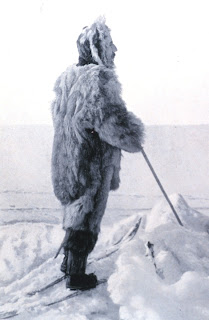
The adventure began more than 10 years earlier, in 1897, when a great, global effort to uncover the mysteries of Antarctica began. People knew that a huge, frozen continent lay beyond the wild seas at the southern end of the Earth, but it wasn’t until 1820 that explorers first laid eyes on Antarctica. Before then ships had failed to penetrate far enough through the frozen ocean to carry their passengers within sight of land. During the winter of 1897, a Belgian ship carrying a crew of explorers, called the Belgica, was trapped in the ice off the coast of the continent. The crew became the first people to endure an Antarctic winter and sparked a period of exploration that would last for 25 years. During that time scientists, geographers and adventurers would compete to become the first to explore uncharted territories and claim the credit for their respective nations. But it was the parallel journeys of Scott and Amundsen that would capture the imaginations of people across the world. Scott had been planning his Terra Nova Expedition for years. His aim was to be the first to the South Pole after Ernst Shackleton had narrowly failed during an earlier expedition. Scientific research was also an important part of Scott’s expedition to Antarctica. But when the American adventurers Frederick Cook and Robert Peary laid claim that achievement, Amundsen turned his attention towards the other end of the Earth. Only his brother Leon and second-in-command Thorvald Nilsen knew of Amundsen’s plan until after his ship, the Fram, had set sail. Scott only learnt of this change of direction months later when his ship, the Terra Nova, docked in Melbourne, Australia. There he was handed a telegram from the Norwegian, it read: ‘Beg to inform you Fram proceeding Antarctic – Amundsen.’ Even though Scott publically insisted that this news would change nothing, the reality was that he was now locked in a race to the South Pole.
That's it for now - there will be another Marine News Roundup in two week's time. Please free to comment and let us know what you think!
Race to the South Pole
And finally, as part of the BBC's Frozen Planet series, BBC Earth have blogged about the race across the Antartic wilderness by two teams 100 years ago. Led by Roald Amundsen from Norway and Captain Robert Scott from Great Britain, the men set out to conquer this vast icy continent and to become the first to reach the South Pole. For one group the adventure would end in triumph, for the other it would end in tragedy. This year marks the 100th anniversary of Scott and Amundsen’s separate attempt to be the first to the South Pole.

The adventure began more than 10 years earlier, in 1897, when a great, global effort to uncover the mysteries of Antarctica began. People knew that a huge, frozen continent lay beyond the wild seas at the southern end of the Earth, but it wasn’t until 1820 that explorers first laid eyes on Antarctica. Before then ships had failed to penetrate far enough through the frozen ocean to carry their passengers within sight of land. During the winter of 1897, a Belgian ship carrying a crew of explorers, called the Belgica, was trapped in the ice off the coast of the continent. The crew became the first people to endure an Antarctic winter and sparked a period of exploration that would last for 25 years. During that time scientists, geographers and adventurers would compete to become the first to explore uncharted territories and claim the credit for their respective nations. But it was the parallel journeys of Scott and Amundsen that would capture the imaginations of people across the world. Scott had been planning his Terra Nova Expedition for years. His aim was to be the first to the South Pole after Ernst Shackleton had narrowly failed during an earlier expedition. Scientific research was also an important part of Scott’s expedition to Antarctica. But when the American adventurers Frederick Cook and Robert Peary laid claim that achievement, Amundsen turned his attention towards the other end of the Earth. Only his brother Leon and second-in-command Thorvald Nilsen knew of Amundsen’s plan until after his ship, the Fram, had set sail. Scott only learnt of this change of direction months later when his ship, the Terra Nova, docked in Melbourne, Australia. There he was handed a telegram from the Norwegian, it read: ‘Beg to inform you Fram proceeding Antarctic – Amundsen.’ Even though Scott publically insisted that this news would change nothing, the reality was that he was now locked in a race to the South Pole.
That's it for now - there will be another Marine News Roundup in two week's time. Please free to comment and let us know what you think!
Subscribe to:
Posts (Atom)